A bedroom rug earns its place when it meets your feet in the morning. A beautiful pattern hidden entirely beneath the bed may add little to the room, while a smaller rug placed thoughtfully can be useful every day.
Mark the landing areas
Stand beside the bed where you normally get up. Note the route toward the closet and door. Then outline possible rug positions around those areas. Include the bed frame's full dimensions and any bench at the foot.
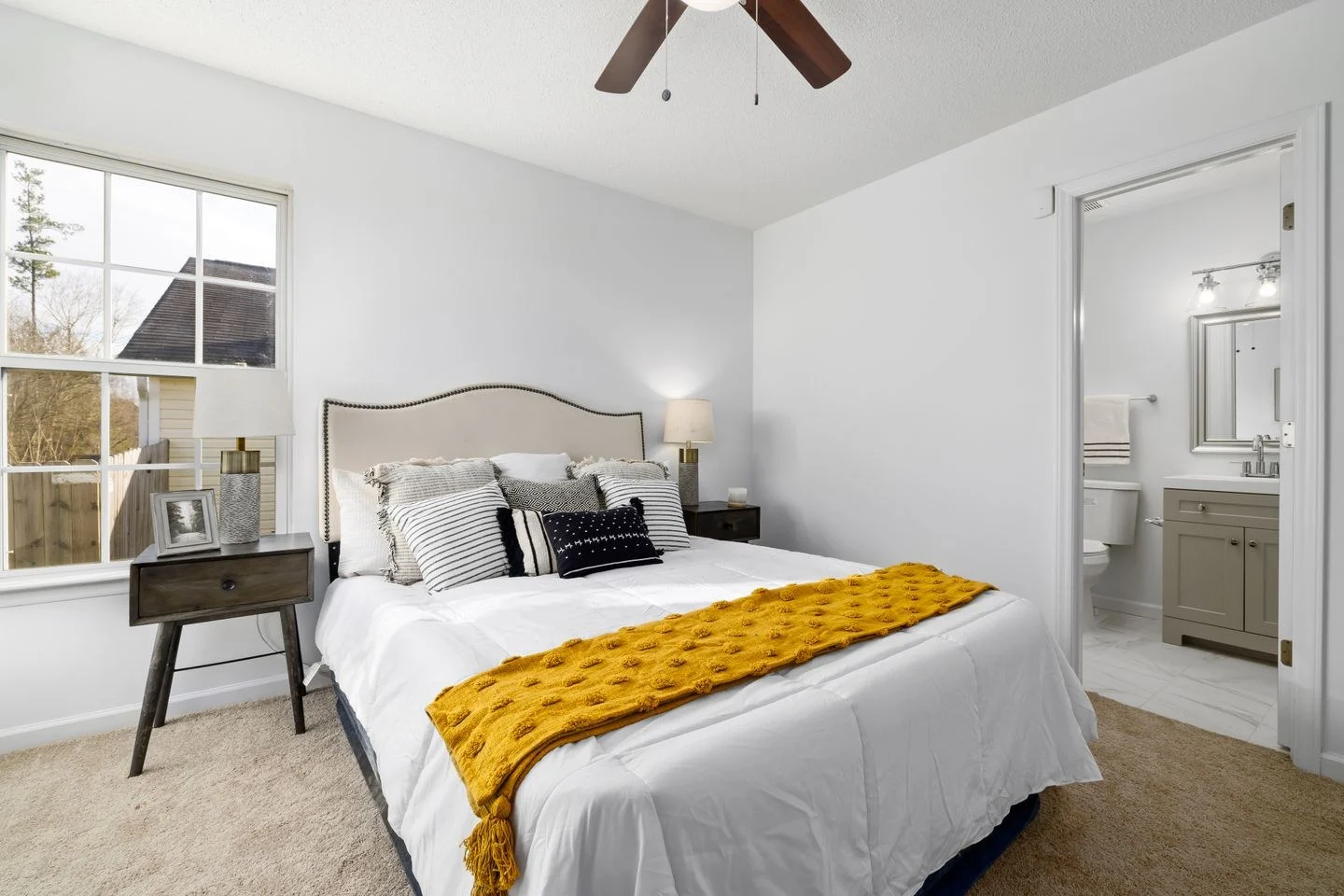
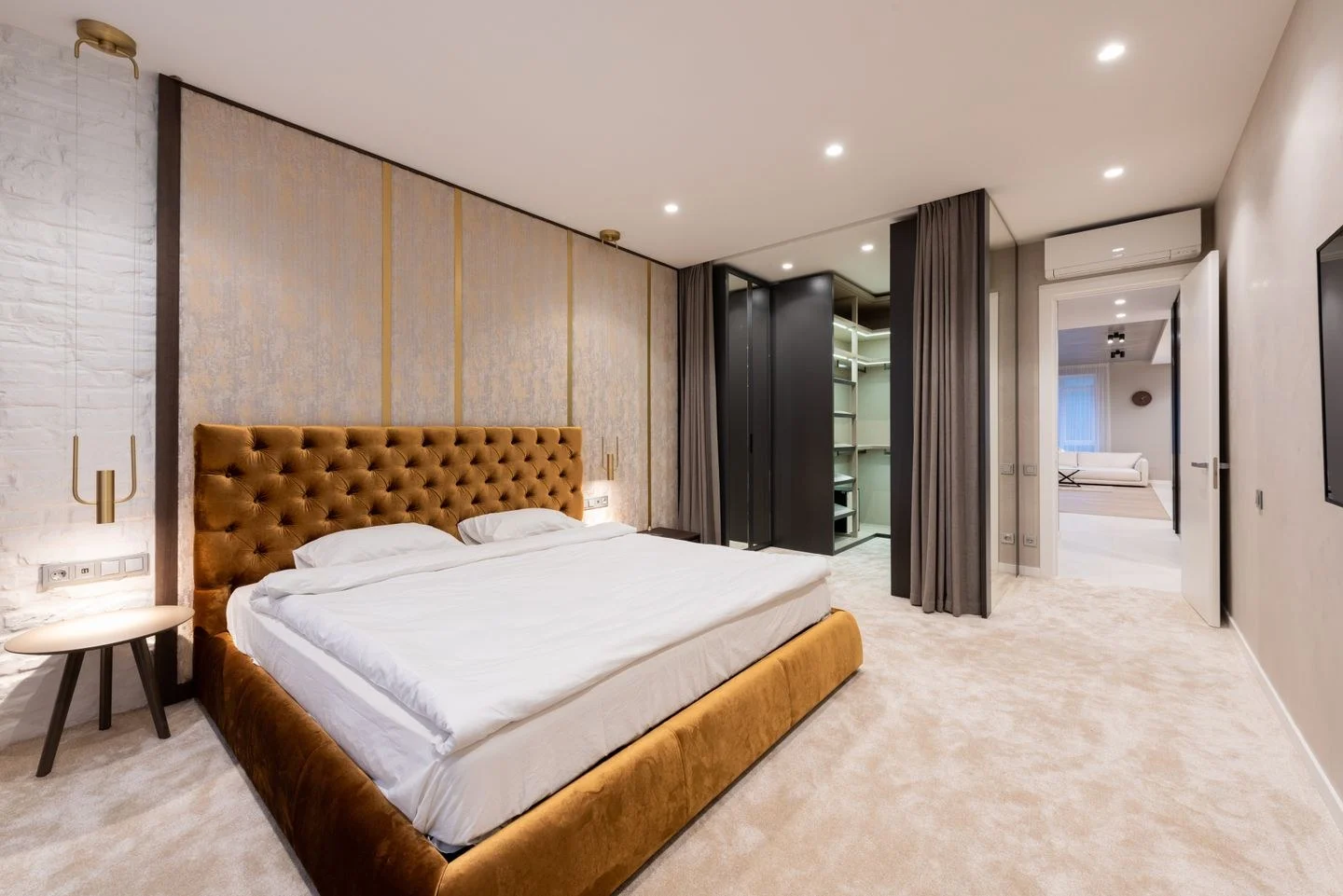
One large rug can connect the bed and nearby furniture. It may begin below the nightstands or extend beneath them, depending on the room and size. What matters is that furniture stands securely and the exposed edges make sense. Avoid leaving one nightstand half on a thick rug and half off if that makes it uneven.
Compare runners with a single rectangle
Separate runners can give both sides of a shared bed a soft landing without buying a very large rug. They work best when each lies flat and stays in place with a suitable pad. A narrow runner that shifts every morning is less useful than bare floor.
Room & Board's rug guide includes both smaller bedside rugs and larger bed arrangements. Use these as layout ideas rather than assuming a mattress size dictates one mandatory rug size. The room's doors, storage, and exposed floor also influence the choice.
A rug at the foot can showcase a pattern and soften a dressing area, but it will not serve the sides unless it reaches them. Decide which function matters instead of expecting one small rug to do all three jobs.
Check thickness and maintenance
Open nearby doors and under-bed drawers with the rug and pad thickness in mind. Measure the clearance rather than assuming a low-pile description guarantees it will fit. Use a pad compatible with the rug and flooring, following care instructions.
Consider how you will clean beneath the bed. A heavy frame on a large rug may make rotation or removal difficult. A washable rug still needs to fit the washing machine specified by its care label and have adequate drying space.
Finish by looking at the exposed pattern from the doorway. A broad border may disappear under the bed, while a small repeating design can read more evenly around it. Choose the layout first and the pattern second, so the rug's most useful area is also the part you enjoy seeing.