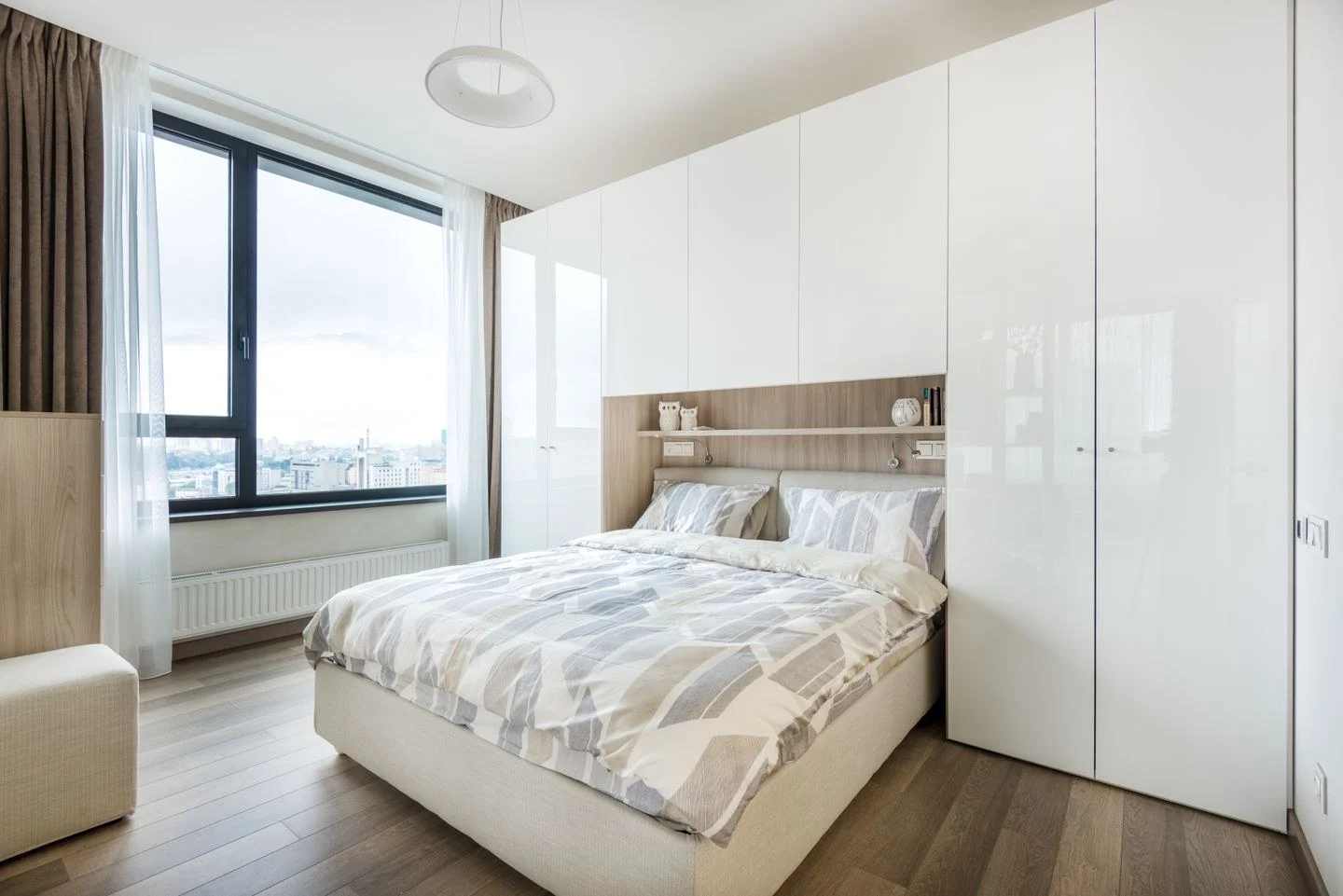
When a dresser blocks the route around the bed, more compact storage can be a better answer. The replacement needs to hold the actual clothes, however. A collection of attractive baskets is not automatically equivalent to a set of usable drawers.
Sort by how clothes are handled
Separate hanging items, folded clothing, small accessories, and occasional pieces. Count the space each category currently occupies. This gives you a capacity target before you remove the dresser. If the drawers contain items you no longer use, edit those first rather than building storage around them.
Everyday clothing should remain easy to reach and return. A container under the bed may suit seasonal sweaters but be inconvenient for socks needed each morning. Think about the return action as well as retrieval: a system that requires careful stacking after every laundry load may be difficult to maintain.
Use the closet's interior deliberately
A drawer unit designed for the closet system can provide familiar storage without occupying the bedroom floor. Shelves with dividers may work for folded shirts or knitwear. Measure the interior, including door hinges and any sloped ceiling, and check whether doors can close with the proposed organizers in place.
Do not add a hanging organizer without checking the rail's load capacity and the organizer's intended use. Extra storage concentrates weight. Leave enough space around hanging clothes so they can be removed without dragging several other garments with them.
A second hanging level can be useful for shorter garments when the closet system supports it, but it will not help with long dresses or coats. Choose the arrangement according to your wardrobe rather than a generic closet diagram.
Assess the space beneath the bed
Measure the clear height at the lowest obstruction and the usable width between legs or supports. Include container lids, handles, and wheels. Then check the route for pulling each container out. A box that fits underneath but cannot pass the nightstand is not accessible storage.
Use containers suited to the items and conditions, keeping textiles clean and dry. Avoid blocking ventilation required by the bed or mattress manufacturer. Follow the frame's instructions, especially for built-in drawers or lifting mechanisms, and do not modify structural supports to make a box fit.
Keep small items in real compartments
A narrow bedside drawer, closet tray, or small organizer can hold accessories, but give each category a defined place. Otherwise the lack of a dresser simply moves clutter onto the nightstand. Jewelry, charging cables, and clothing should not all disappear into the same deep basket.
A wall-mounted cabinet may provide useful storage if installed for its load and wall construction, but its depth can still intrude into the room. Freestanding wardrobes and chests need appropriate anchoring. CPSC's furniture tip-over guidance is relevant even when the piece is inside a bedroom rather than a family space.
Try the new system with a complete laundry cycle before disposing of the old dresser. Put clean clothing away, get dressed, and reset the room. That trial reveals whether the replacement has enough accessible capacity. A bedroom without a dresser can work well when the storage is distributed by task, not merely hidden wherever a container happens to fit.