The right window covering depends on what the daylight is doing in your room. You may want to soften direct sun, reduce glare on a screen, retain a view, or gain privacy after dark. Those are different tasks, and one fabric may not handle all of them equally well.
Observe the window in the morning, afternoon, and evening. Note where the strongest light lands and when it becomes uncomfortable. A room that looks dim during one visit may receive direct sun later. This observation helps avoid choosing a permanently heavy treatment for a problem that occurs only at a particular time.
Separate light filtering from privacy
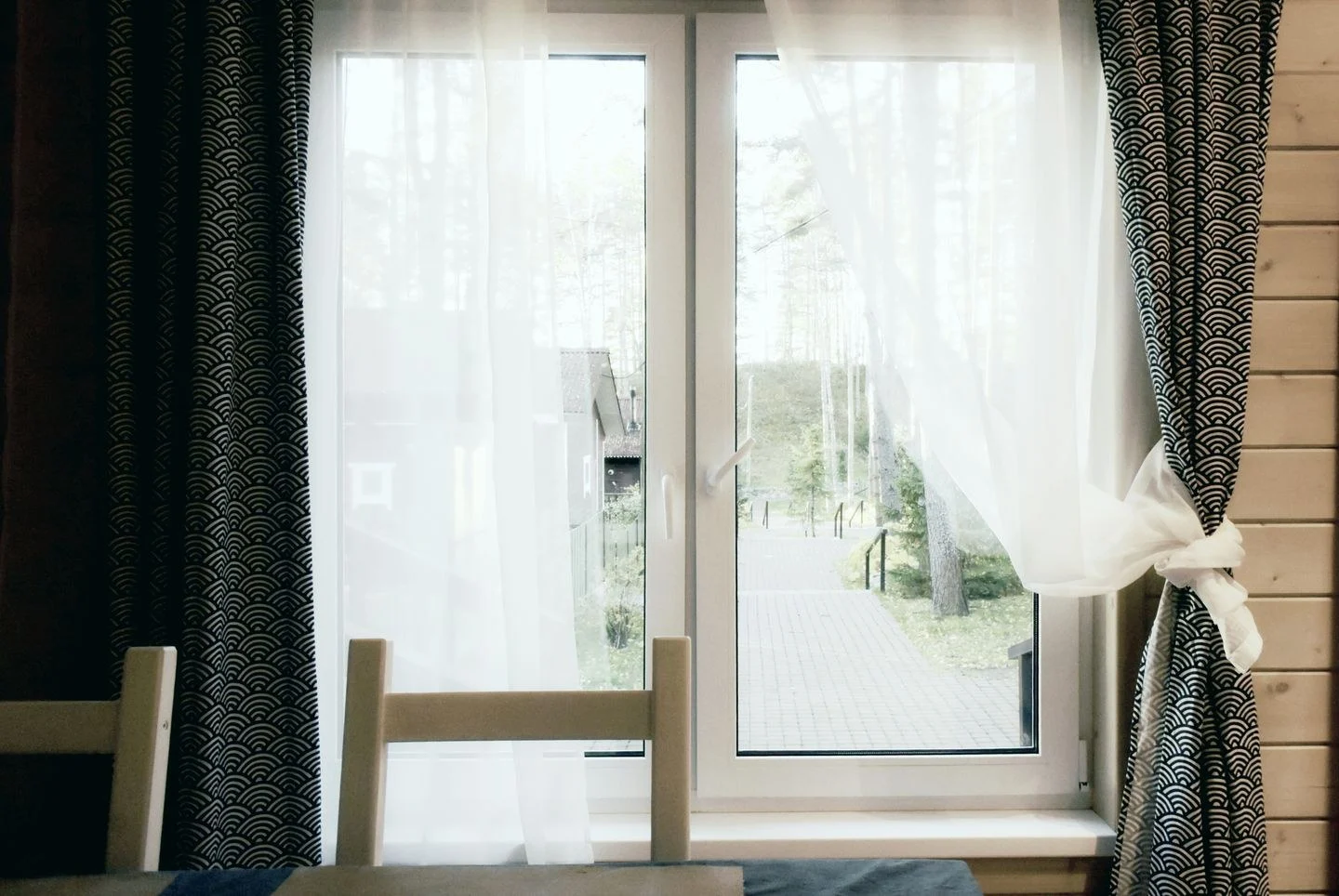
A sheer or light-filtering layer can soften the appearance of daylight while preserving some brightness. Its privacy performance depends on the fabric and lighting conditions. Check the view from outside where appropriate, particularly after dark when the room is illuminated. Do not assume that a daytime impression of privacy remains the same at night.
An additional opaque layer can offer a different level of control. Combining layers may allow the room to remain open and bright at some times while closing more fully at others. Compare the combined depth of the hardware and the space occupied by the fabric when drawn back.
For a desk or television, consider the angle of the light before simply choosing darker curtains. Moving the screen or changing its orientation may reduce a reflection while retaining more daylight. The window covering can then address the remaining issue without unnecessarily darkening the whole room.
Keep operation part of the decision
The treatment should be easy for the household to adjust when conditions change. Furniture that blocks access can turn an adjustable solution into one that stays in the same position all day. Check handles, openings, and the path of the fabric against nearby tables and shelves.
Select and install window products according to their instructions, including appropriate child-safety guidance. Avoid dangling cords where they can create a hazard, and do not modify operating systems casually. A visually tidy arrangement is not a substitute for a suitable product and installation.
Look at the room with each layer open and closed. The fabric contributes color and volume even when it is not controlling light. Choose an arrangement whose ordinary positions work with the furniture, then use its flexibility as the light changes rather than expecting one fixed setting to suit the entire day.