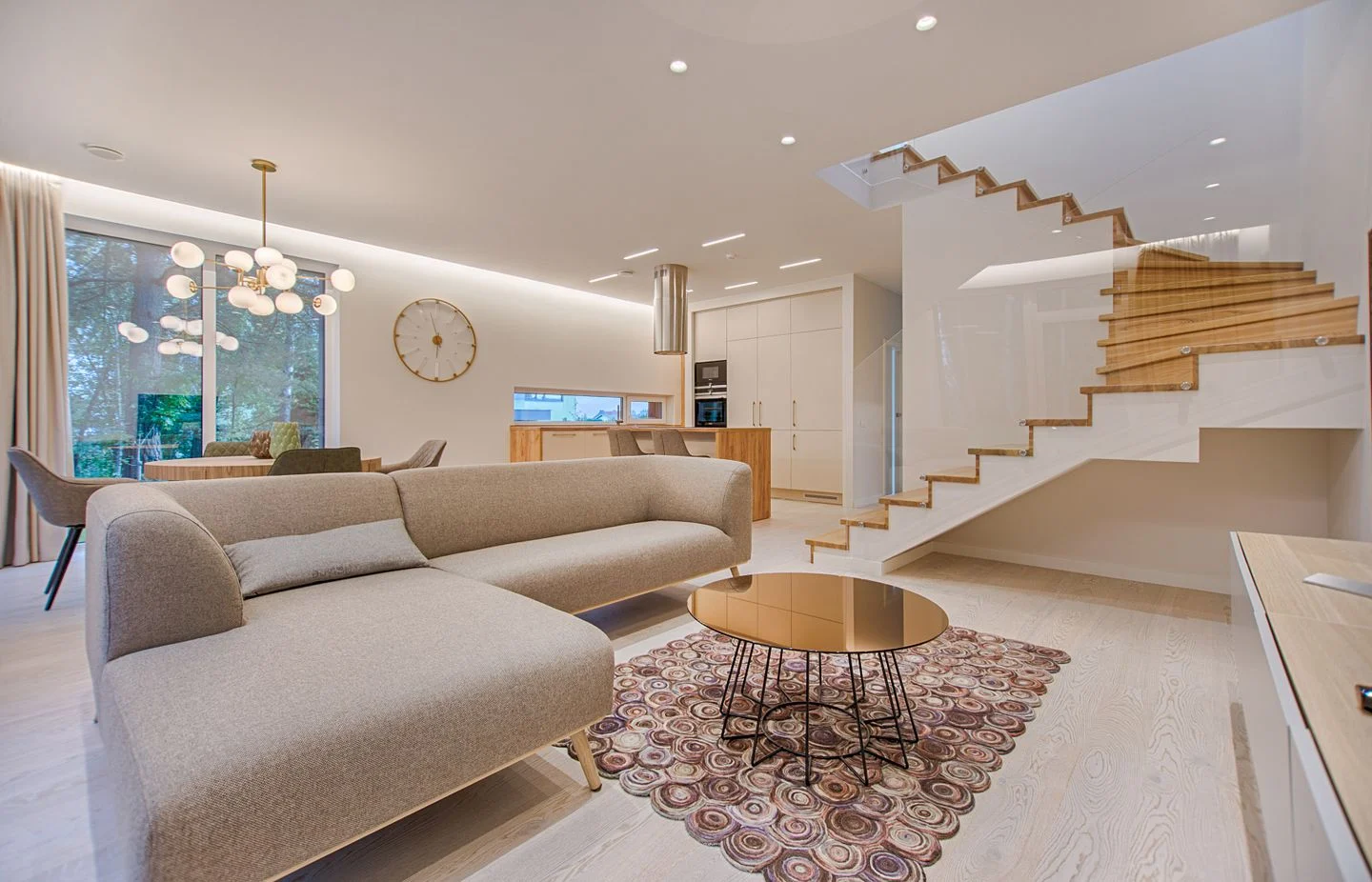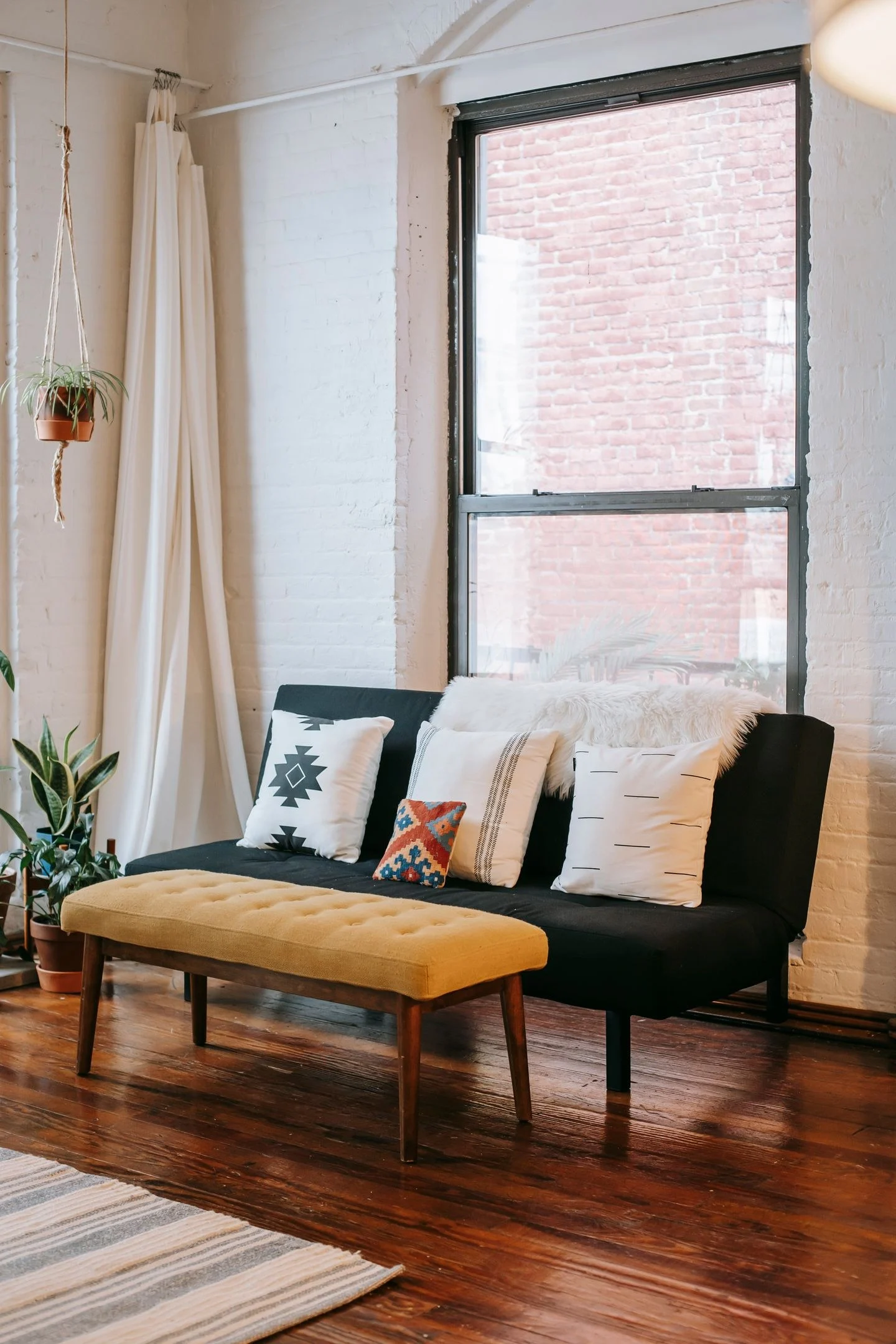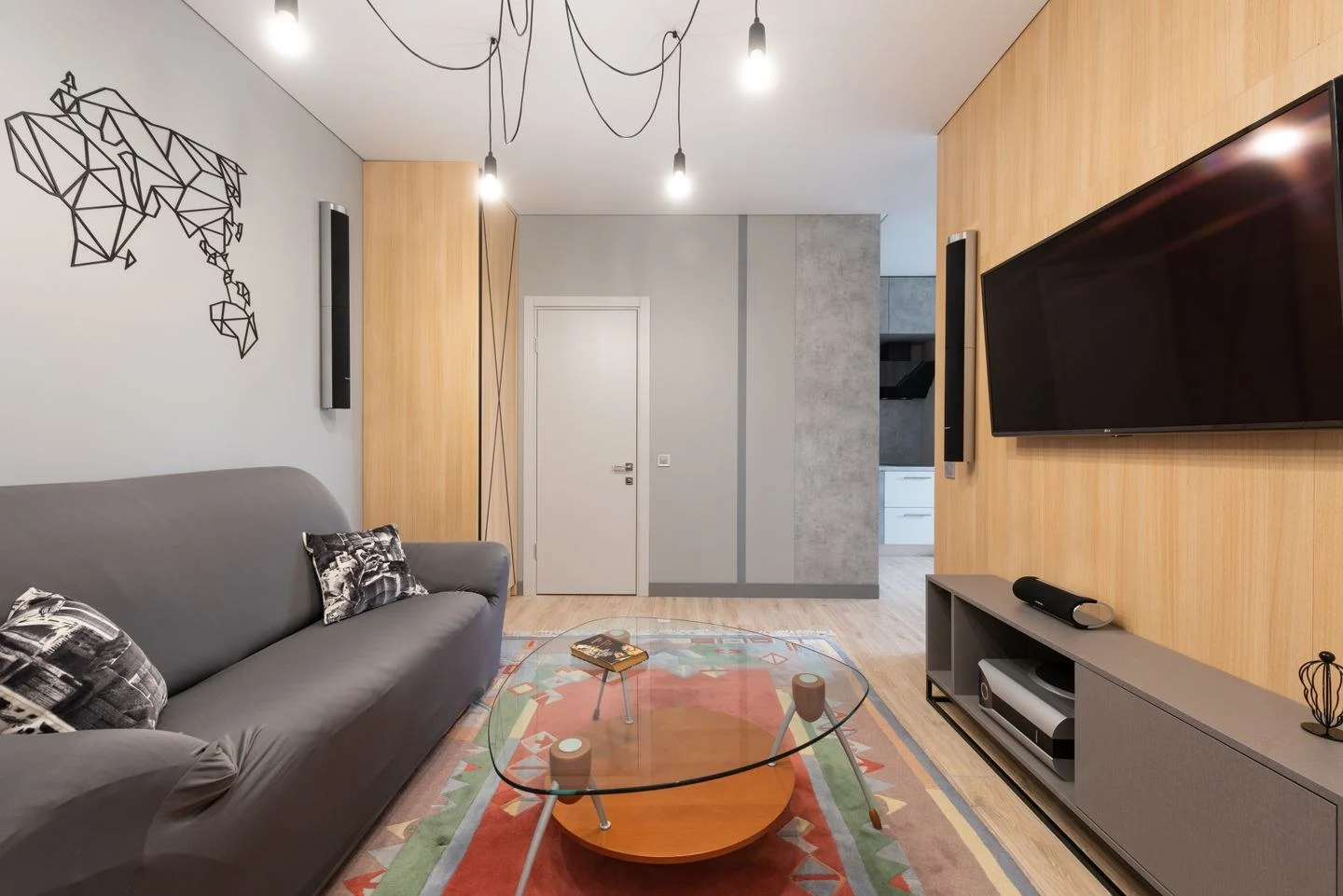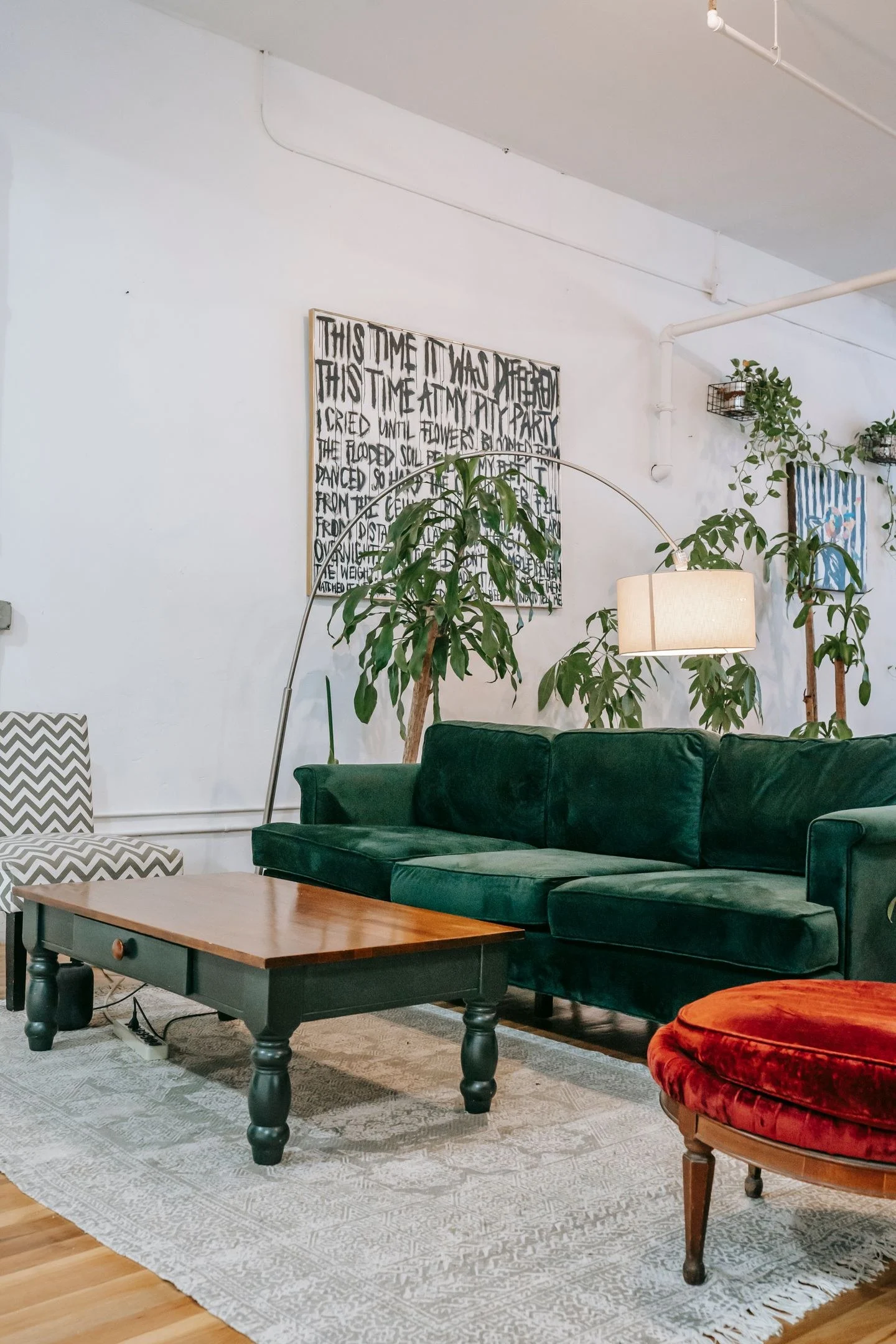
A dark sofa is often the largest visual weight in a living room. You can balance it without surrounding it with bright white or replacing every other dark object. The key is to consider the floor beneath it, the wall behind it, and the shapes around it together.
Look at the largest adjacent surfaces
A pale rug can separate a dark sofa from a dark floor, making the furniture's outline easier to read. A medium-toned rug can do the same job more gently. Compare actual samples against the upholstery: a cool gray may make a warm brown sofa look unexpectedly orange, while a creamy neutral may feel more compatible.
The wall behind the sofa does not have to be the lightest wall in the house. A muted middle tone can reduce the jump between upholstery and background. If you are considering paint, test a large sample in that location and under the lamps you use at night. Benjamin Moore's sampling guidance recommends evaluating color in the room rather than relying on a small chip alone.
Repeat the darkness in smaller doses
A dark picture frame, lamp base, or detail in a rug can connect the sofa with the rest of the room. Place those repetitions at different heights and distances rather than gathering them all beside the sofa. You are giving the color a few companions, not making the room uniformly dark.
Consider the coffee table's shape as well as its color. A table with visible legs can leave more floor in view next to a solid upholstered base. Conversely, a low sofa on slim legs may look balanced with a more substantial table. There is no need for every piece to appear lightweight.
Let texture do some of the work
A woven cushion or a softly textured throw can break up a broad area of dark upholstery. Keep enough of the sofa visible for its color to remain deliberate. A row of pale pillows that completely covers the back may make the piece seem like something you are trying to hide.
Light the room at more than one height if possible. A dark corner beside a dark sofa can make the entire group feel compressed, while a nearby lamp helps reveal its edges and fabric. Choose lighting for the activities there and check glare from the seated position.
Before adding another pale accessory, remove anything that feels unrelated. The sofa may already balance a dark cabinet or artwork across the room. A coherent arrangement of existing tones usually feels more settled than a strict dark-versus-light formula.