A bay window already supplies architecture, light, and a view. It rarely needs furniture fitted into every angled wall. Decide first whether the bay should be a place to sit or a backdrop to the main seating group.
If it is shallow, keep the sofa or chairs in the rectangular part of the room. The bay can remain open, perhaps with one low plant stand that does not interfere with the window. Leaving that floor visible emphasizes the shape more effectively than squeezing in a piece that almost fits.
A pair of chairs needs more than seat width
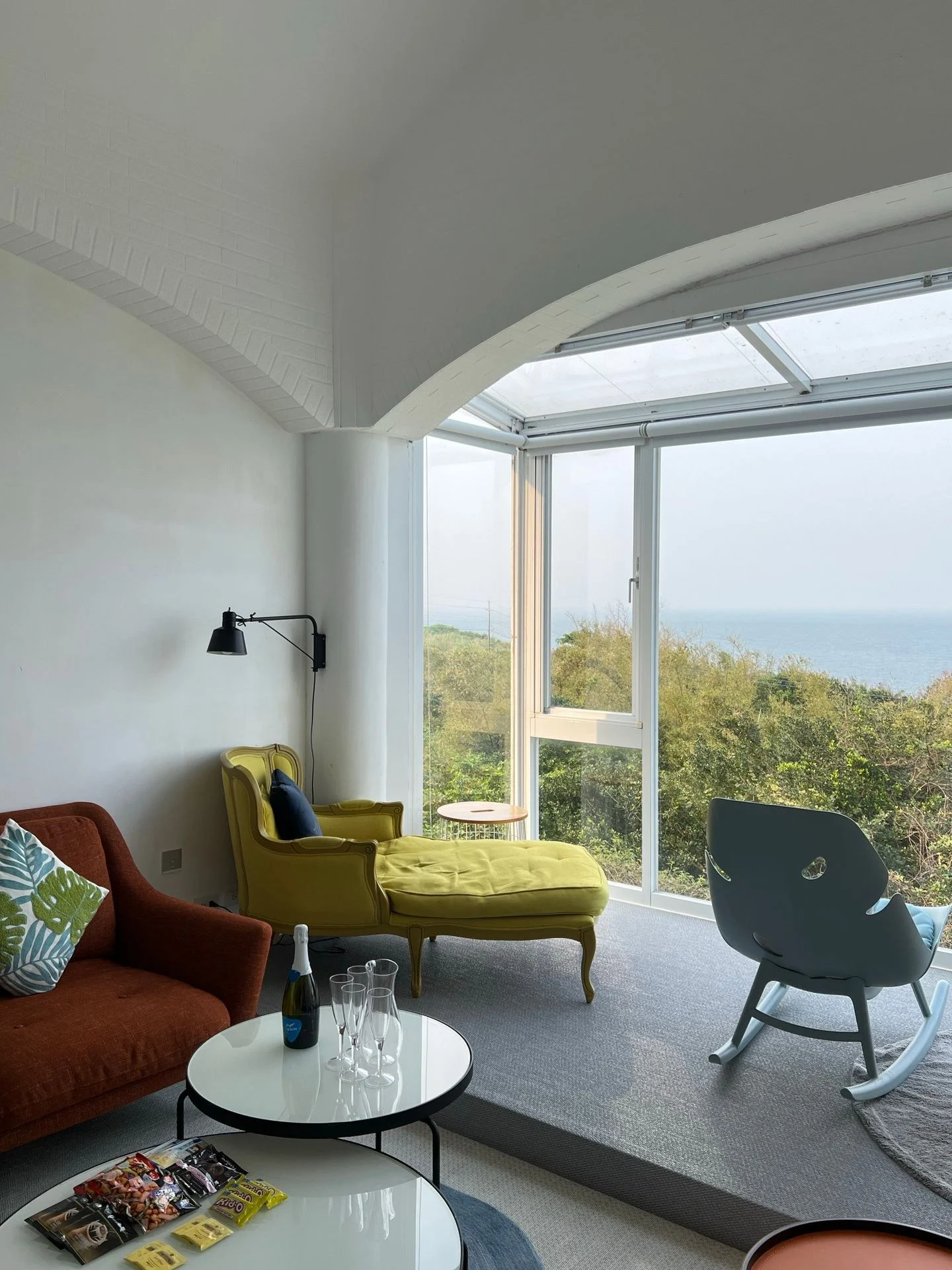
In a deeper bay, two compact chairs angled toward the room can create an inviting conversation area. Measure the backs and arms at their widest points. A chair that fits straight against the center window may project far into the room when turned. Put a small shared table between the chairs only if both people can reach it comfortably.
Look at the arrangement from outside the bay. Tall chair backs may obscure much of the glass, while low backs keep more of the window visible. Neither choice is inherently wrong: a high-backed chair can create enclosure, but it should be intentional rather than a surprise after delivery.
Resist the automatic bench
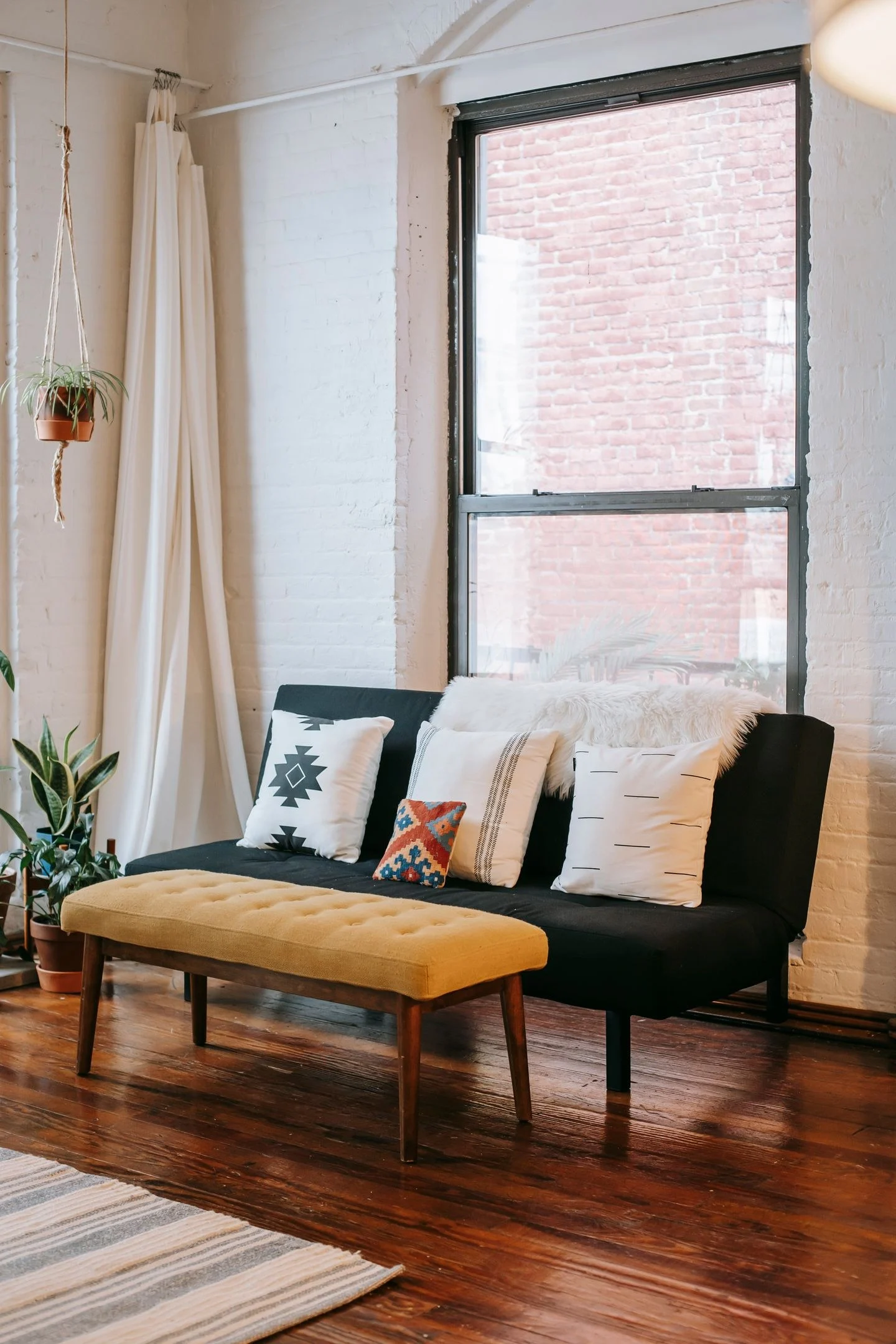
A freestanding bench can suit a bay, but it may be less comfortable than it appears if the sill or wall is used as an improvised backrest. Check seating height, depth, and the bench's intended use. Do not sit on a storage unit or radiator cover unless it is specifically designed for that load.
A custom window seat raises questions about ventilation, access, installation, and any required emergency exit. Have those assessed rather than treating a decorative sketch as construction guidance. You can test the general idea with ordinary furniture before commissioning a permanent piece.
Window treatments also need operating space. Curtains should draw without snagging on chair arms, and shades should remain accessible. Where children live or visit, follow CPSC's guidance on cordless coverings and furniture placement near windows.
Finish by checking the corner at the times you would use it. Direct sun may make a favorite seat uncomfortable for part of the day; evening glass can reflect lamps placed directly in front of it. A small change of angle often improves both conditions. The bay's strongest feature is the extra perspective it gives the room, so preserve a clear view of that feature before adding more objects.