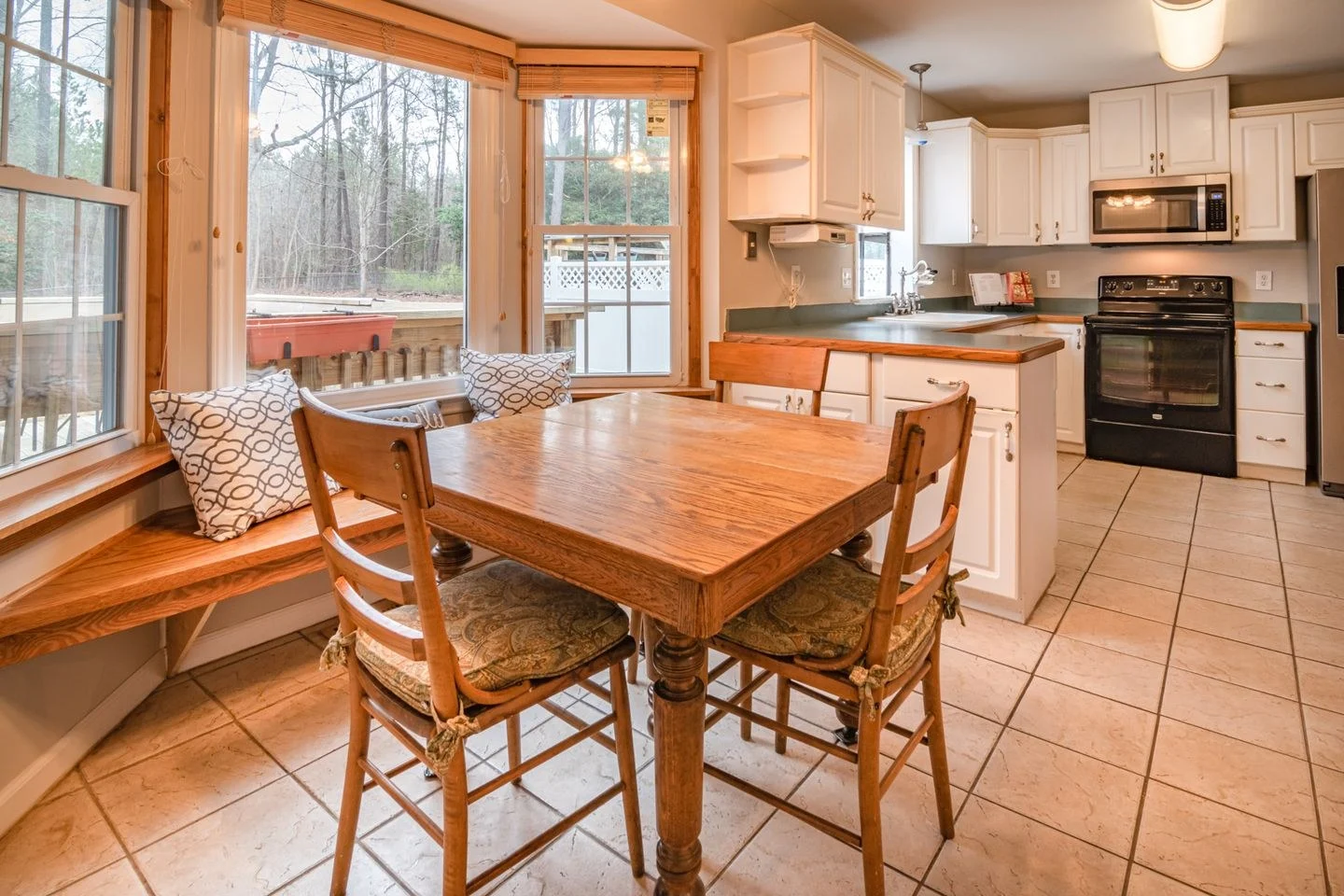
A bench on one side of a kitchen table can make the dining area feel informal and compact. It also changes how people sit down and leave. The person in the middle may have to slide past someone else, so the layout deserves a trial before purchase.
Check the space beneath the table
Measure the distance between table legs and the bench's full width. If you want the bench to tuck in, its arms or back—if present—must also fit. A bench that is slightly too long can remain permanently in the room's route even though its seat looks narrow.
Compare seat height with the underside of the table and any apron. A cushion raises the seated position and may reduce comfortable legroom. Try sitting at a similar combination rather than relying only on standard dining dimensions.
Give both ends an approach
A bench against a wall can work for a compact eating area, but access from the ends becomes important. A table pushed too close may require awkward climbing or sliding. Consider who uses the seats, including anyone who needs easier entry, back support, or space for a mobility aid.
A freestanding bench is easier to move than a built-in one only if its weight and size make that realistic. Do not assume a long solid-wood bench will be shifted casually at every meal. Follow its load and use instructions, and avoid using a decorative storage piece as seating unless it is designed for that purpose.
Balance it with the chairs opposite
The opposite chairs can provide individual back support and easier access. They do not need to match the bench exactly; a shared wood tone or simple color relationship can connect them. Check the overall visual weight so a substantial bench does not overpower delicate chairs.
An upholstered cushion may add comfort, but it should stay securely in place and have a care routine suited to kitchen use. Avoid a pile of loose pillows that must be moved before sitting. A bench's appeal often comes from its straightforward form.
Test the arrangement with the dishwasher or refrigerator open if the table is nearby. Include the movement of a person carrying food between the counter and table. If the bench closes that route, a narrower table, a shorter bench, or conventional chairs may work better. The bench should make the room easier to use, not simply make the furniture look more tightly packed.