An empty strip of bathroom floor can look like the perfect place for a small cabinet. Before filling it, find out why the space is empty. It may be part of the door swing, the standing area in front of the basin, or the route used to clean beside the toilet.
Measure the proposed footprint and mark it on the floor with removable tape suitable for the surface. Add the depth of handles and any projecting top. Leave the marker in place while moving through ordinary routines. If you repeatedly step across it, the piece needs a different position or a smaller footprint.
Test the furniture in its open state
Cabinet doors and drawers require space beyond the closed dimensions. A drawer that opens into the entry door may technically fit but remain awkward every day. Check whether a person can stand in front of the unit and retrieve its contents without blocking another essential fixture.
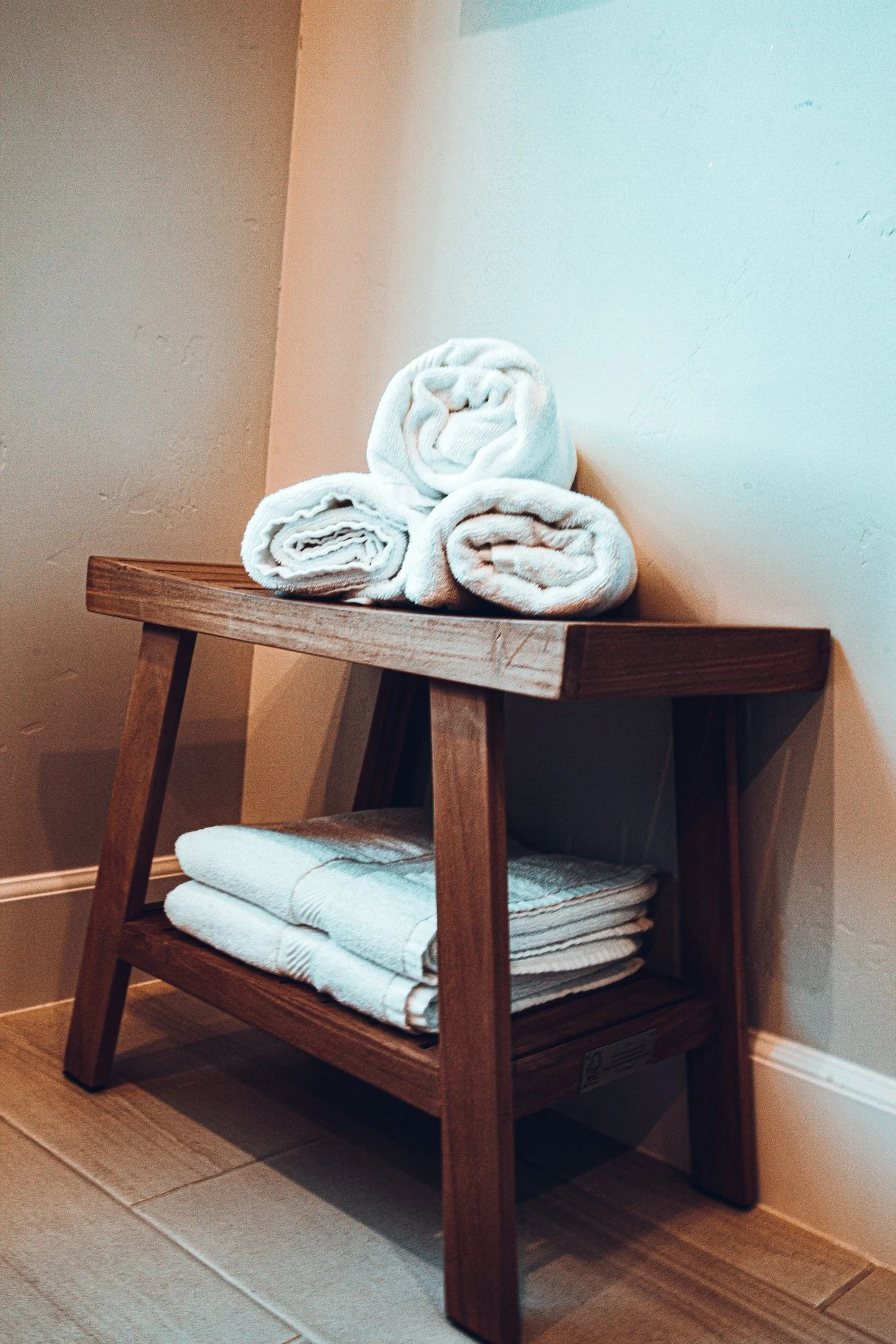
Open shelving removes the door swing, though it exposes the contents and can invite overfilling. A narrow trolley adds mobility, but it still needs a useful place to park. Wheels do not make an obstructed route acceptable. Test the movement and any wheel locks according to the product instructions.
Height also changes the effect. A low unit may offer a landing surface while leaving the wall visible. A tall cabinet can hold more but dominate a small room or interfere with a light switch. Check the complete outline from the doorway, not just the footprint beside your feet.
Choose for the room's conditions
Read the manufacturer's intended-use and care information. Furniture sold for a dry living area is not automatically suitable beside a shower. Material names alone do not describe the protective finish, exposed edges, joints, or hardware. Even bathroom furniture needs care appropriate to its construction.
Keep the piece out of direct spray unless it is specifically intended for that location. Consider how the floor beneath and behind it will be cleaned. Very low clearance can create a hard-to-reach strip, while a piece standing on legs may allow cleaning only if there is enough space to reach around them.
Freestanding describes the furniture's form, not permission to ignore securing instructions. If the manufacturer requires wall attachment, follow that requirement with suitable hardware and professional help where needed. Bathroom walls may conceal plumbing, wiring, or waterproofing layers; do not improvise drilling based only on the visible finish.
Once installed, load the unit according to its instructions and keep its main purpose clear. A cabinet intended for spare towels should not gradually become an unstable stack of heavy supplies. If its presence makes the room harder to use or maintain, extra storage capacity has not produced a better bathroom.