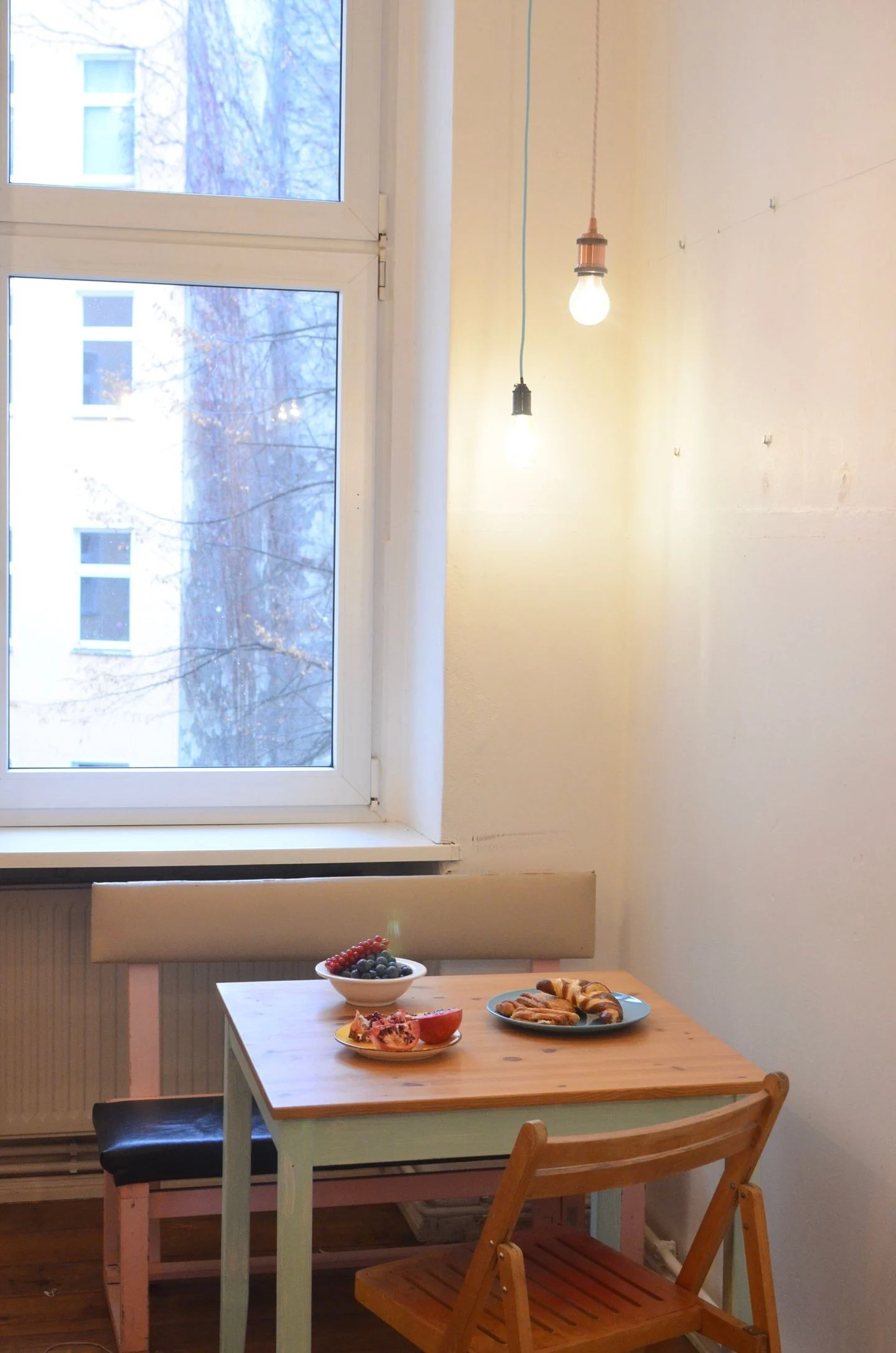
A breakfast corner can be made with ordinary furniture rather than a built-in bench. This offers flexibility if the room changes or if you rent, but it still requires enough space for people to sit and stand comfortably. Begin with the meals and activities the corner will actually host.
If it is mainly a place for one person to have coffee, a modest table and one or two chairs may be enough. If several people eat there every morning, plan for their occupied positions. A small table described as seating four can feel very different once bowls, cups, and elbows are involved.
Test the edge of the kitchen
Mark the table footprint in the proposed corner, then add chairs and pull them out. Check refrigerator, oven, dishwasher, and cabinet openings nearby. A chair should not have to be moved every time an essential appliance is opened. Follow appliance requirements and keep the working route clear.
Look at the window and any radiator or vent. The furniture should preserve needed access and clearances. A table placed under a window may offer a pleasant view, but a high chair back can interfere with opening the window or operating a shade.
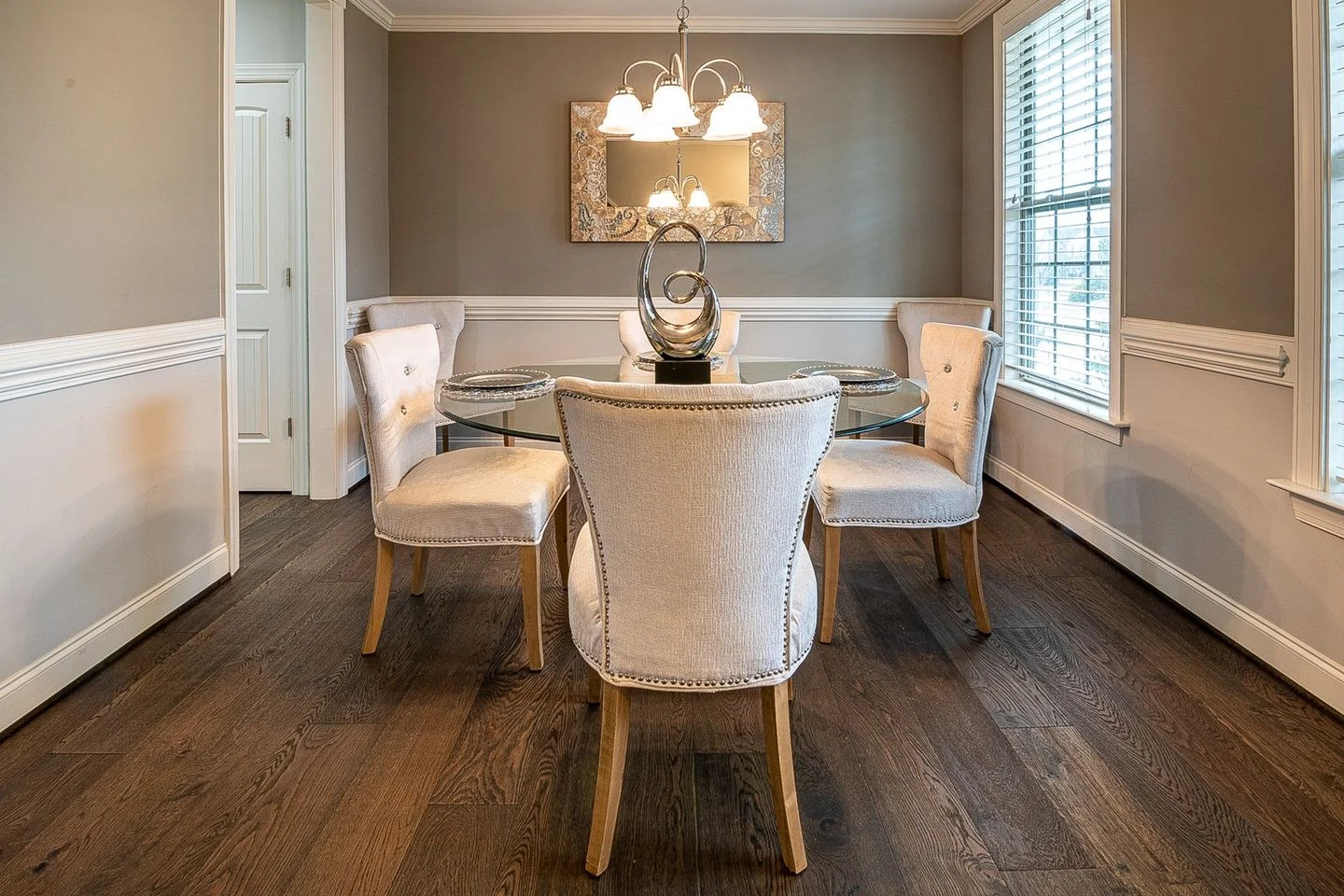
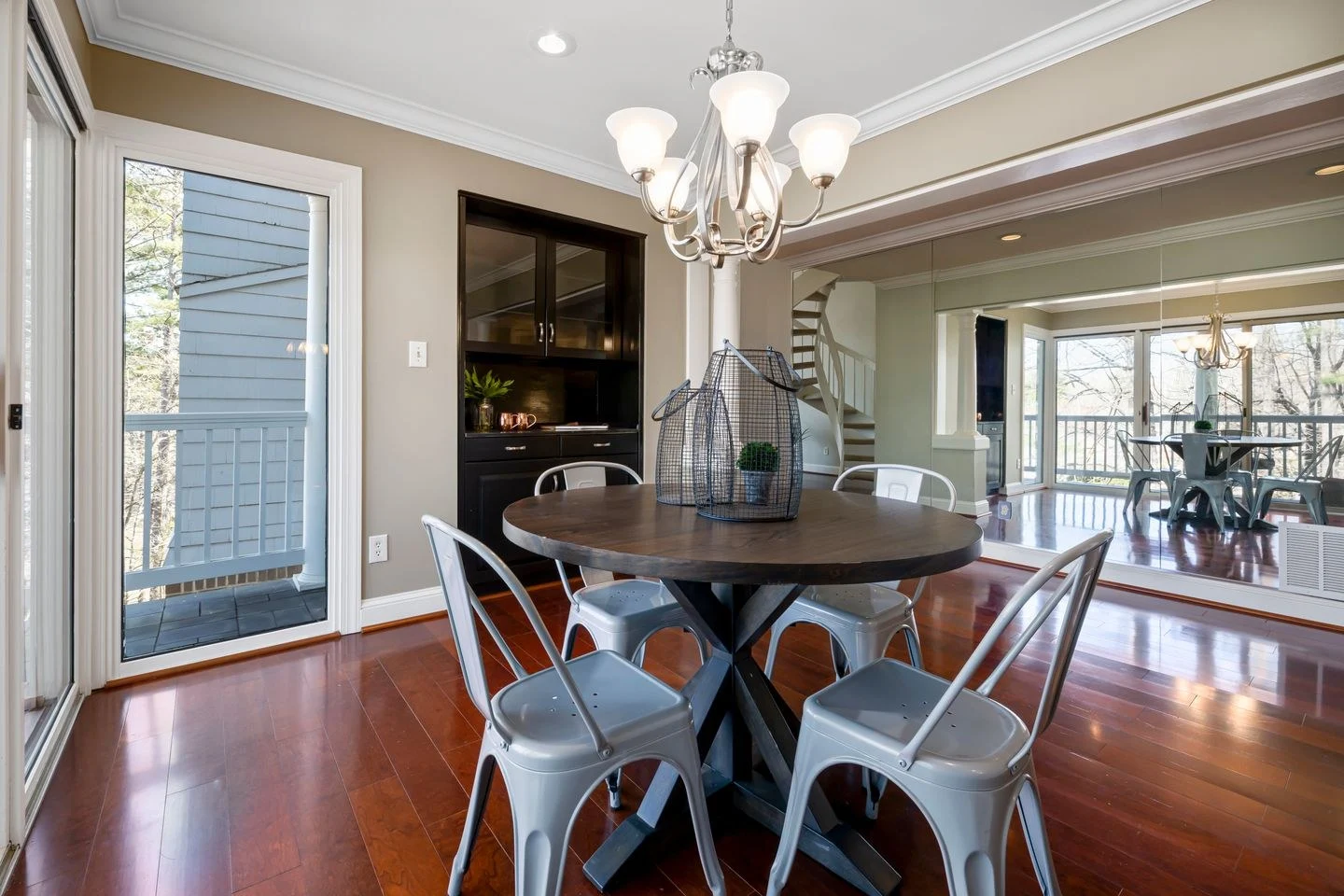
A round table can ease movement around a corner, while a small rectangular table may sit more efficiently against a wall. A pedestal can simplify chair placement, though foot space still needs testing. Compare the actual dimensions and base construction rather than selecting by shape alone.
Keep the seating movable without making it temporary
Choose chairs that are comfortable for the expected length of use and easy for the household to move. Very light-looking furniture is not necessarily light in weight. If the chairs are pulled out several times a day, their handling matters as much as their outline.
A freestanding bench may work along one wall, but check how someone reaches an inner seat and whether the bench can remain stable in its intended position. It should not be treated as a built-in merely because it is pushed tightly against the wall. Follow the furniture's use and assembly instructions.
Use a wall color, an appropriately sized picture, or a small lighting plan to connect the corner to the kitchen. Avoid adding so many accessories that the table loses its useful surface. A compact eating area benefits from a clear place to put a cup and a plate.
Spend a few mornings with the basic arrangement before buying more pieces. If the corner naturally becomes a mail drop, decide whether to provide a separate home for that task. The breakfast area earns its place when it remains available for the simple activity it was created to support.