In a compact bathroom, the shower curtain can be the largest changeable surface. Its color may occupy more of the view than the painted wall. That makes it a useful starting point for a refresh, particularly when the tile and fixtures will remain.
Judge the curtain in two positions. Closed, it becomes a broad panel; open, its pattern compresses into folds beside the tub or shower. A bold motif that looks balanced when spread out may turn into a dark stripe when gathered. Decide which view you will see most often from the doorway.
Choose a relationship to the tile
With a strongly patterned floor, a plain or softly textured curtain can leave the floor as the focal point. With simple white tile, a large print can introduce color without requiring a collection of smaller accessories. A stripe may echo existing tile joints, but closely spaced lines in both places can make the room feel busier.
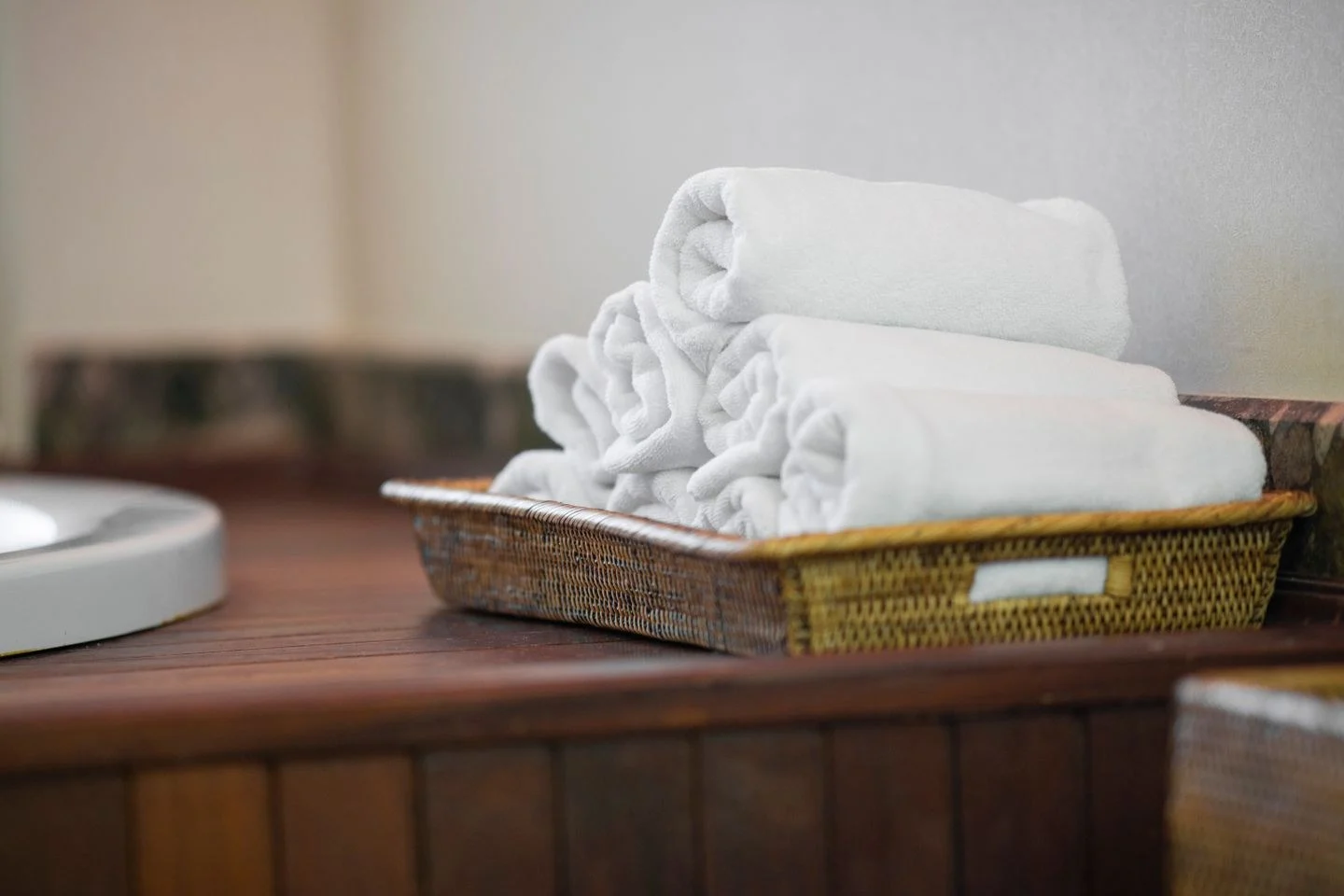
Pick one or two colors from the curtain for supporting textiles. The least obvious color in the print can be a useful choice for a hand towel: it connects the pieces without reproducing the entire design. Leave another surface quiet so the room does not become a series of competing patterns.
For example, a curtain with a cream background and dark green leaves could work with plain cream bath towels and one green hand towel. Matching leaf-patterned mats and containers would add a different, more literal effect. Decide whether that is what you want before purchasing a coordinated set.
Fit the curtain as a working object
Measure the opening and the distance from the hanging point to the intended lower edge. Include the drop of rings or hooks. Product dimensions describe the flat curtain; enough width is needed for the way it will hang and close. Follow the curtain, liner, and enclosure instructions for placement rather than letting fabric trail across the bathroom floor.
Check whether the selected fabric requires a separate liner. A decorative textile and a water-containing liner perform different jobs, and care instructions may differ. IKEA's shower-curtain range illustrates this distinction: some curtains are water resistant, while separate liners are offered for use with decorative layers. Read the specific product details rather than assuming every curtain works the same way.
Consider access for laundering or wiping the material. Hooks that are difficult to remove may become an inconvenience if the curtain needs frequent care. The rod and its mounting must also suit the product and its weight. A tall visual line is appealing, but it is not a reason to improvise an unsuitable support.
Once the curtain is installed, live with it before adding more color. The bathroom may already have the change it needed. A new hand towel or a simpler countertop arrangement can finish the composition without competing with its largest textile.