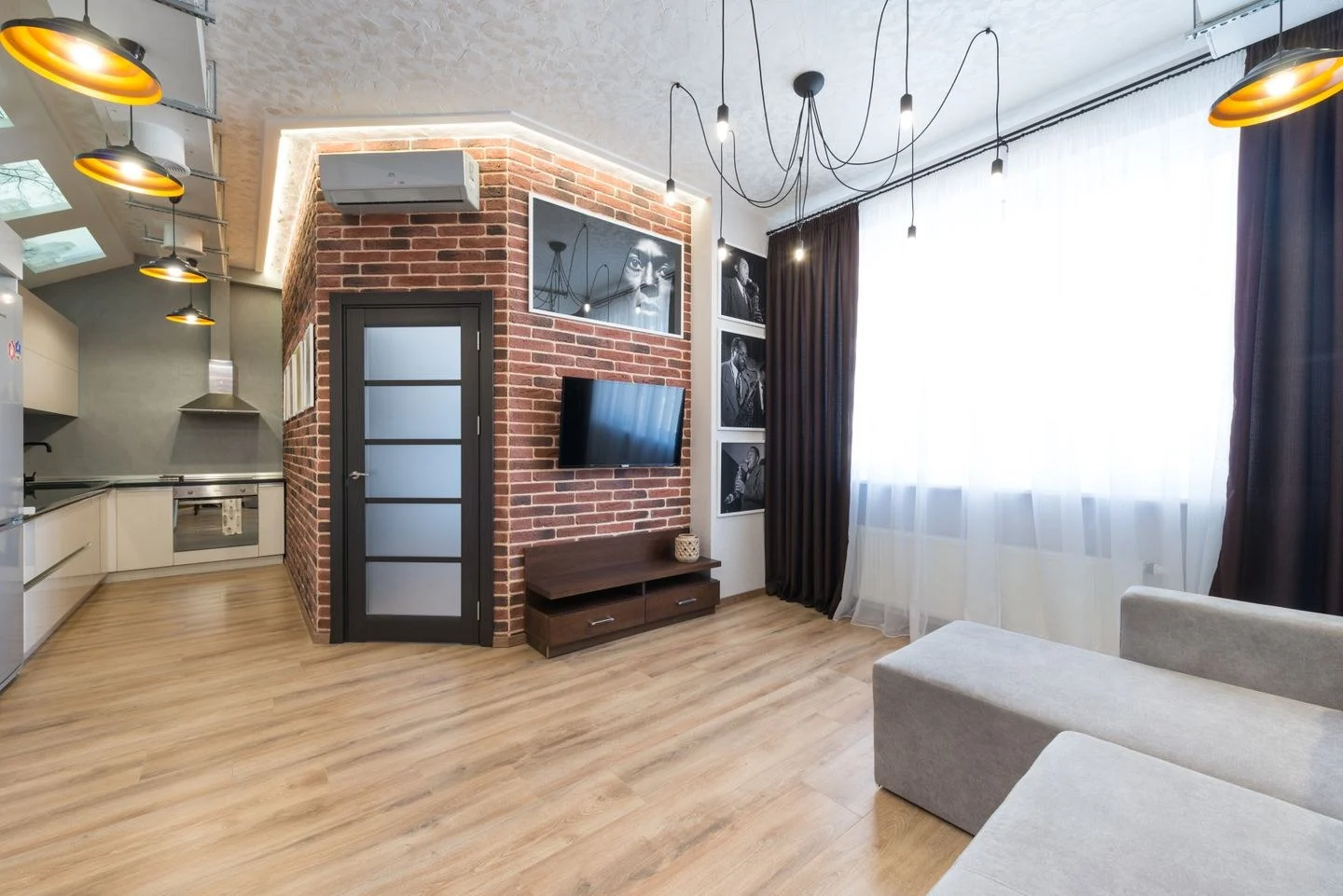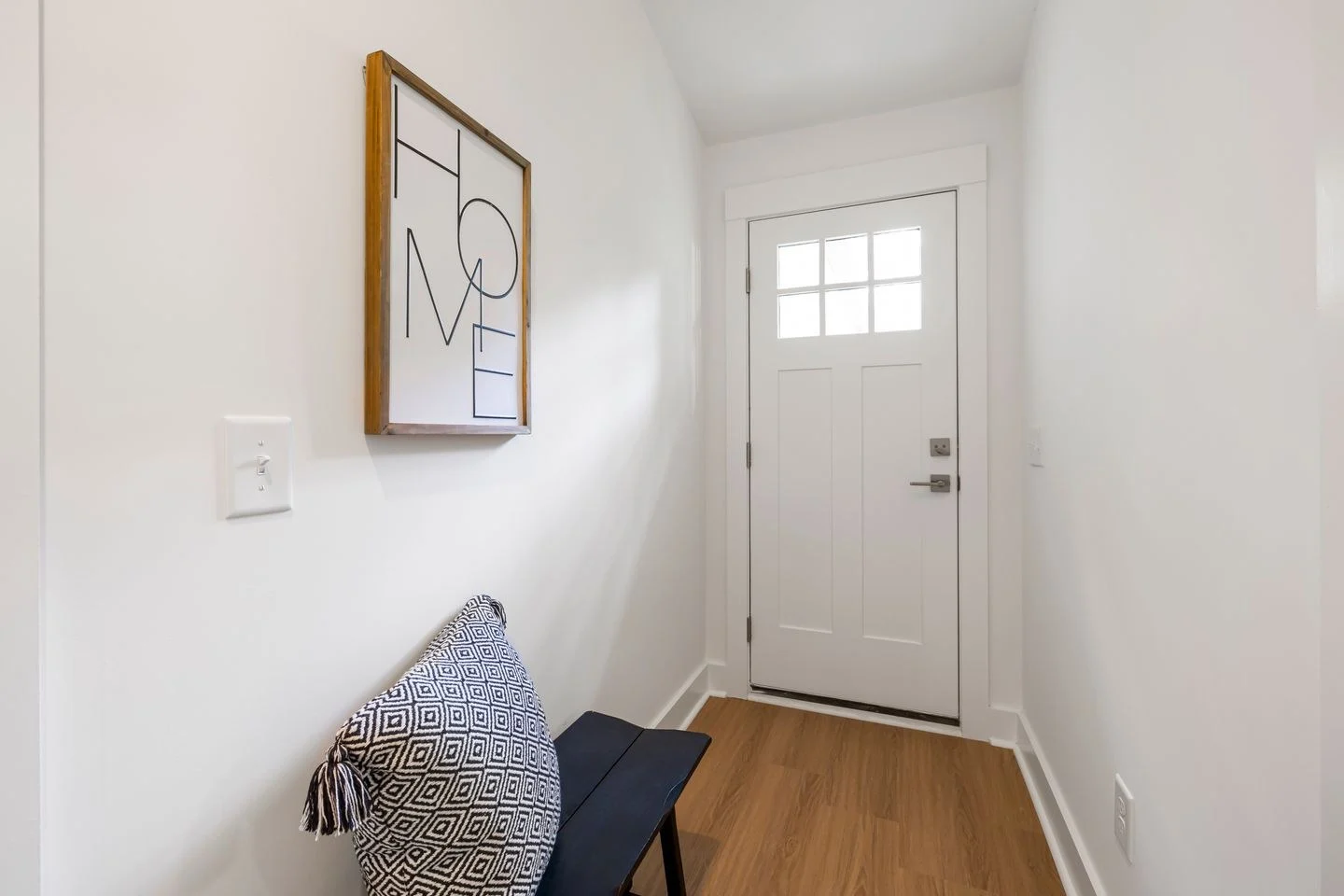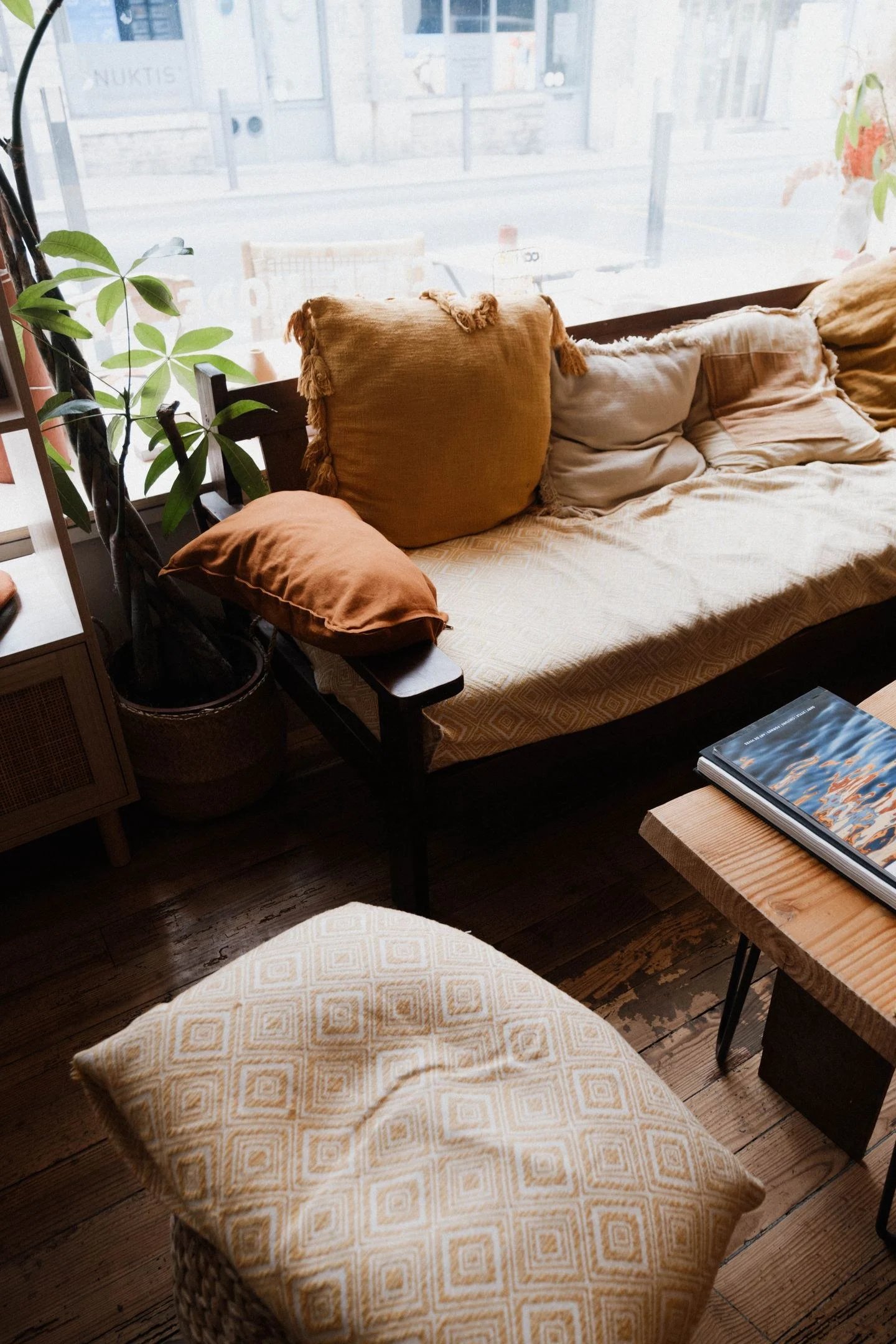
A rental refresh can begin with the parts of the room you control: furniture arrangement, textiles, lamps, and objects that move with you. You do not need to disguise every permanent finish before the room can feel coherent.
Identify the feature that is hardest to change. It may be a gray floor, dark cabinet, or awkward window. Build the palette around that reality rather than treating it as an error. A rug, curtain, or substantial upholstered piece can create a new layer while leaving the original surface intact.
Buy for the current room, with some flexibility
Measure the actual space and delivery route. A modular piece may adapt to a future home, but it still needs to fit this one. Avoid buying oversized furniture for an imagined next apartment at the cost of today's circulation.
Smaller independent pieces can sometimes adapt more easily than one elaborate system. Two side tables may become bedside tables later. A simple cabinet can serve dining, living, or office storage. The useful feature is a versatile proportion, not merely a product description that says multifunctional.
Use textiles to change the large surfaces
A correctly sized rug can define a seating area and introduce a palette. Curtains can soften a window, provided the installation is permitted and appropriate. Freestanding lamps can change the evening atmosphere without replacing the ceiling fixture. Check outlets before settling on their positions.
Do not assume that removable adhesive products are harmless to every wall. Follow the product directions and the lease requirements, and test only where permitted. Some wall finishes are unsuitable even when the packaging describes removal as easy.
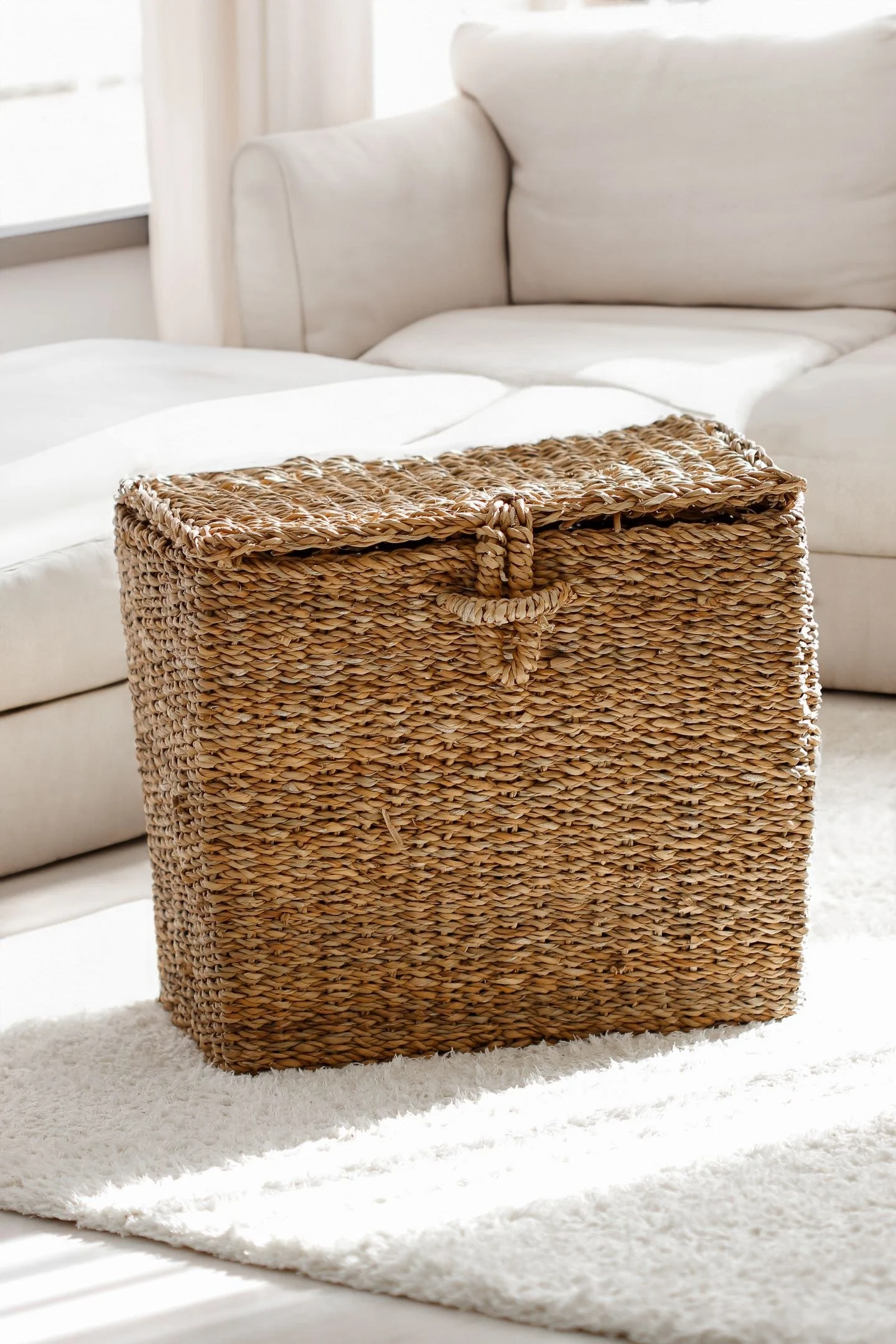
Keep storage functional. A rental room often benefits more from one well-sized closed cabinet than from several decorative baskets that leave contents exposed. Check furniture anchoring requirements and obtain any necessary permission for safe installation.
Before purchasing, rearrange what you own and live with it briefly. A chair moved away from a crowded window or a lamp brought to a reading seat may solve the main problem. Spend on the missing function after the layout is clear. The room will feel more personal through a few considered choices than through a collection of temporary coverings bought to hide it.