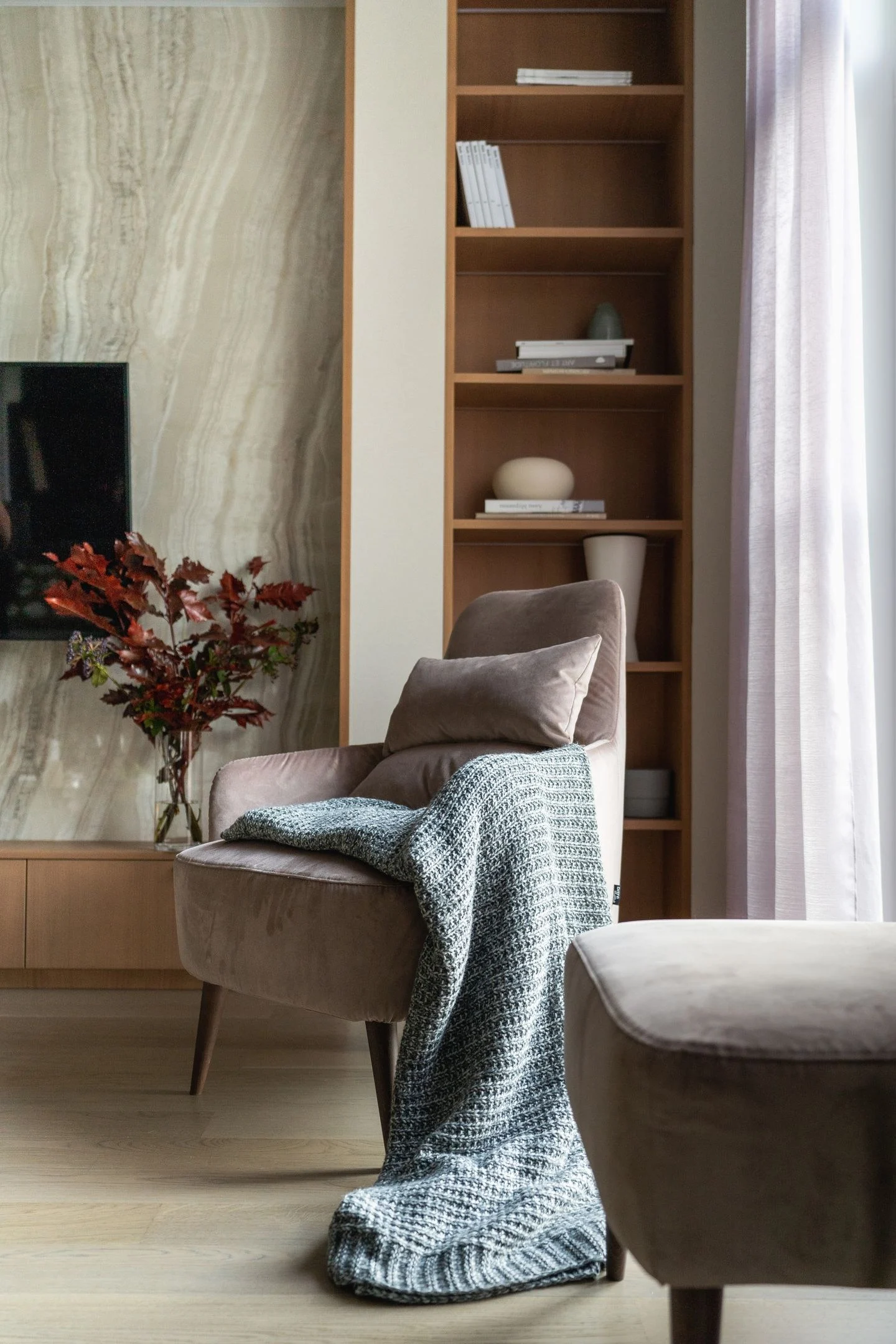
A reading corner can share the living room without becoming a separate miniature room. It needs a comfortable seat, light on the page, and somewhere to put the book when interrupted. A decorative chair in an unused gap is only the beginning.
Locate the quiet edge
Look for a position just outside the main conversation group, with a view back toward it. A chair angled away slightly can feel private when one person is reading and still join the group when guests arrive. Avoid the main route to the kitchen or a place where someone must walk between the chair and its lamp.
Use the chair's full dimensions when planning. A reading position may involve elbows resting on arms or feet extending forward, so the occupied footprint is larger than the outline of the base. A swivel chair needs additional space to turn without hitting the wall or table.
Choose support for the way you read
Reading a heavy hardcover upright asks different things of a chair from looking at a tablet while curled up. Try the posture you actually use. Room & Board's accent-chair guide distinguishes seat depth, height, and cushion feel; these are worth comparing separately instead of choosing by the width alone.
An ottoman can be welcome, but it should not close the route into the seat. A small movable footstool may serve better than a large matching piece. If you need a table, place it on the side where your hand naturally reaches, not merely in the corner that looks symmetrical.
The lamp should illuminate the page without shining directly into your eyes or reflecting sharply off a screen. Adjust its position while seated, and check it after dark. Follow the fixture's bulb and electrical instructions, and route the cord away from foot traffic and moving furniture.
Keep the collection small
One current book and a few next reads can live beside the chair. The full library does not need to gather around it. A small shelf or table drawer can hold reading glasses and a bookmark without creating a stack on every surface.
Listen as well as look. If the television dominates the room, this may be a good place for short reading sessions but not concentrated study. Furniture placement cannot fully separate competing sound. A reading seat in another room may be more useful than an elaborate nook beside a loud screen. Let the intended use decide how much furniture the corner earns.