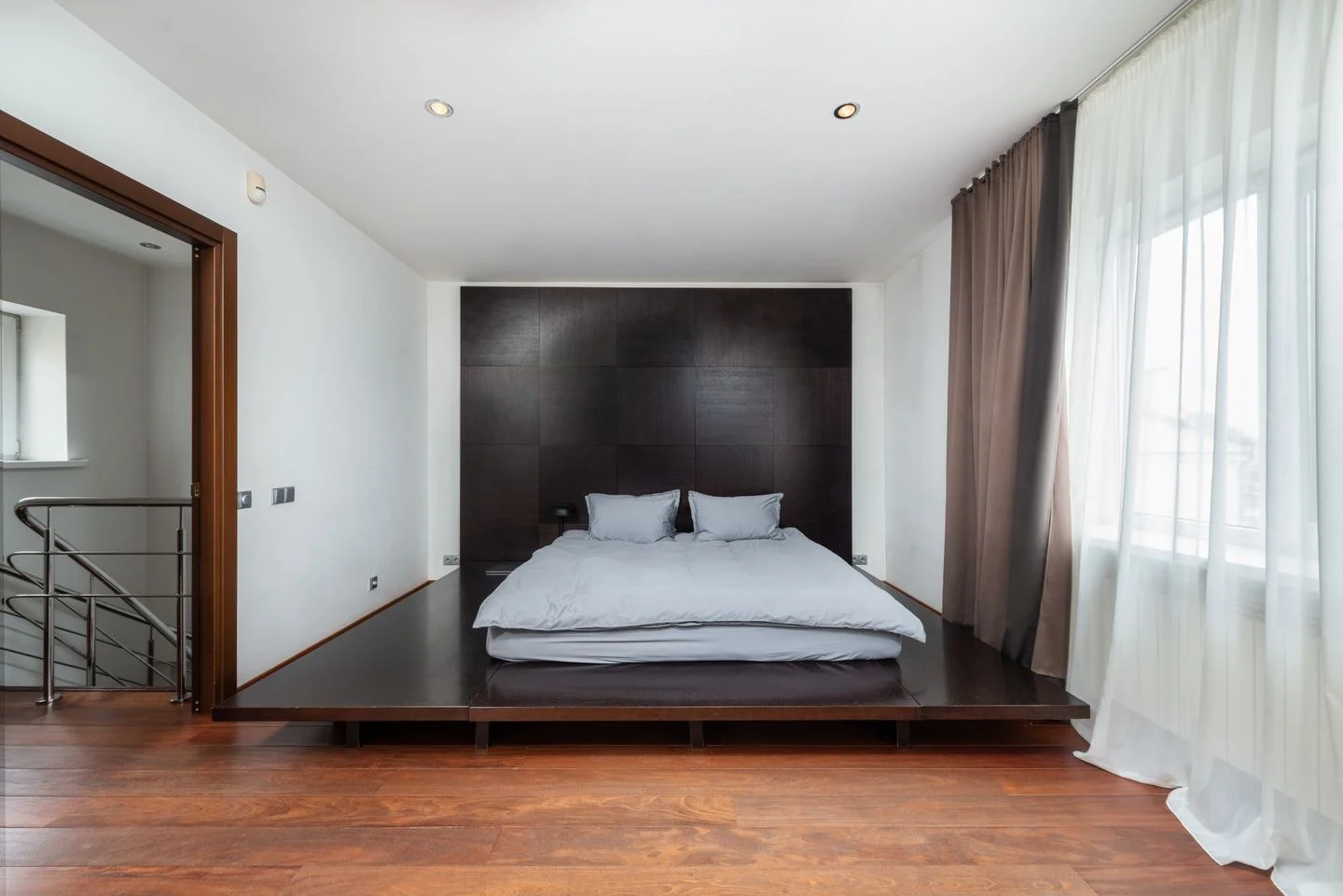
A platform bed and a bed with legs are not necessarily opposites. Platform describes a mattress-support arrangement, while legs describe how the frame meets the floor. A platform bed can have visible legs, a recessed base, or a solid-looking surround. Compare the actual construction rather than relying on the style label.
Check what supports the mattress
Read both the bed and mattress requirements. Slat spacing, center support, weight limits, and compatibility can vary. A frame that supports one mattress correctly may not suit another. Room & Board's platform-bed instructions, for example, describe a specific support assembly; they should not be generalized to every platform bed.
Do not add a box spring, plywood sheet, or alternative support without checking the manufacturers' guidance. An improvised change can affect height, ventilation, and performance. Confirm what is included with the frame before comparing prices.
Consider the finished sitting height
Add the mattress and any permitted foundation to the frame height. Sit on a similar combination if possible. A low frame may look appealing but be awkward for someone who finds rising from low seats difficult. A high mattress on a legged frame can have the opposite problem.
Measure bedside furniture against the final mattress top, not the bare rails. The bed's relationship to lamps, windows, and a headboard changes with that total height.
Look underneath and around the edges
Visible legs can leave more floor in view and allow cleaning beneath the bed. Check the actual clearance against your vacuum or cleaning tools, including the center supports. A recessed base may hide dust but can still require access around its perimeter.
Under-bed storage needs a usable opening, not merely empty space. Measure boxes with their lids and handles, and make sure they can be removed past bedside furniture. Built-in drawers require their own operating space. A lifting base should be used only according to its mechanism and safety instructions.
A broad platform edge can add character but also project into a narrow route. Include that edge in the floor outline, especially around the foot where people turn. Upholstered surrounds may be softer to touch, but they need appropriate cleaning and are not a reason to ignore circulation.
Choose the frame that supports the mattress correctly and works with the room's daily use. The visual effect—floating, grounded, open, or upholstered—can then refine a decision that is already comfortable and functional.