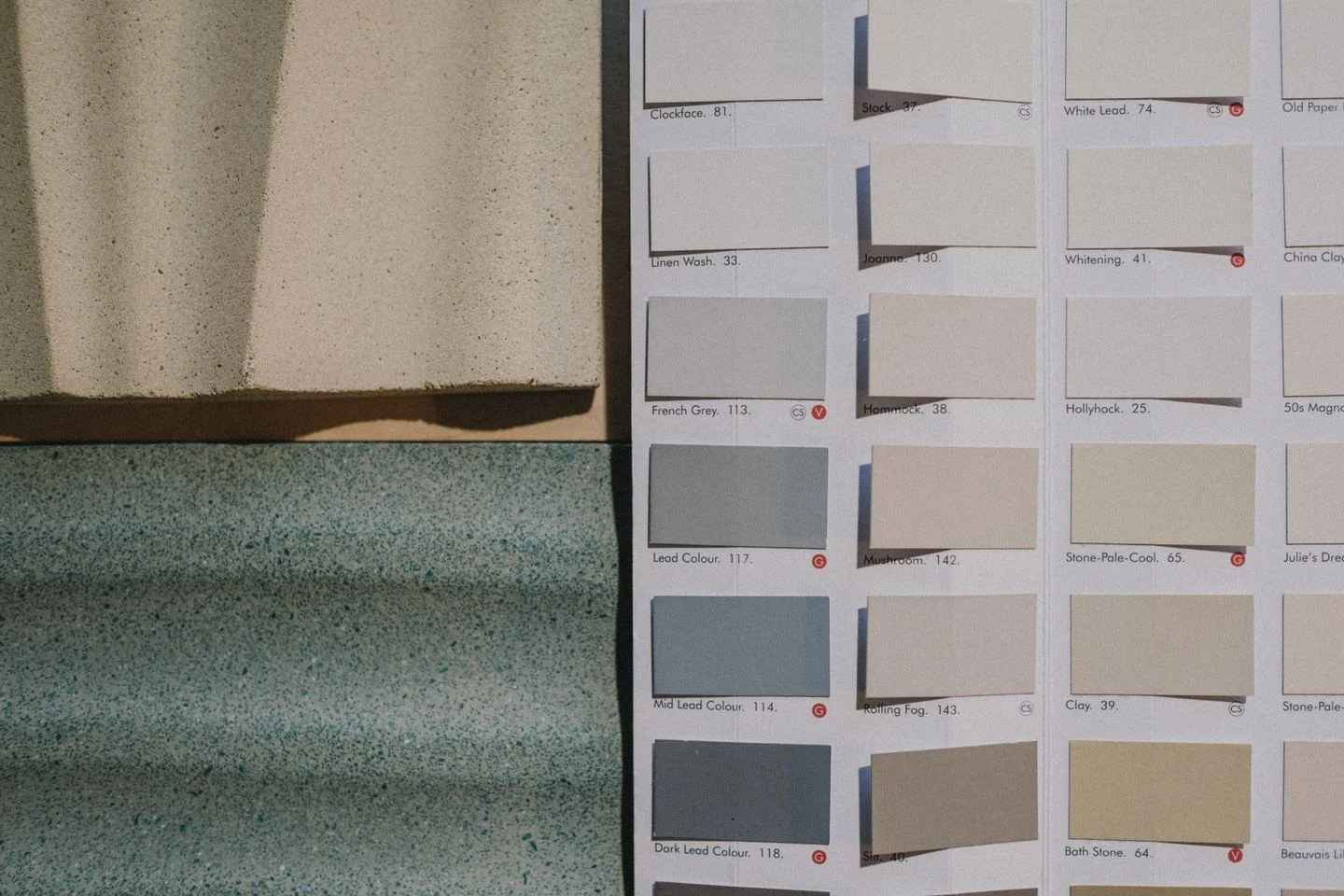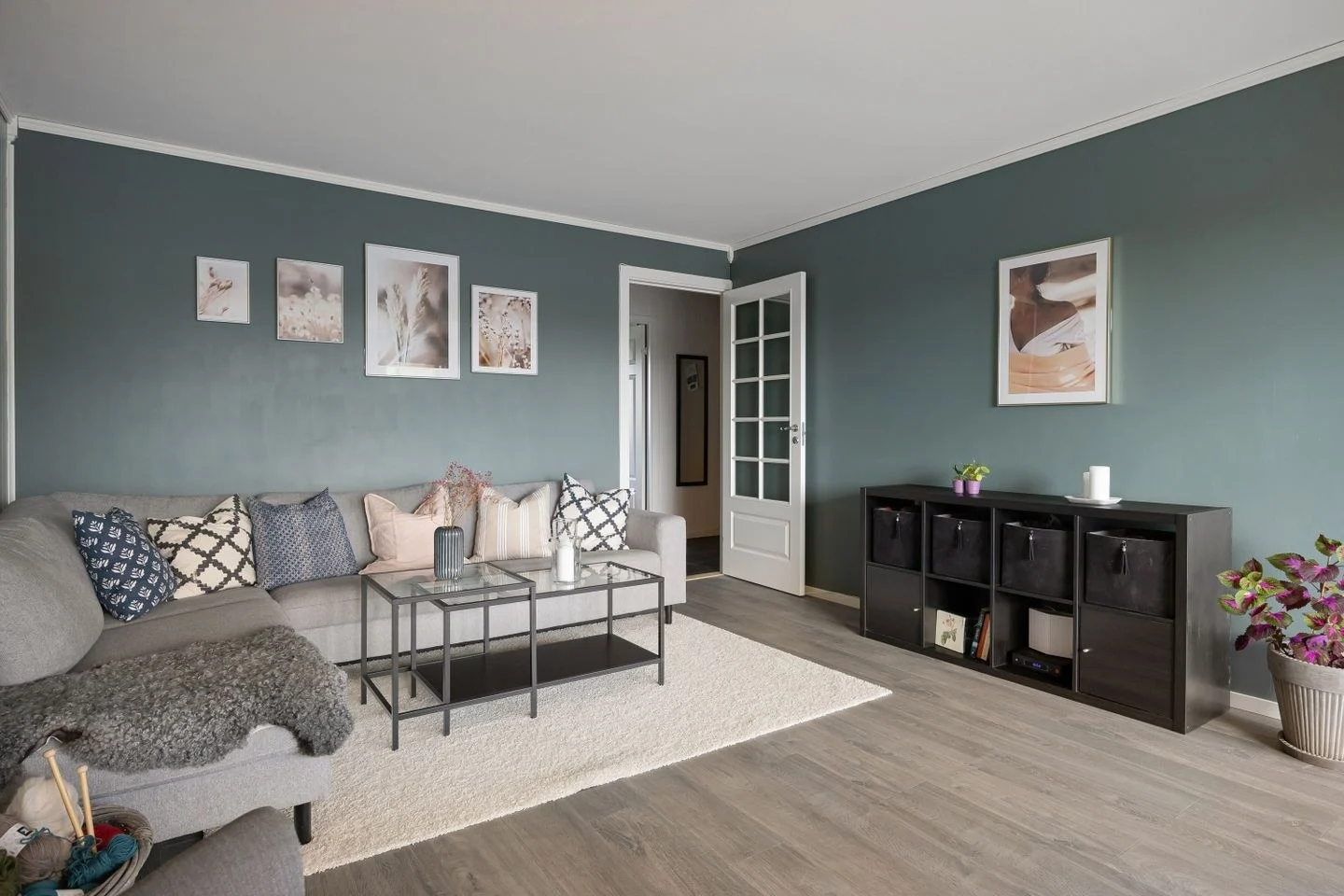
Neutral does not have to mean beige. A room built from chalk white, charcoal, weathered wood, and stone can remain restrained while having a clear personality. The key is to choose a small group of compatible surfaces rather than collecting everything sold under the neutral label.
Start with the permanent material that has the most presence. A gray floor, dark fireplace, or pale wood cabinet can guide the room more effectively than an abstract color chart. Decide whether you want to soften that material, repeat it, or contrast with it.
Build a range of values
Use a light surface, a middle tone, and a darker anchor. For example, chalk walls, a gray-brown sofa, and blackened wood tables create a readable sequence. The room can then gain texture through a woven rug and a smooth ceramic lamp without needing additional colors.
If every large surface is pale, consider one substantial darker piece rather than many small dark accessories. A chair or cabinet can organize the view more clearly than a collection of little objects distributed around the perimeter.
Keep undertones visible
Gray, white, and brown can lean warm or cool. Compare them in the room rather than assuming that two neutrals will automatically agree. A pinkish gray beside a greenish gray may create more tension than a definite gray beside a warm wood. Benjamin Moore's neutral guidance encourages this side-by-side comparison.
Metal and glass also belong in the palette. A brushed metal lamp can provide a cooler highlight, while clear glass may reveal the colors behind it. Do not count them as visually absent simply because they are not painted.
A neutral room benefits from meaningful shapes: a curved chair against a rectangular cabinet, a broad rug under slender-legged furniture, or one large artwork on a quiet wall. Form can provide the interest that a more colorful room gets from hue.
When reviewing the result, ask which surface is doing each job. If several objects provide the same small accent, remove a few. If the major pieces merge together, adjust contrast. A restrained room becomes richer through clear relationships, not through the addition of another nearly identical neutral.