Windows, doorways, and open connections can leave a living room with just one uninterrupted wall. Instead of trying to place every substantial piece against it, decide which function truly needs that wall and let the seating occupy the floor more freely.
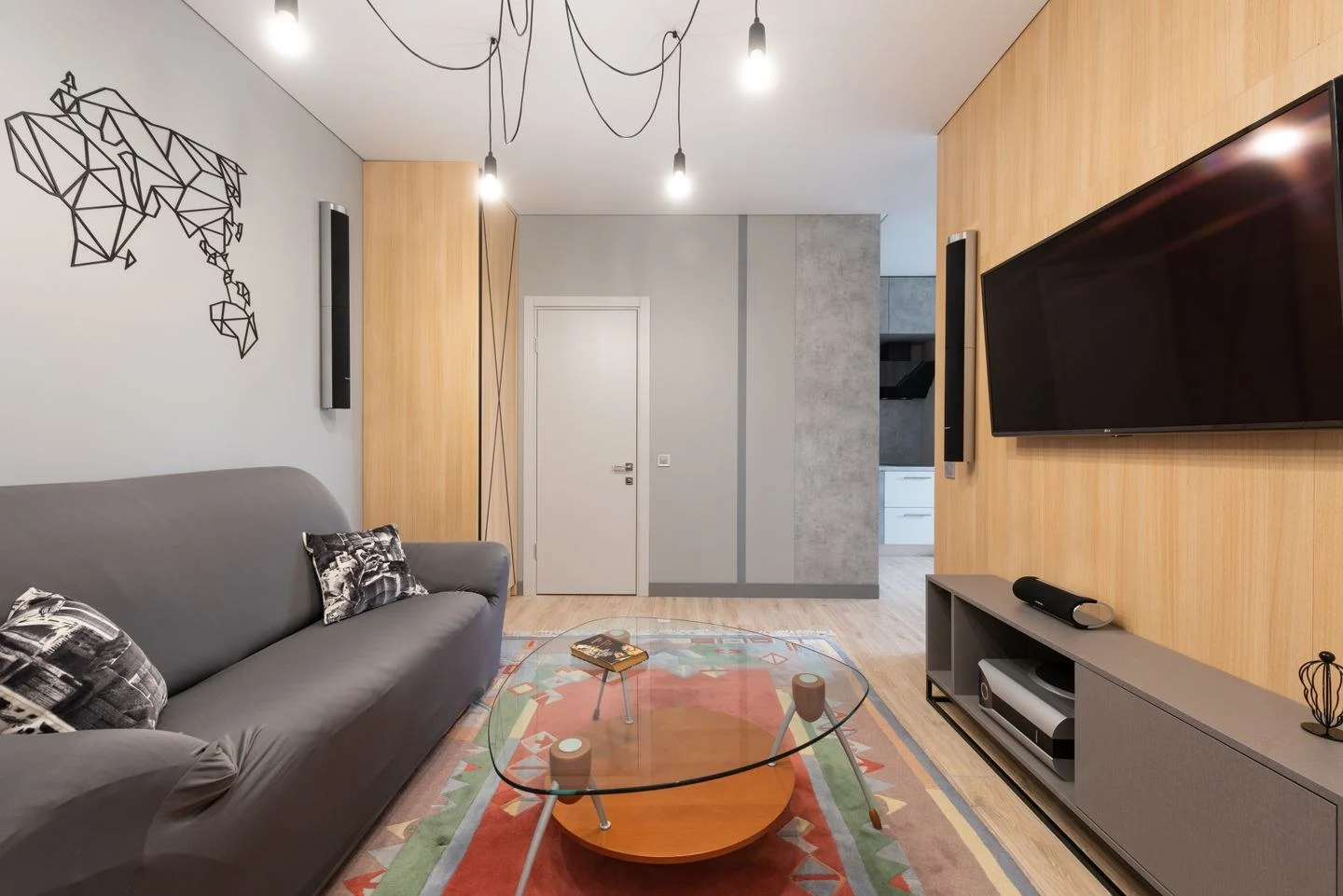
If you use a television, the available wall may be the most sensible location for it and its cabinet. If you do not, it may be better used for books or one large artwork. The sofa does not automatically have the strongest claim. Putting it there can force everything else into less workable positions.
Try a sofa perpendicular to the wall
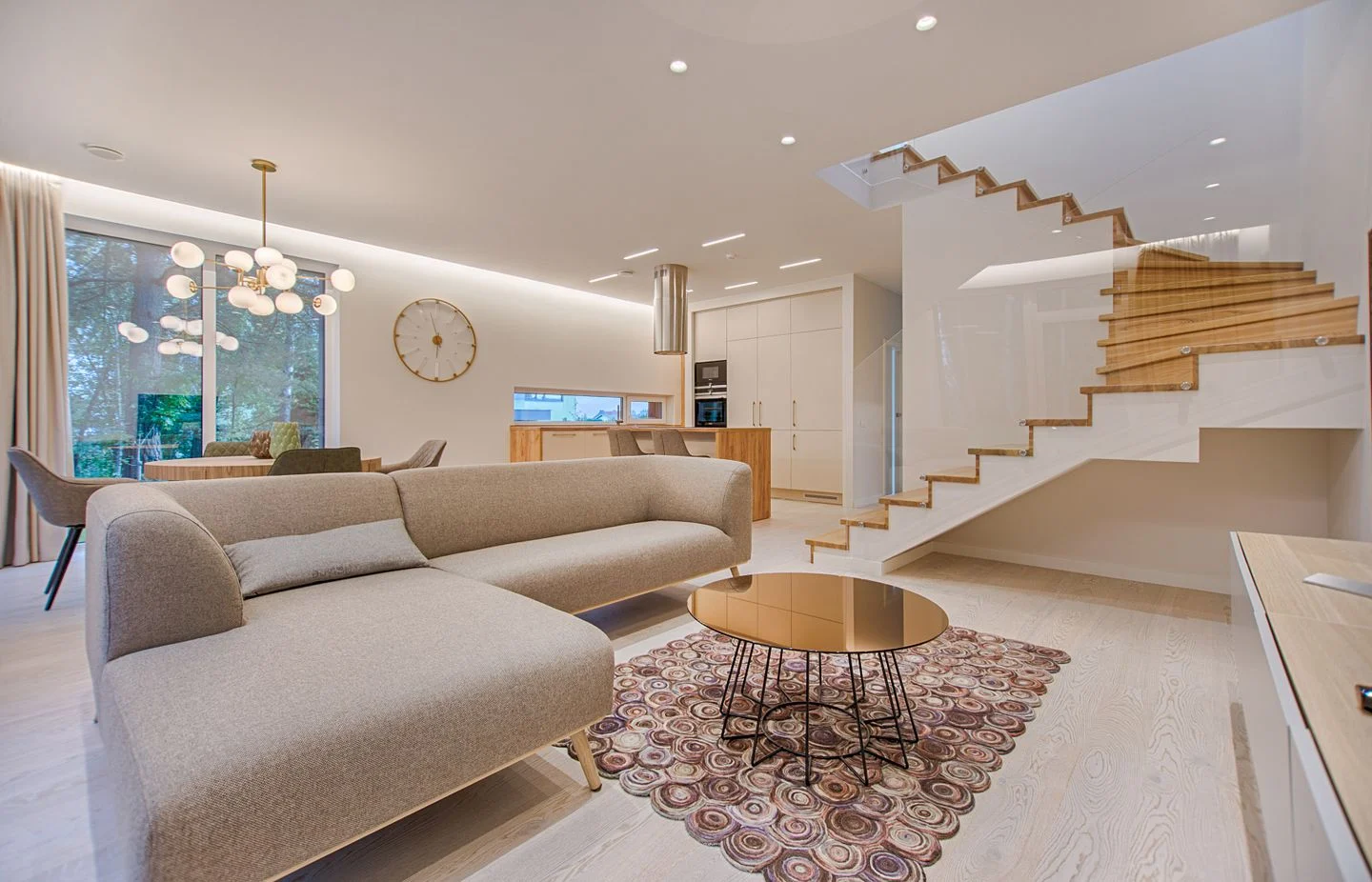
A perpendicular sofa can face a view while leaving the solid wall for storage. Its back defines one side of the seating area, and a chair opposite completes the group. Check the route around both ends of the sofa before adding a table behind it.
A sofa facing the wall is another option when the wall holds media. Keep the route through the room behind the sofa if possible, so people do not continually cross between seats and screen. If this produces a cramped passage, consider a smaller sofa or a pair of chairs instead of shifting every other piece into the windows.
Look at the backs of furniture before buying. Freestanding pieces are seen from more directions, so unfinished panels, exposed stapling, or untidy cables become more apparent. This is especially relevant for storage units borrowed from another room.
Make the windows usable
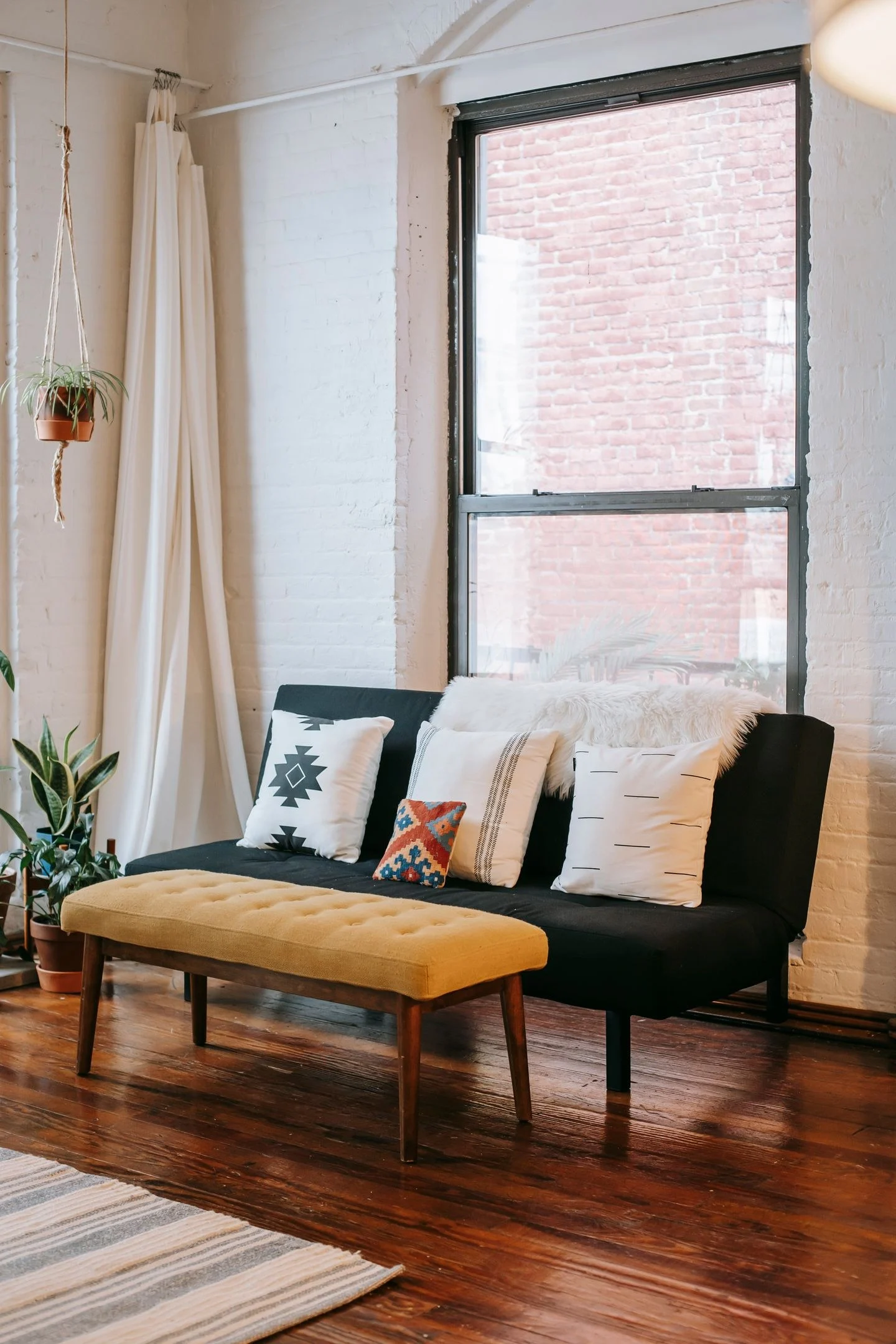
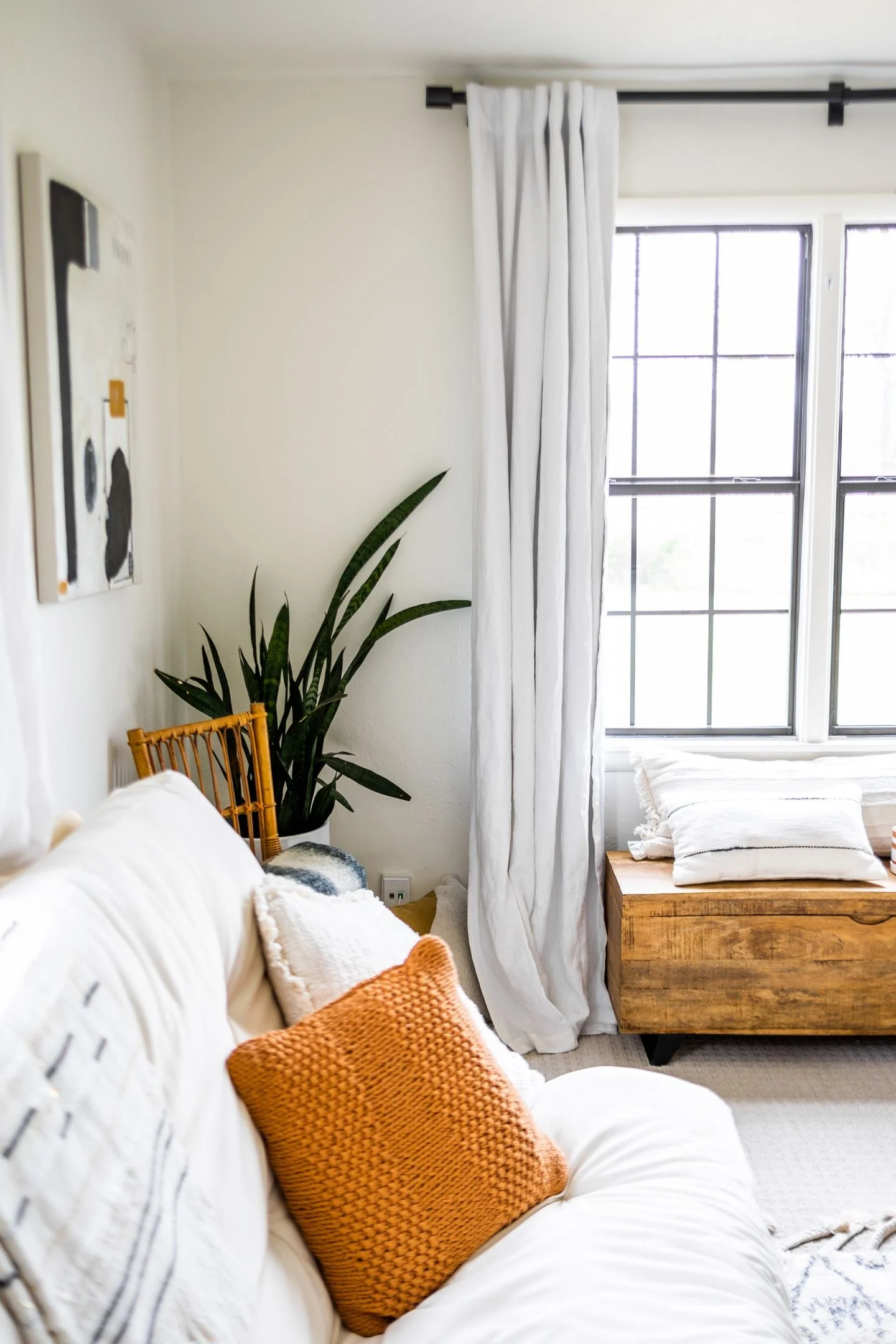
A low chair or bench can sit near glass if it does not obstruct operation, required escape routes, heaters, or window coverings. Keep the manufacturer's clearances for heating equipment. Do not let a visually light piece become a physical obstacle just because you can see through its legs.
If the only wall contains an outlet, a floating lamp may be difficult to power safely. Favor lighting positions that use existing outlets without crossing circulation. A suitable cordless lamp may help for occasional use, but check its brightness and charging routine rather than assuming it will replace a reading light.
Keep supporting pieces modest
One central table and a reachable side table may be enough. A full collection of matching end tables, consoles, and cabinets can overwhelm a room whose boundaries are already busy. Choose storage according to what must stay here, and let other rooms carry occasional-use items.
Stand at each entrance and look for a clear invitation into the seating group. If a sofa back blocks the approach completely, move it or create a wider opening at one end. The strongest layout is not necessarily centered on the architecture; it is the one that gives the room an understandable route and a comfortable place to settle.