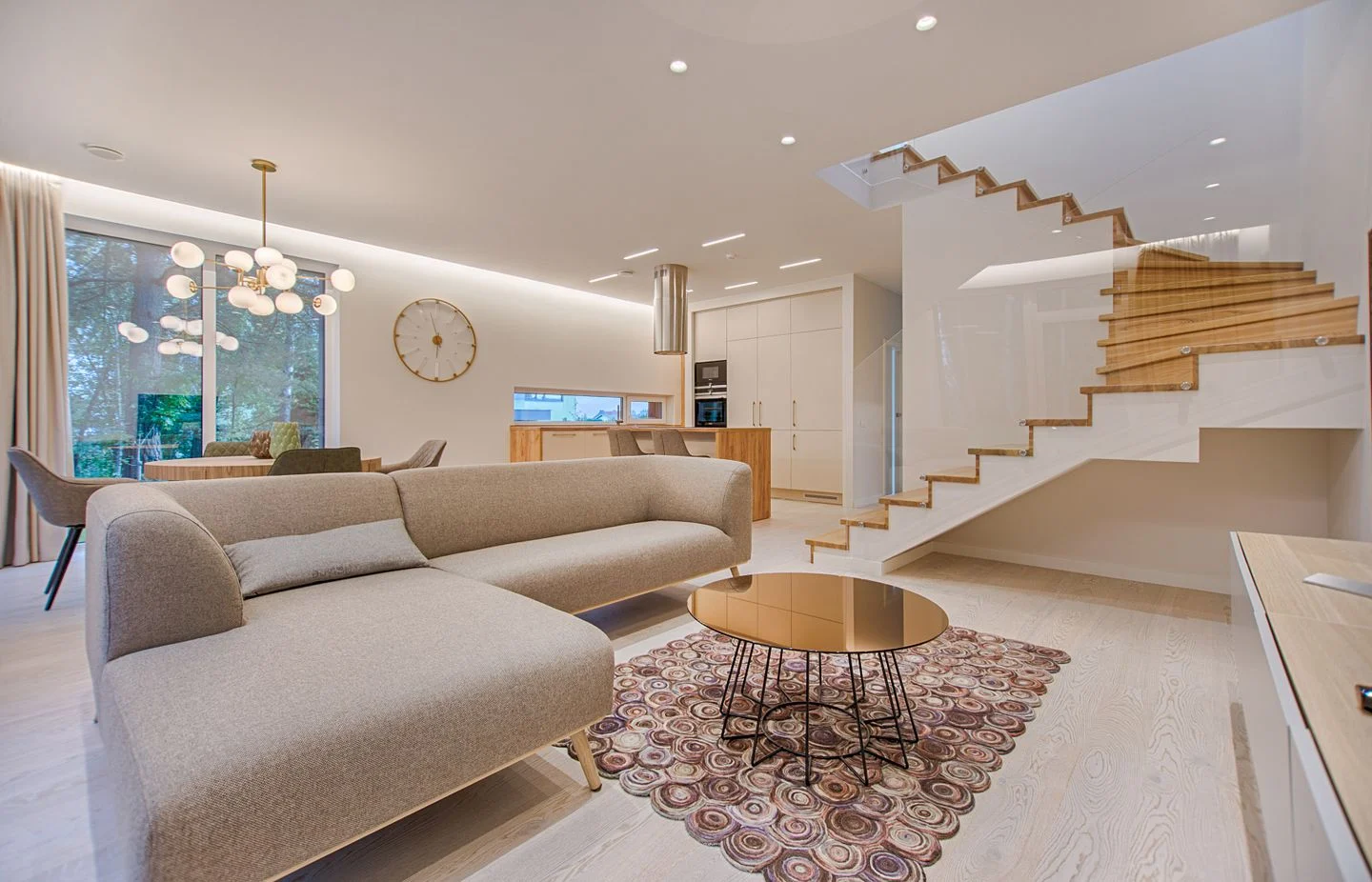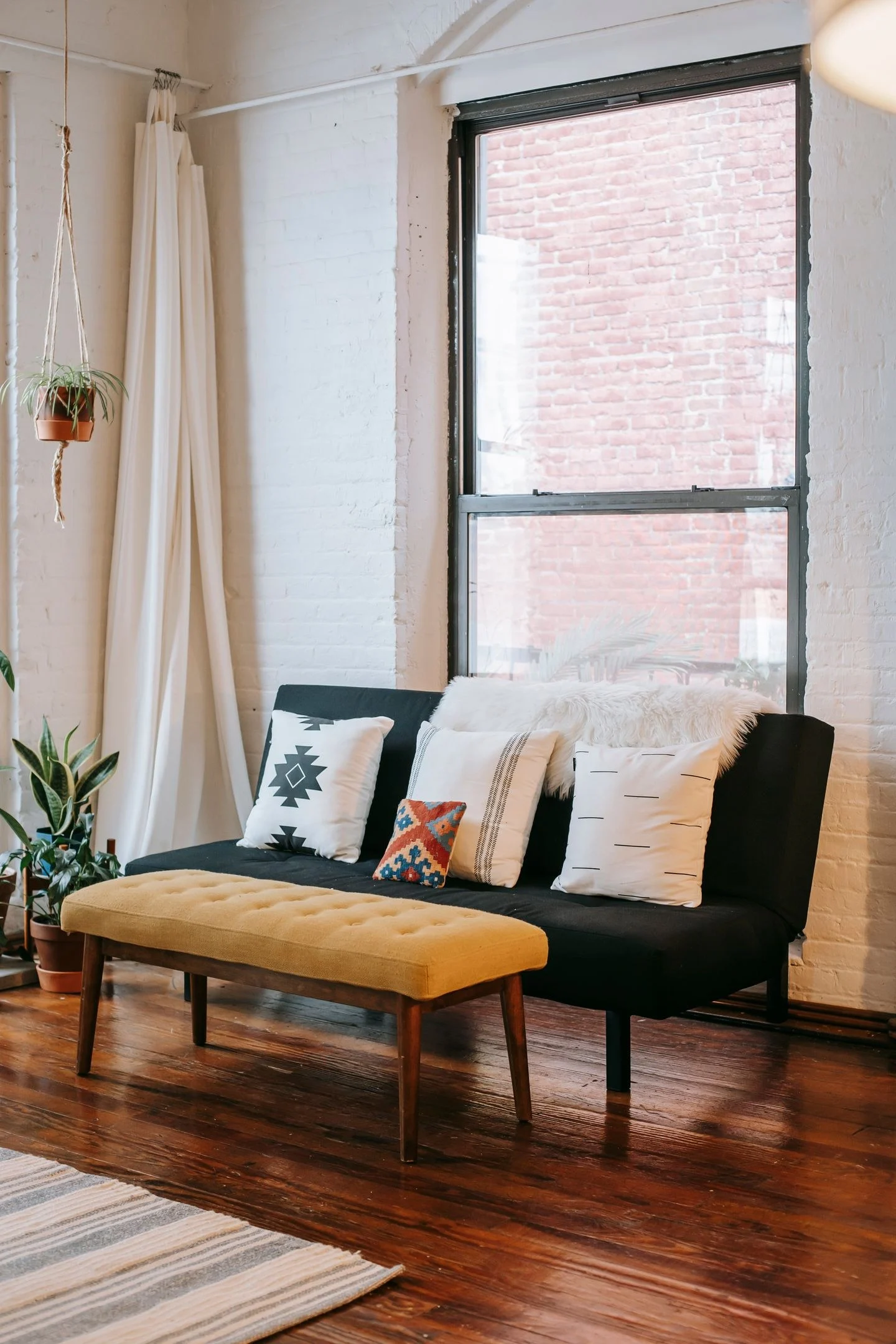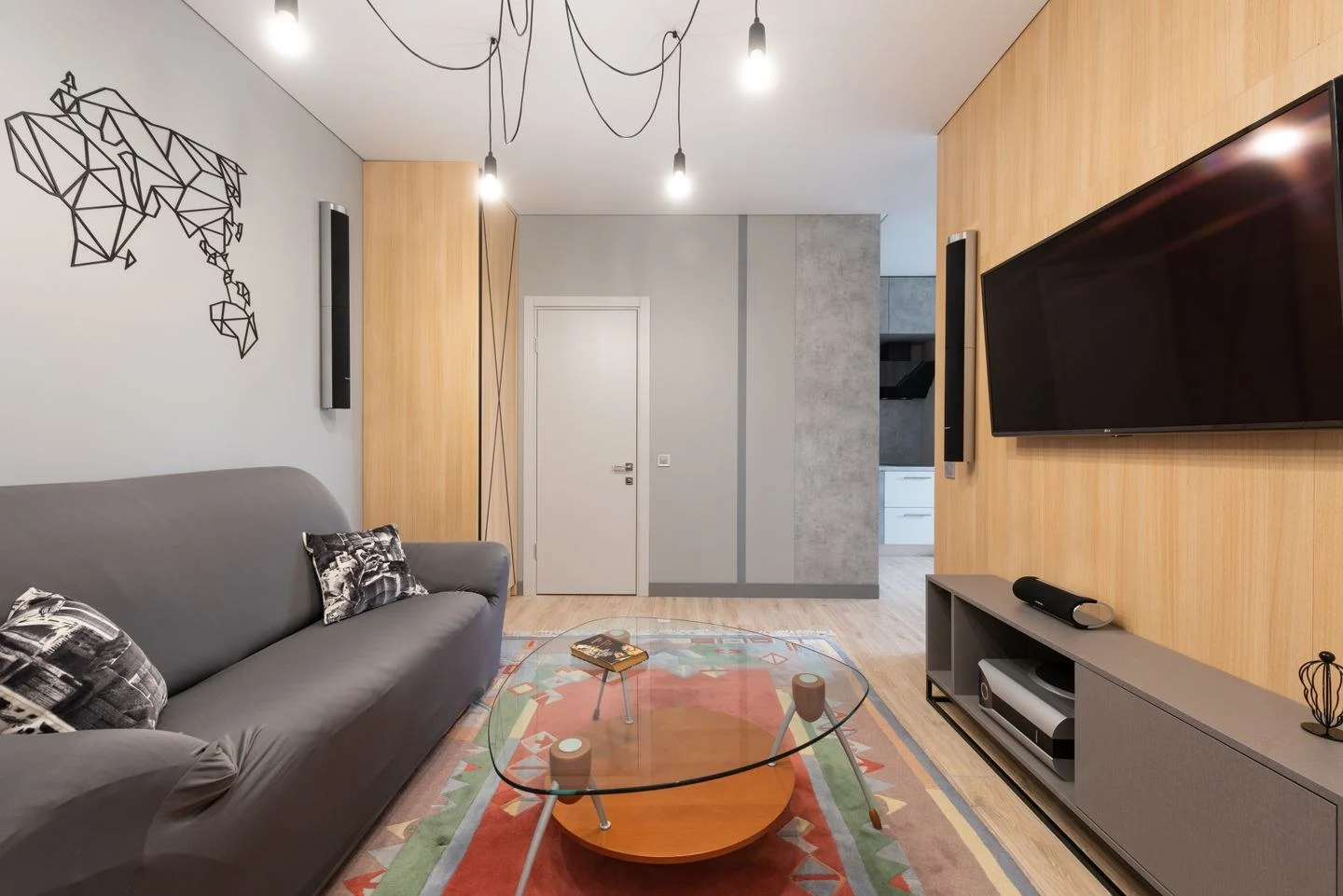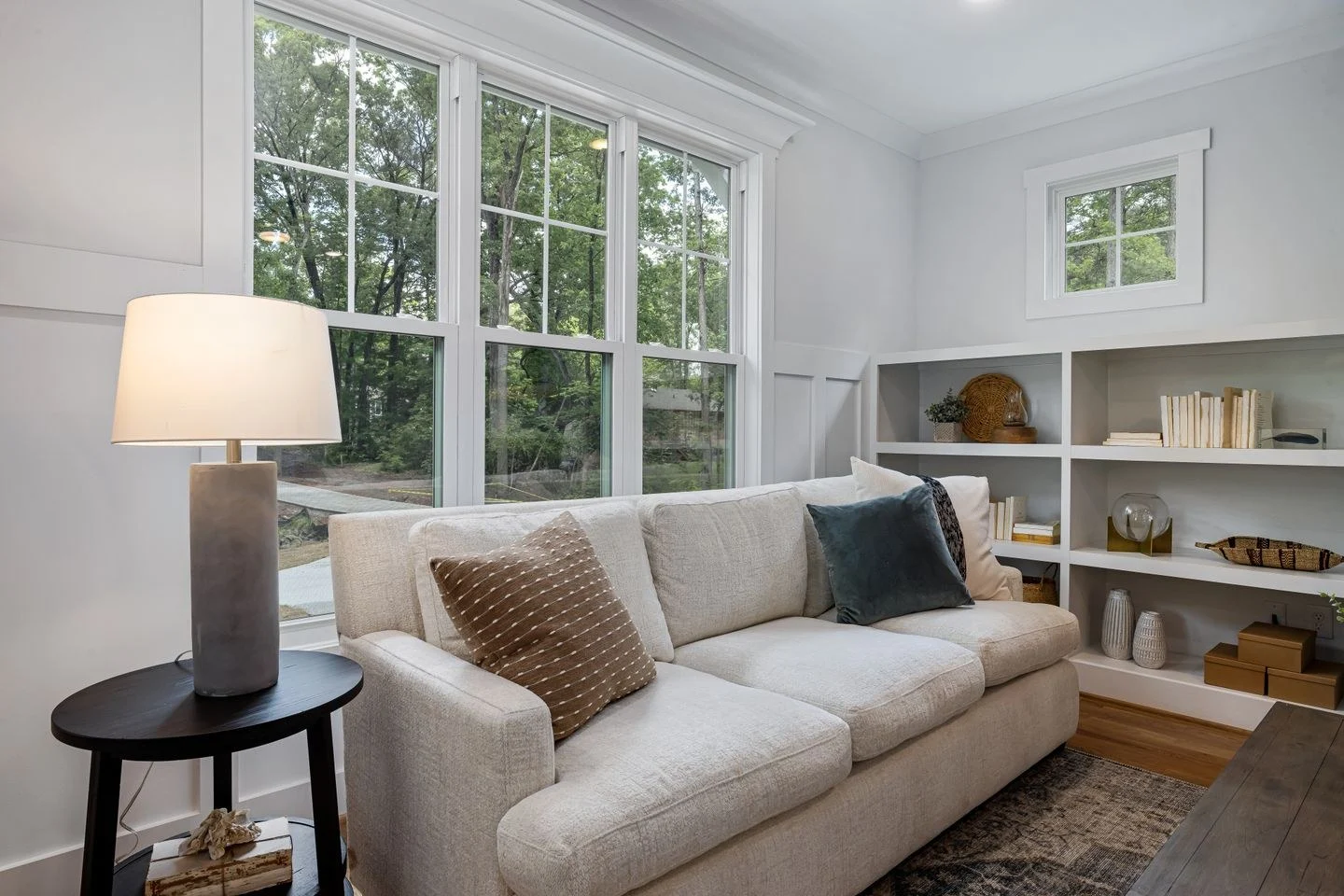
Put the shopping list aside for one afternoon and look at the living room as a set of movable parts. The sofa may still be right; the chair may simply be in the wrong place. A refresh can begin with a different arrangement rather than a new purchase.
Remove the small distractions first
Clear decorative objects, cushions, and loose stacks from the main surfaces. Keep essential equipment connected safely and set fragile items aside. This lets you see the furniture's outlines and the amount of open floor. Photograph the room before moving anything so you can compare changes or restore the original layout.
List three frustrations in ordinary language: the reading lamp is too far away, the chair blocks the window, or the coffee table is hard to reach. A successful refresh should address those frustrations. Replacing the cushions will not solve a blocked route.
Test one substantial change
Rotate the main seating orientation if the room permits, or move the chairs closer to the sofa. Try the coffee table in a slightly different position. Work with safe lifting help and protect the floor appropriately; do not drag heavy furniture by delicate arms or legs.
Check doors, drawers, and walking routes after each change. A layout can look more spacious while making storage unusable. Include reclining furniture and the space needed to sit down, not only the furniture's closed footprint.
If one piece remains awkward in every arrangement, try it in another room temporarily. You may discover that the living room needs fewer items. A side table from a bedroom or a small cabinet from a hall can also solve a specific problem, provided it suits the intended use and does not create a new problem elsewhere.
Reintroduce color and light selectively
Return the lamps to places where they serve reading, conversation, or general evening light. Keep cords out of circulation. A lamp that was previously decorative may become much more useful beside the chair people actually choose.
Add textiles in small groups and keep enough seating surface clear. Try repeating one existing color in two places, such as a cushion and a throw, rather than introducing several new accents. Rotate artwork if the wall arrangement no longer relates to the furniture below it.
Live with the edited room for a few days. Write down any remaining need precisely: a narrower table, a lamp with a more adjustable head, or storage for a particular collection. A focused list makes the next purchase more likely to improve the room. The pieces you keep will also be easier to appreciate when their placement supports the way you live.