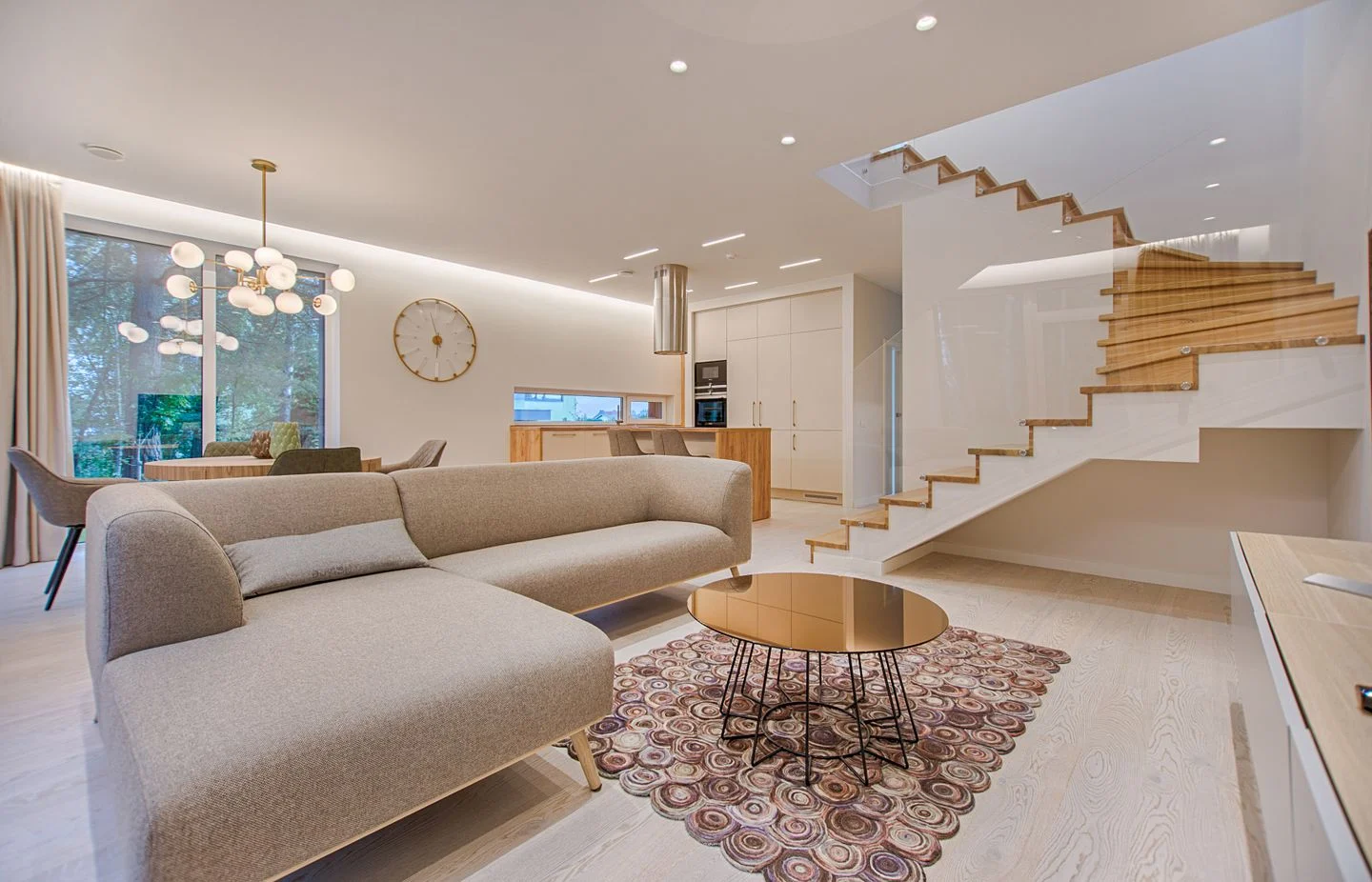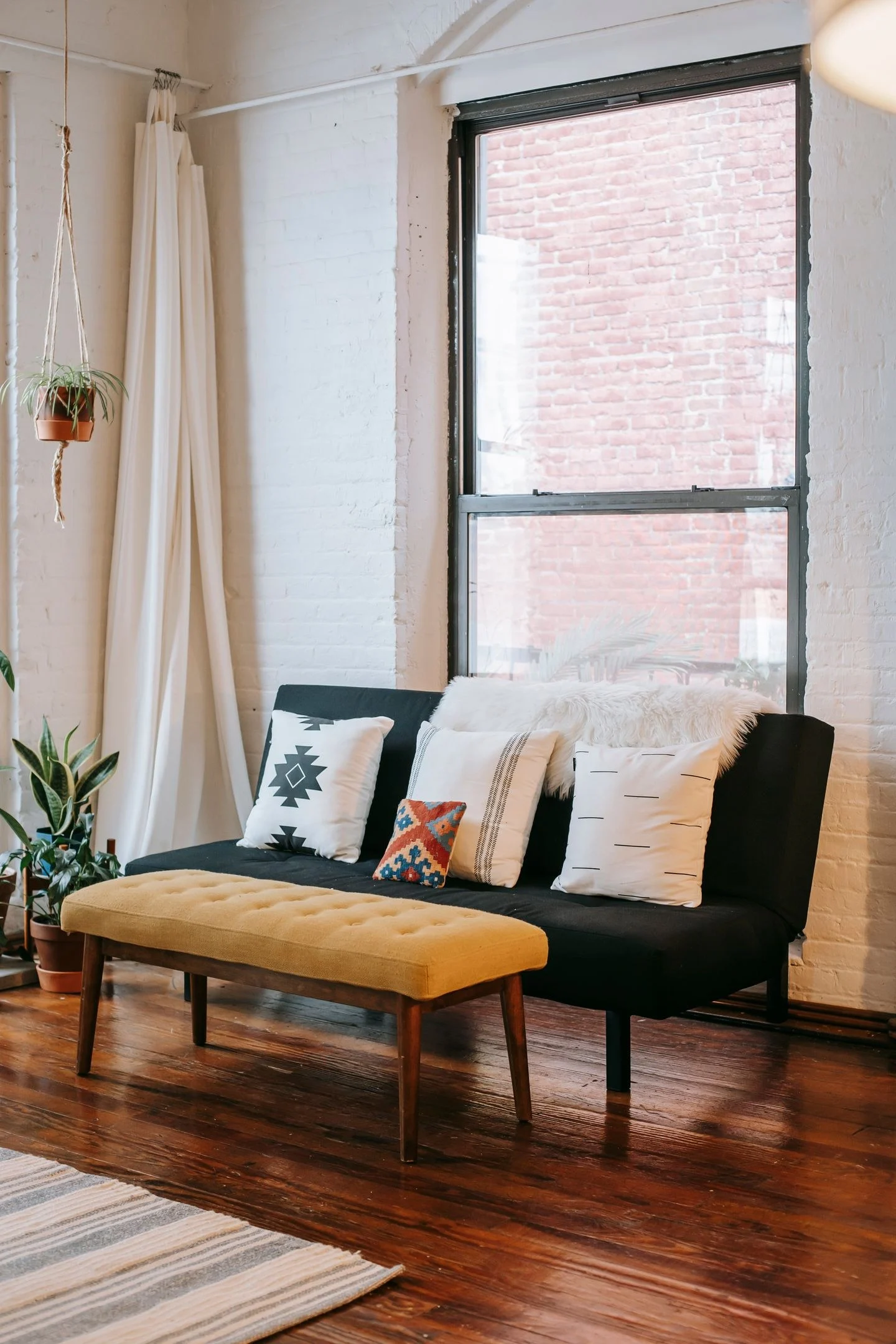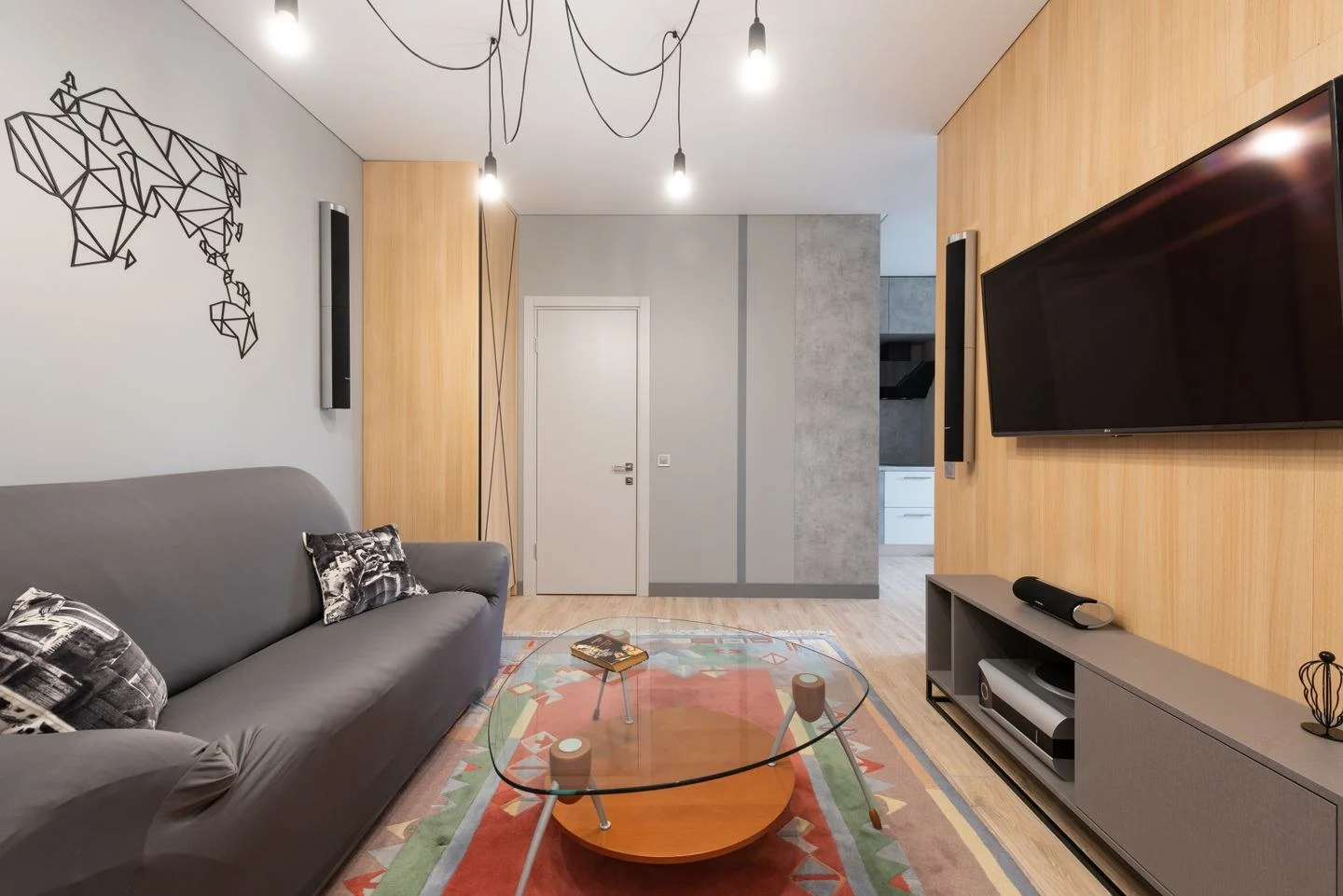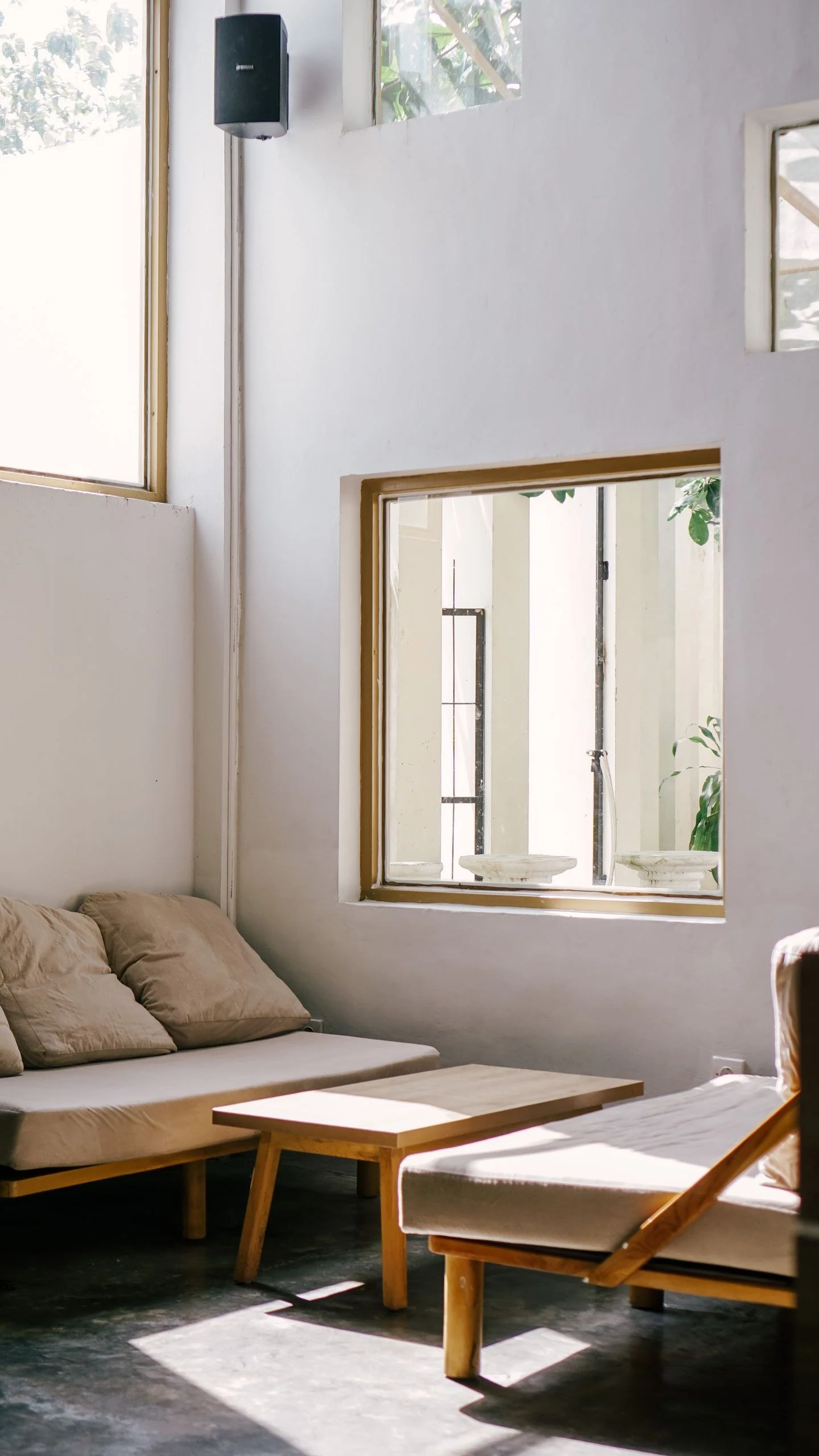
Without a television, the question changes from where everyone should look to what everyone should be able to do. Conversation, reading, music, and watching the garden can share a room without one oversized feature taking charge.
A useful starting point is two seats facing each other at a comfortable conversational distance. They could be a sofa and two chairs, a pair of small sofas, or four chairs around a central table. The best arrangement depends on how many people gather regularly and whether anyone likes to lie down.
Let a view participate
If the window is the main attraction, avoid turning every chair away from it. A sofa perpendicular to the window and a pair of chairs opposite can let people glance outside without arranging the room like an audience. Swivel chairs offer another option when both the view and conversation matter.
Check the window in the evening too. A bright daytime view becomes a dark reflective surface after sunset. Lamps near the seating and appropriate window coverings help the room retain its focus then. Keep any lamp cords out of walkways and away from moving chair bases.
Give hands somewhere to land
A television-free layout often has more seats facing inward, making the central table especially useful. Try reaching a cup from every position. If one seat is stranded, a small side table may solve the problem without increasing the size of the coffee table.
Choose a table according to the activities you expect. A broad surface suits a shared board game, but a fragile display arrangement will have to move each time. A low upholstered ottoman suits feet better than a puzzle. You can combine a footstool with small hard tables instead of asking one piece to do everything.
Make room for the quieter seat
Not every chair needs to be part of the main conversation all the time. Place a reading chair at the edge of the group with a light that reaches the page and a nearby shelf or table. It should feel connected when guests arrive and useful when only one person is home.
For music, consider the equipment and listening habits before buying cabinetry. Follow the device manufacturer's ventilation and placement instructions. A shallow display console is not automatically suitable for an amplifier or a heavy collection of records.
An artwork, fireplace, or bookcase can provide visual structure, but there is no requirement to replace the television with an equally dominant rectangle. Try leaving the main wall relatively quiet and letting the furniture arrangement carry the room. Vary the heights of lamps and objects so the view does not become a continuous line of low surfaces. The room is finished when its activities have comfortable places, even if no single object commands everyone's attention.