White appliances can belong comfortably in a kitchen without every cabinet, wall, and accessory matching their exact shade. The difficulty usually comes from several almost-matching whites that reveal different undertones when placed together.
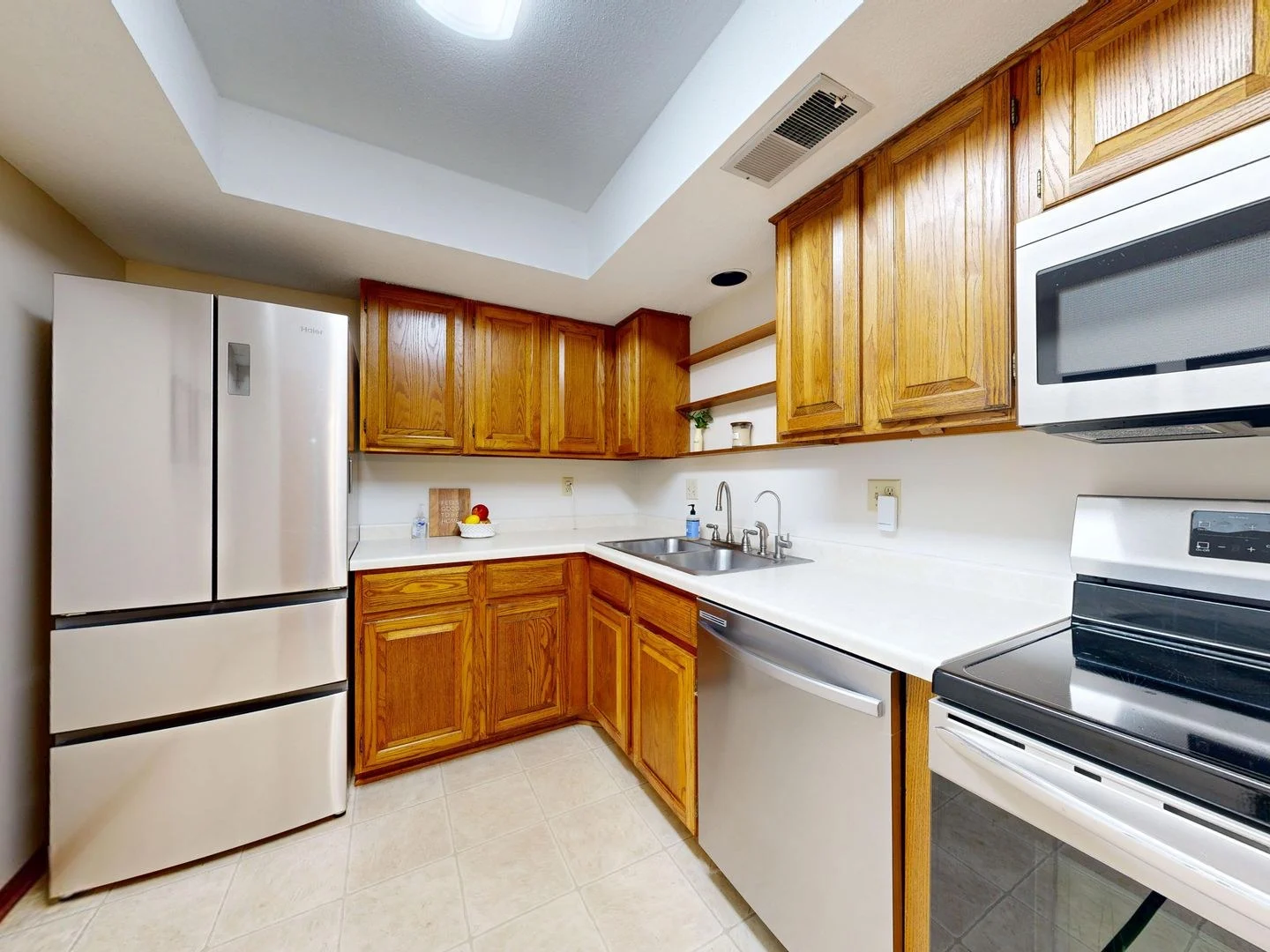
Look at the appliance finish beside the existing cabinets and countertop in daylight. Then switch on the kitchen lights. A refrigerator may appear cool and bright while an older cabinet paint looks creamy. Decide whether you want a close relationship or a clear contrast before choosing another white.
Make near-matches earn their place
If you are painting the walls, compare large samples beside both the appliances and fixed finishes. Benjamin Moore's sampling guidance emphasizes viewing color in the room under different conditions. A color that looks neutral on a screen may lean yellow or gray beside a glossy appliance door.
You do not need to repaint usable cabinets simply to eliminate every difference. A wall color with a more distinct tone—muted green, pale blue-gray, or a warm neutral, for example—can make the appliance white feel like one deliberate part of the palette. Test the actual combination rather than choosing by a color family alone.
Repeat white in useful places
A few white dishes on an open shelf or a simple white tile can connect the appliances with the rest of the room. Avoid buying decorative objects solely to duplicate the appliance color. Repetition is more convincing when the objects already have a purpose.
Wood can provide warmth between white surfaces. A dining table, shelf, or cutting board stored appropriately can introduce grain without requiring all cabinets to be wood. Dark hardware or lighting can add definition if the room otherwise feels visually flat.
Keep the fixed materials in the decision
The countertop and floor often occupy more visual area than the appliances. A busy stone pattern may call for quieter walls and textiles. A plain countertop can support more color elsewhere. Do not select cabinet hardware, wall paint, and a backsplash independently and expect the appliances to tie them together afterward.
Maintain required appliance clearances and ventilation when adding surrounding furniture or panels. Do not cover or alter an appliance simply to make its finish disappear unless the manufacturer explicitly supports that treatment. A coherent kitchen can acknowledge the appliances as working objects and use the room's other materials to give them a natural setting.