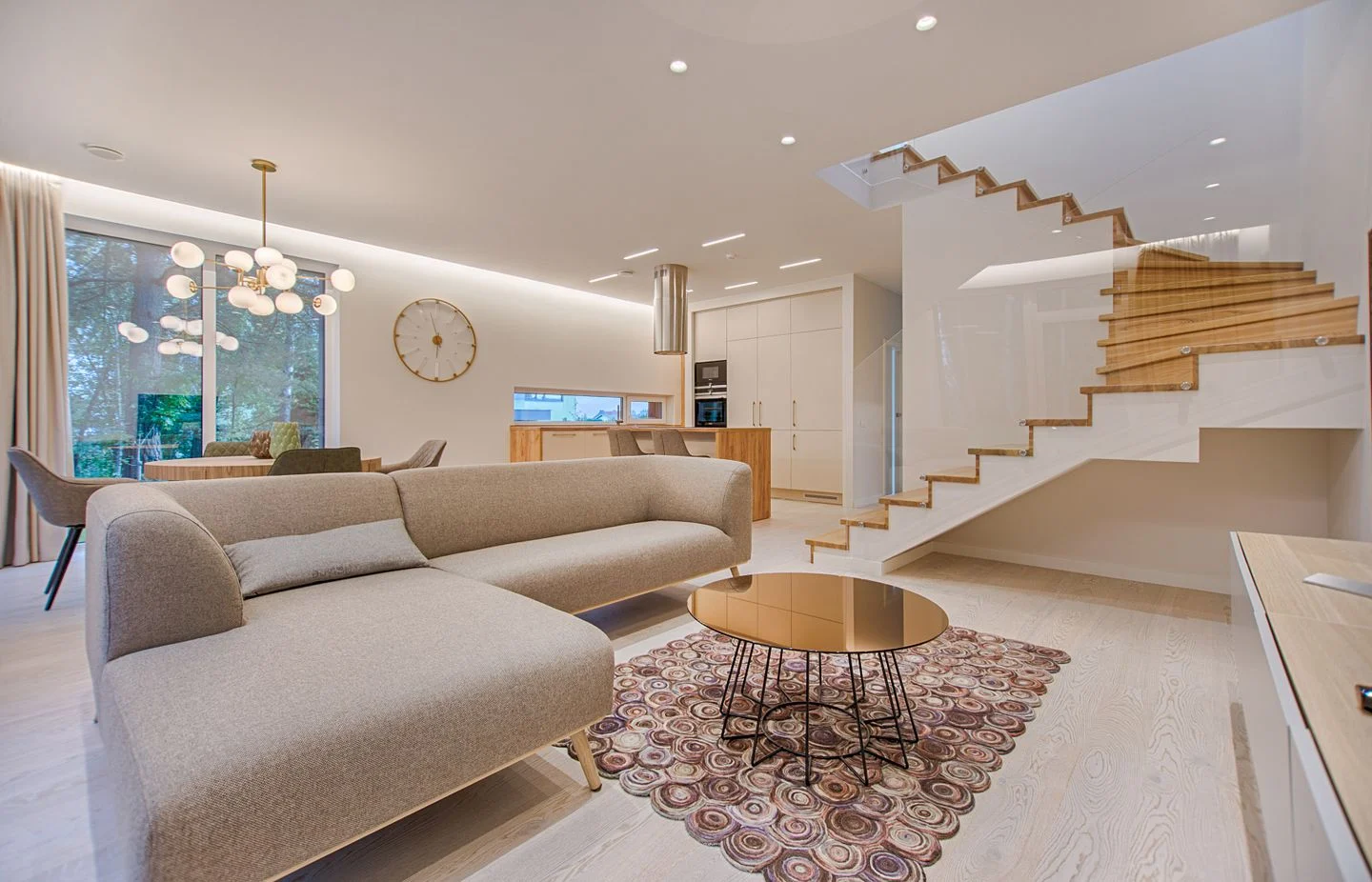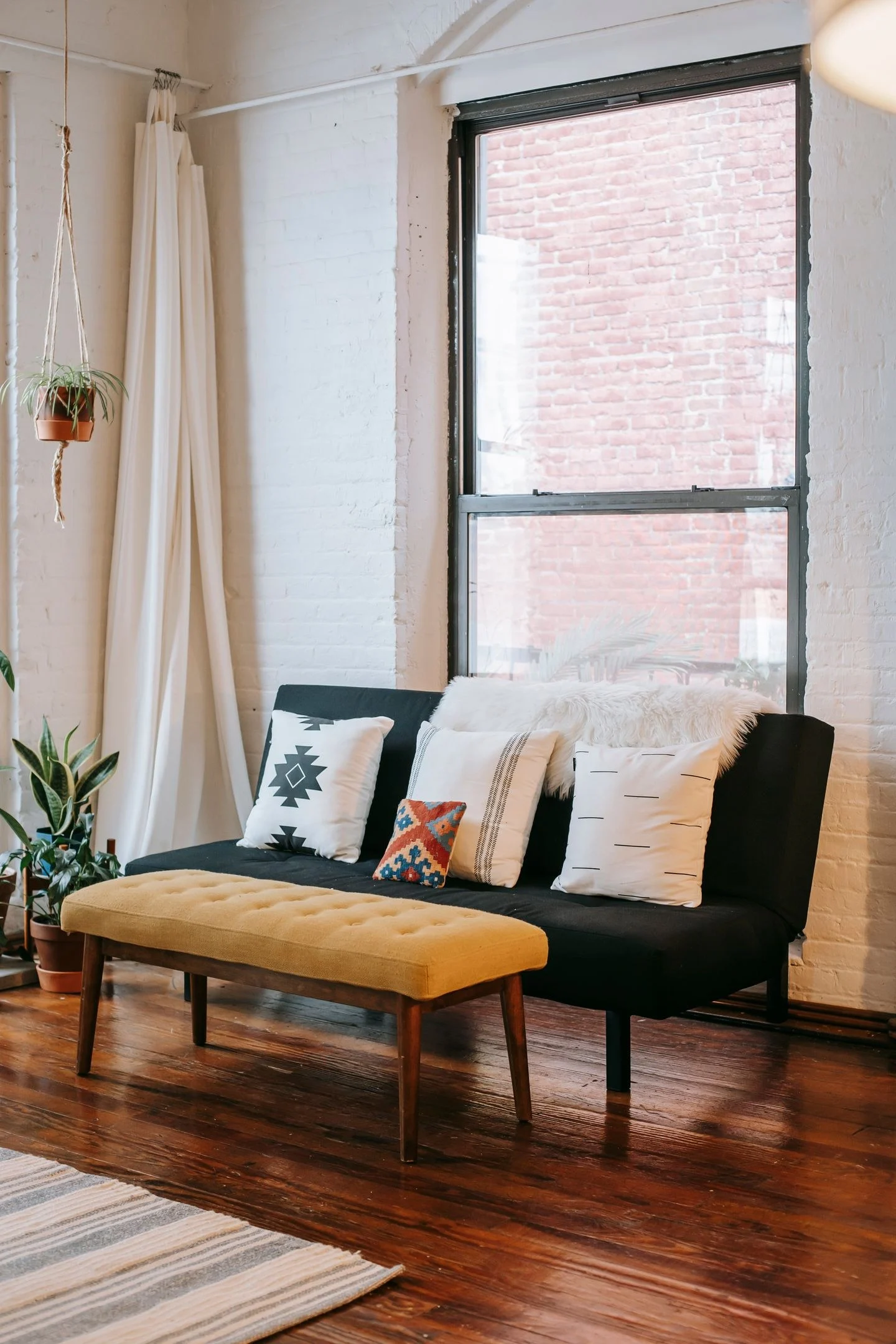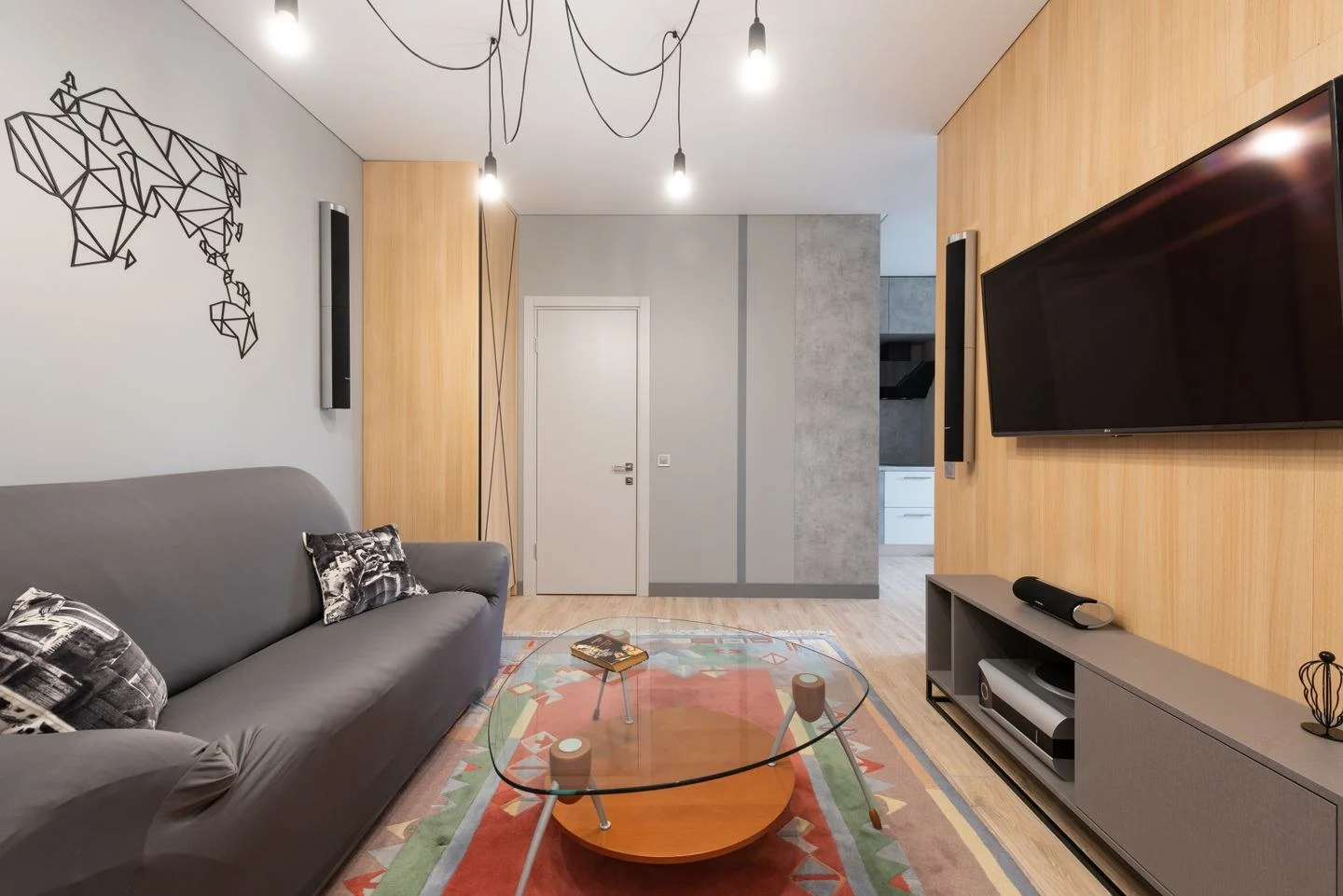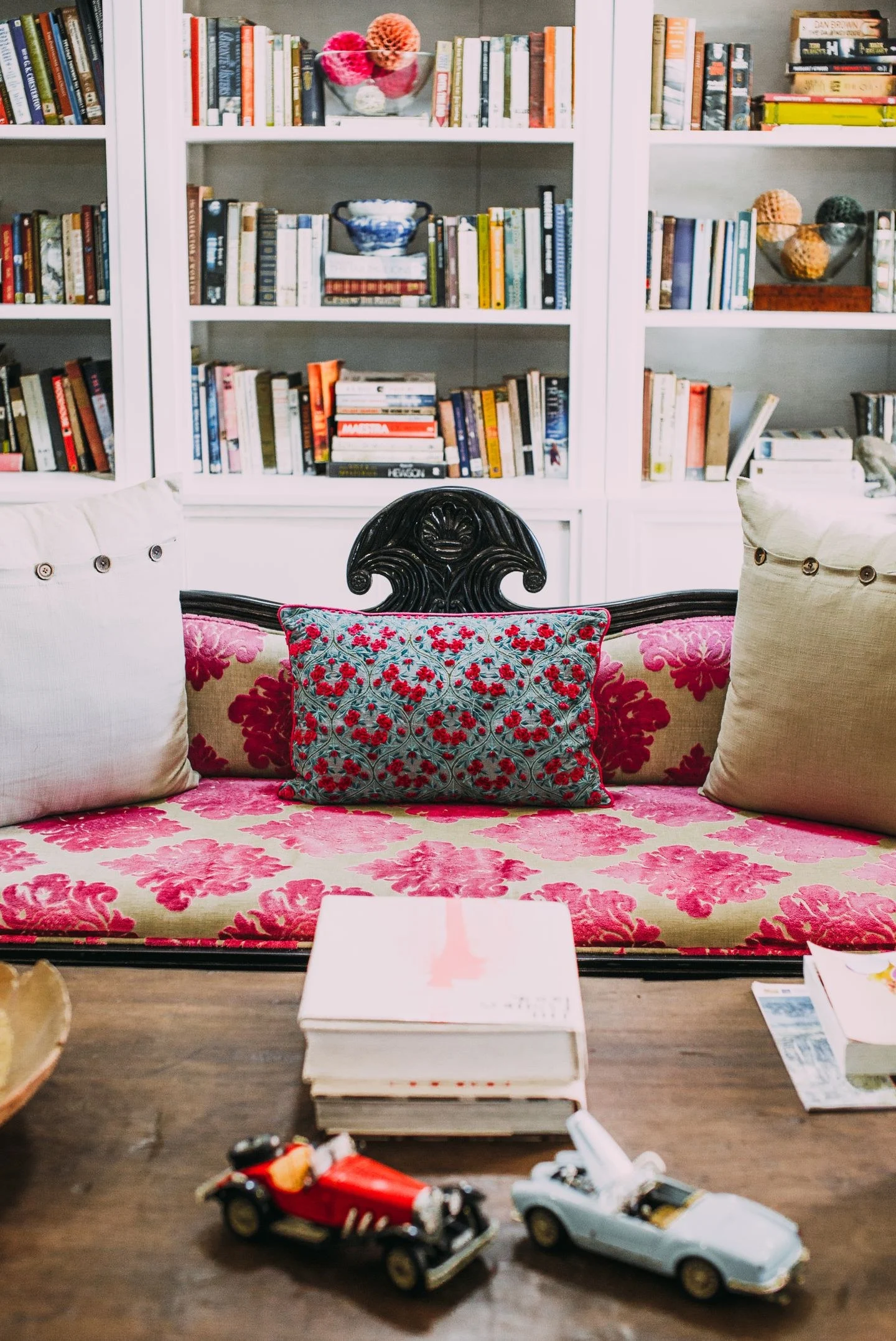
A family living room has to accommodate the toy train while it is being built, not only after everything has been put away. A clear play zone gives that activity a place without asking the rest of the room to remain untouched.
Start by observing which toys actually arrive here. A household with blocks and picture books needs different storage from one with craft supplies or a large floor puzzle. Keep the plan tied to those activities instead of filling the room with generic baskets.
Protect the route through the room
Choose a patch of floor outside the main path to the kitchen, hall, or patio. The play area can be beside the sofa, within sight of adults, rather than directly between the sofa and the coffee table. If the room is small, a movable table may create temporary play space, but decide where it will go before buying it.
Use the floor plan at its busiest. Someone should be able to walk through while another person sits on the floor and a cabinet door is open. Check nearby door swings, heaters, and window access. A zone that only works when every object stays inside an imaginary border will be difficult to maintain.
A washable mat or suitable rug can identify the area visually. Check its backing and pad against the flooring manufacturer's recommendations, and keep edges flat. A soft-looking surface is not a substitute for following product safety instructions or supervising children appropriately.
Make the storage match the return journey
For frequently used toys, choose containers that children can manage with the supervision their age requires. A broad, shallow bin makes larger blocks easier to return than a deep container with a narrow opening. Small pieces need age-appropriate storage away from younger children, not just a more attractive basket.
Keep categories broad enough to maintain: building pieces, pretend-play items, and books may be more workable than a separate container for every color or shape. Put occasional activities elsewhere so the living room only holds what is regularly used there. Rotating a modest selection can be more useful than adding another cabinet.
Avoid balancing storage bins on top of one another in a way that invites climbing. CPSC's Anchor It guidance recommends securing furniture against tip-over. Follow the furniture's anchoring instructions and use fixings appropriate to the wall. Heavy objects should not become attractions on high shelves, and televisions need their own secure placement.
Keep the adult seating complete
Adults still need somewhere for a drink, a reading light, and a comfortable seat. Place the most fragile or hot items where they can be managed safely, rather than decorating every low surface. A side table beside the adult seating may make more sense than a large central table in the play route.
Choose upholstery and covers according to the manufacturer's actual care instructions. A washable label can apply to a removable cover but not the entire cushion or sofa. Check whether washing requires disassembly, air-drying space, or a machine larger than yours. The useful choice is the one you can care for regularly.
The play area and seating do not need different decorative identities. A shared rug color or wood finish can make storage feel part of the room. Let the toys provide color when in use; elaborate matching containers are optional.
Plan for unfinished projects
One low tray or designated shelf can hold a construction that should survive until tomorrow. Give it a clear limit so every surface does not become permanent project storage. For a puzzle, consider a board that fits its intended parking place and can be moved safely by an adult.
At the end of a normal day, judge the reset by its actions. Can the books return without rearranging ornaments? Is there room for all the blocks after the lid closes? Is the route through the room clear? If tidying requires several adults and a precise packing order, the system needs fewer items or more accessible storage. The goal is a room that supports family activity and can recover from it without becoming a nightly decorating project.