A dining rug that fits the table can still be too small for the dining area. Its useful boundary is defined by the chairs when people sit and stand, not by the tabletop alone. Start with that moving footprint before comparing colors or patterns.
Place the table and chairs where they will normally be used. Pull each chair out as someone would when leaving the table, and mark the outer positions. Include the end seats, which may move differently from the side seats. Room & Board's rug guidance similarly emphasizes keeping dining chairs on the rug as they pull away from the table.
Compare the rug with the whole room
Use tape suitable for the floor to outline a candidate rug size. Check its relationship to walls, doors, and sideboards. A rug large enough for the chairs may leave an awkward narrow strip near a doorway or catch beneath a cabinet door. Those conditions are part of the size decision.
For an extendable table, test the expanded arrangement if the rug will remain in place during gatherings. A border that works for ordinary meals may end beneath the extra chairs. Decide whether the rug supports both configurations or whether another floor treatment would be easier to live with.
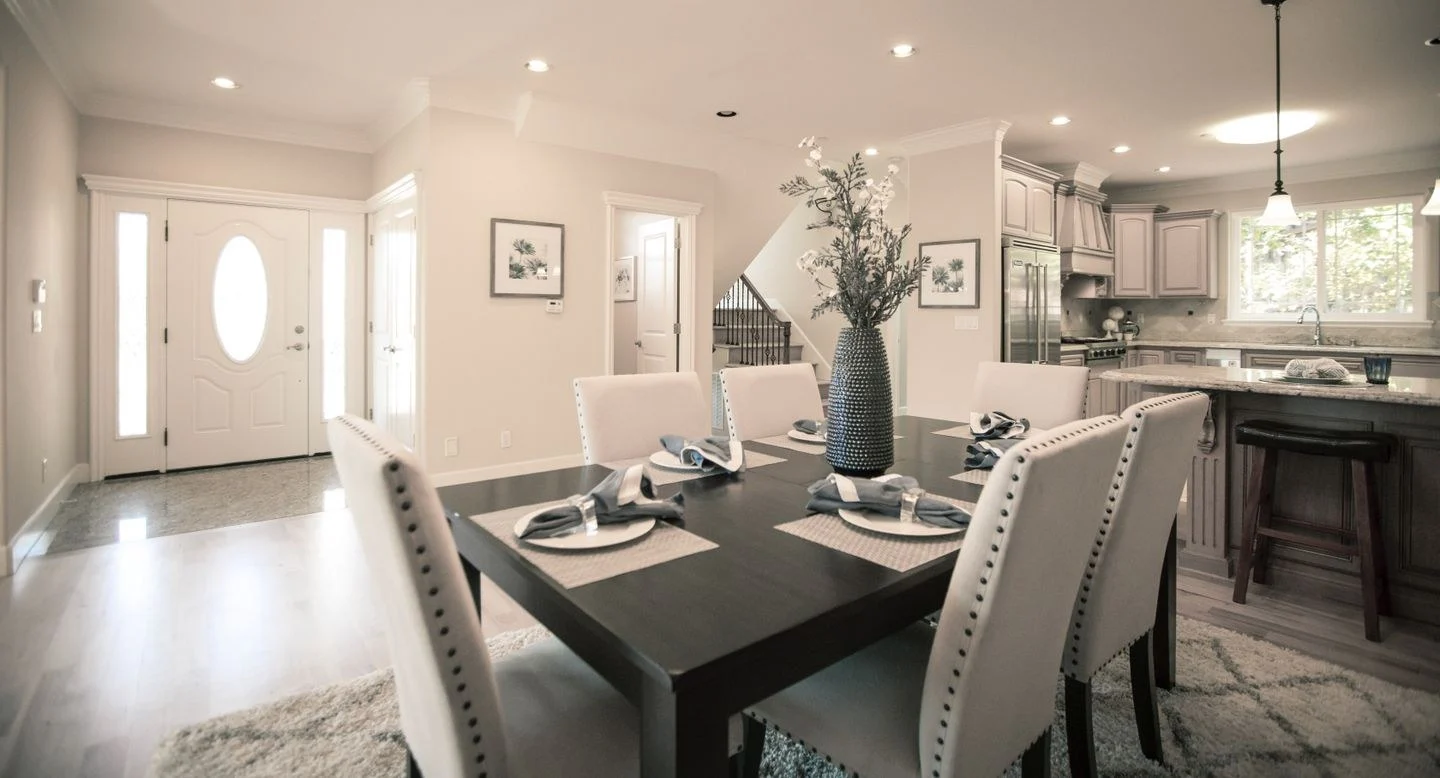
The rug does not have to copy the table's outline. A rectangular rug can ground a round table within a long room. A round rug can reinforce a circular group, but its curved edge still has to accommodate chair movement. The chair test is more informative than a rule about matching shapes.
Feel the movement, not just the surface
Compare how chair legs travel across the proposed construction. A thick or highly textured rug may resist movement; an uneven edge can catch a leg. Test a sample if possible, and use any pad or underlay only as recommended for the rug and floor. Check door clearance with the combined thickness included.
Consider the household's cleaning routine. Food crumbs, spills, pets, and chair use create different demands from a rug in a quiet bedroom. Read the product's cleaning instructions and understand what can be handled at home. The term washable may still involve machine-size limits, separate components, or drying requirements.
Pattern can make small marks less conspicuous, but it cannot substitute for care. A large central motif may be hidden beneath the table while a border remains visible; inspect the portion that will actually show. Bring samples beside the table and flooring rather than choosing from a product photograph alone.
There is also a valid option to leave the dining floor uncovered. If no available rug size supports movement and access, the room may work better without one. Add a rug because it improves the dining arrangement, not because the table seems to require a decorative outline.