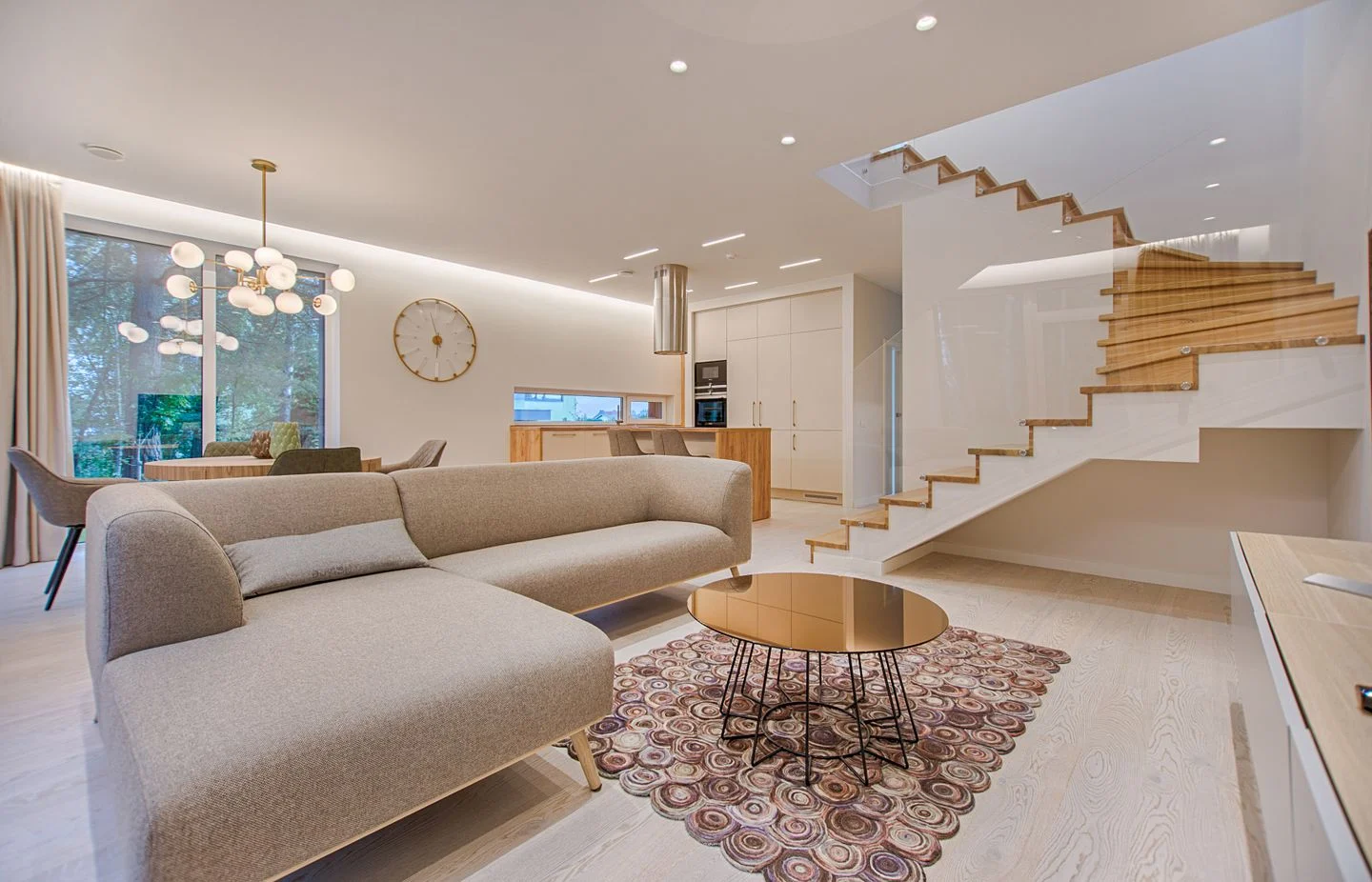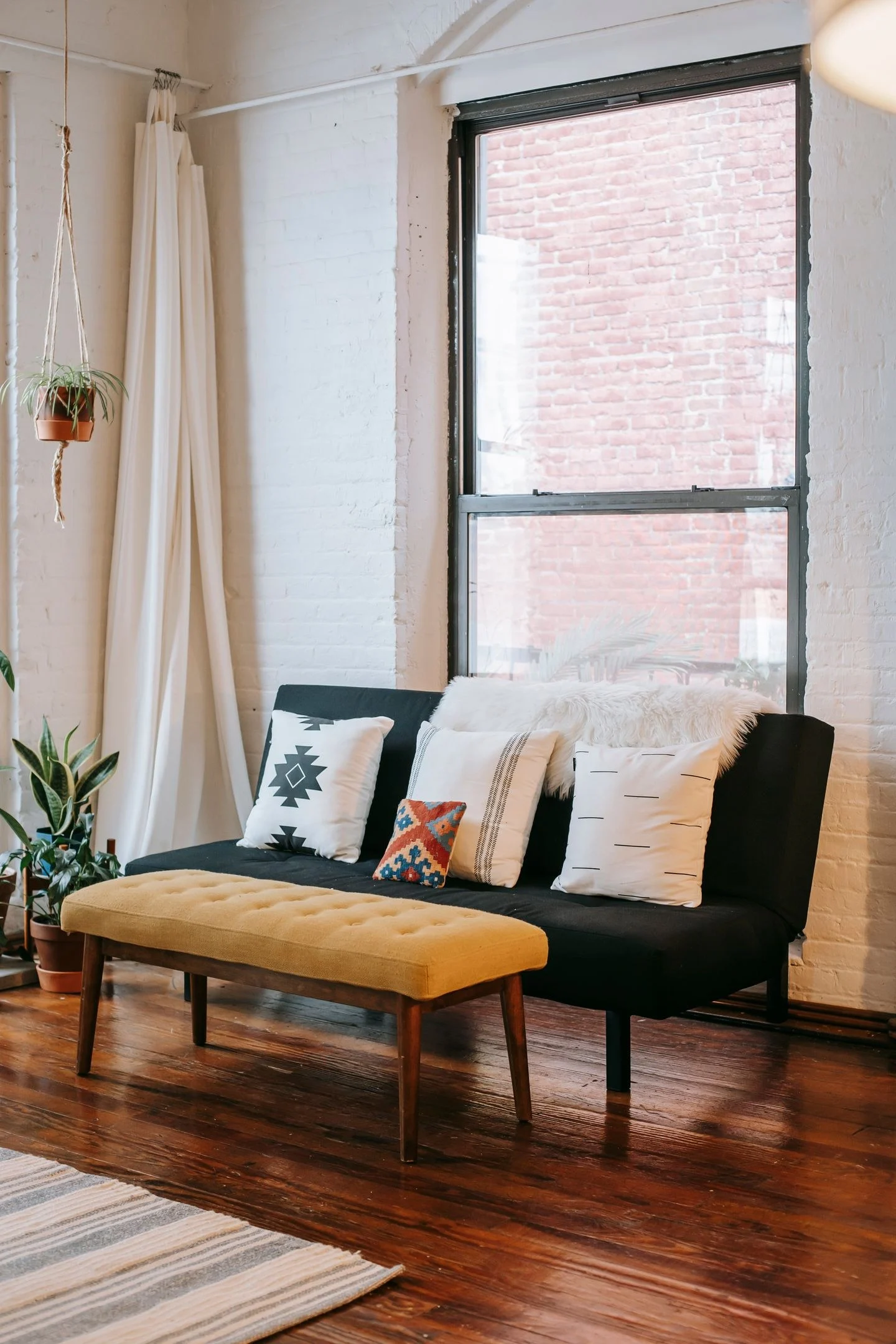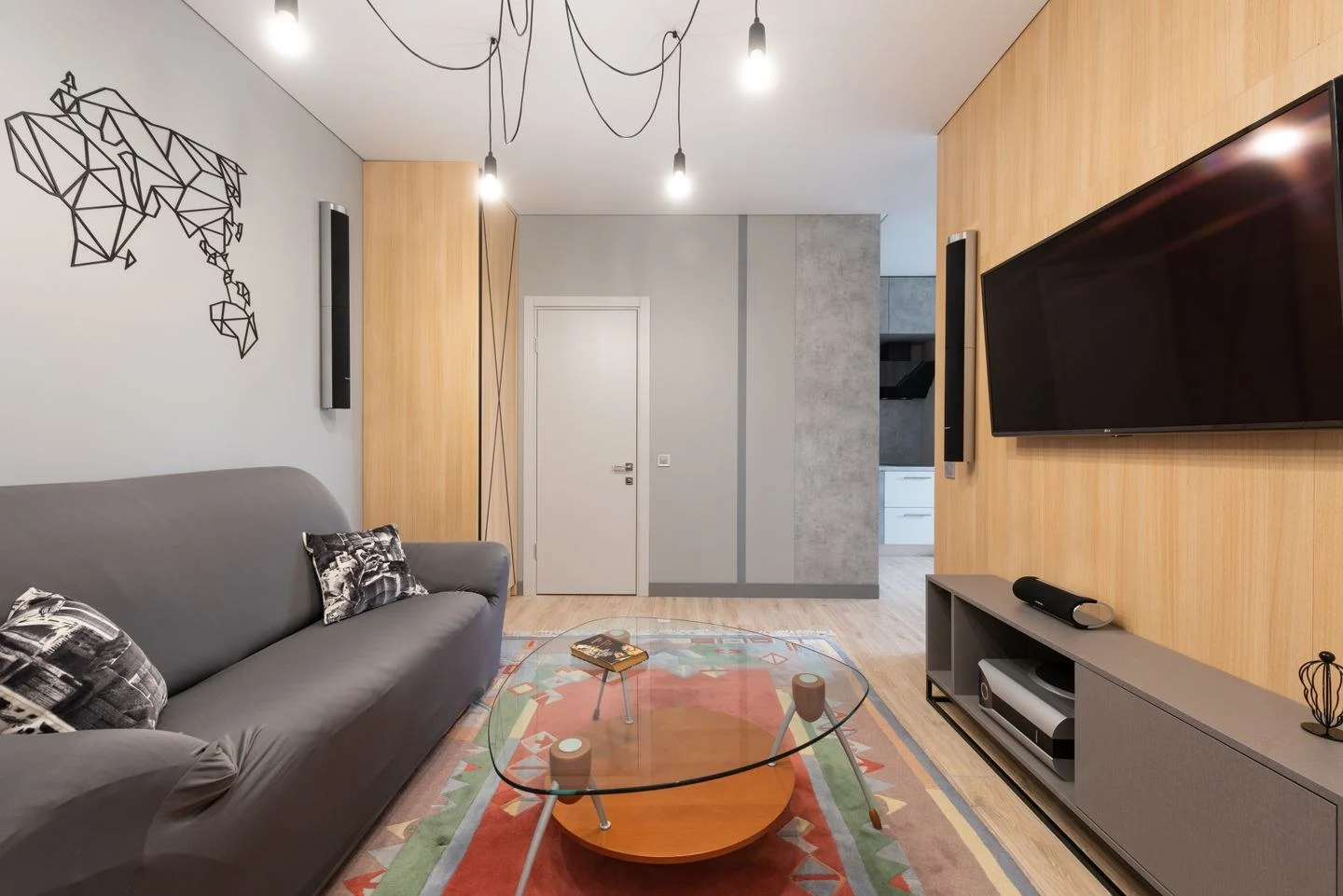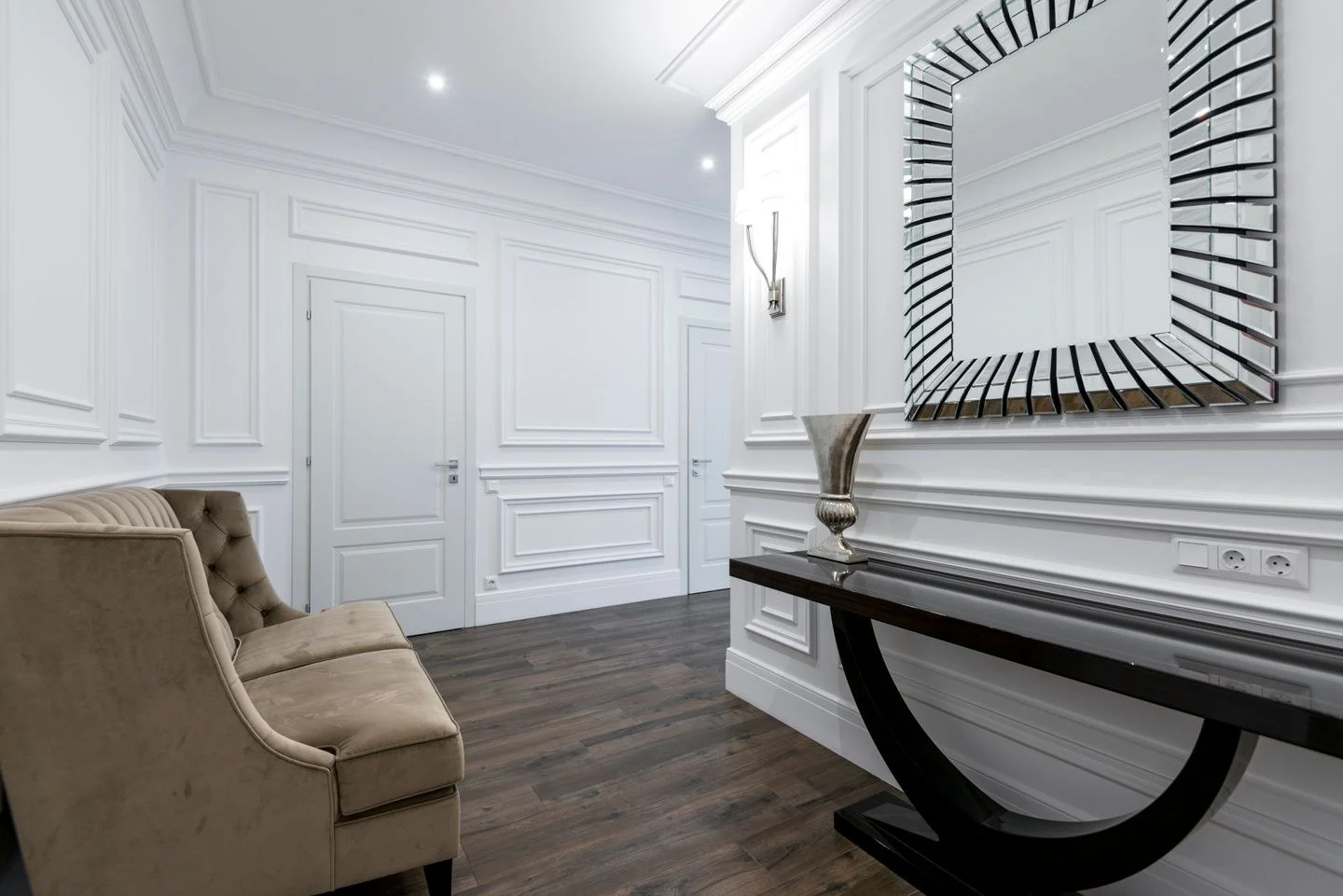
A console behind a sofa can hold a lamp, separate two areas, or provide a landing place near an entrance. It can also turn a generous passage into a narrow squeeze. Decide what the console will do before choosing one to fill the space.
Start with the passage, not the sofa width
Measure from the sofa back to the nearest obstruction. Then subtract the proposed console depth, including any overhanging top or projecting handles. The remaining space has to accommodate real movement, not just a person standing still. Consider bags, mobility aids, and people passing in opposite directions.
Try a full-size outline on the floor and add a temporary object at the proposed height. A line alone will not show how substantial the console feels from the dining area or doorway. If the arrangement becomes cramped, a small table at one end of the sofa may provide the surface you need without using the entire passage.
Let the purpose determine the top
For a lamp, the top must support the entire lamp base securely and leave room for its cord to reach an outlet safely. Do not stretch a cable across the walkway or conceal it beneath a rug. A console is not worth introducing a trip hazard; choose a different lamp position or have an appropriate electrical solution assessed professionally.
For books and a drink, the top should be reachable from the relevant seat without leaning awkwardly over the back cushion. A tall sofa may make this impractical. A console that acts as an entry landing place should instead be judged from a standing position, with room to put down keys or a bag.
If it includes drawers, measure their open depth and the space for a person to stand in front. Open shelves underneath need a realistic plan too. Baskets that protrude into the passage effectively make the console deeper than its advertised frame.
Compare the heights in profile
A console lower than the sofa back usually reads as a quiet supporting piece. One that rises above it can create a stronger divider, but objects on top may intrude into the view across the room. There is no need for an exact match; look at the sofa's cushions, arms, and the height of anything placed on the console together.
The back of the console matters when it faces an adjoining room. Check whether it is finished and whether storage exposes cables or clutter. A lightweight open frame can preserve a sense of space, while a closed piece may be useful where visual separation is desired.
Do not decorate the entire length automatically. A lamp at one end and a low bowl elsewhere may provide enough variation. Keep tall or fragile objects away from places where shoulders, bags, or moving cushions can knock them. The console should make the space behind the sofa more purposeful; if it mainly collects things you must move to get past, leaving that space open is the better arrangement.