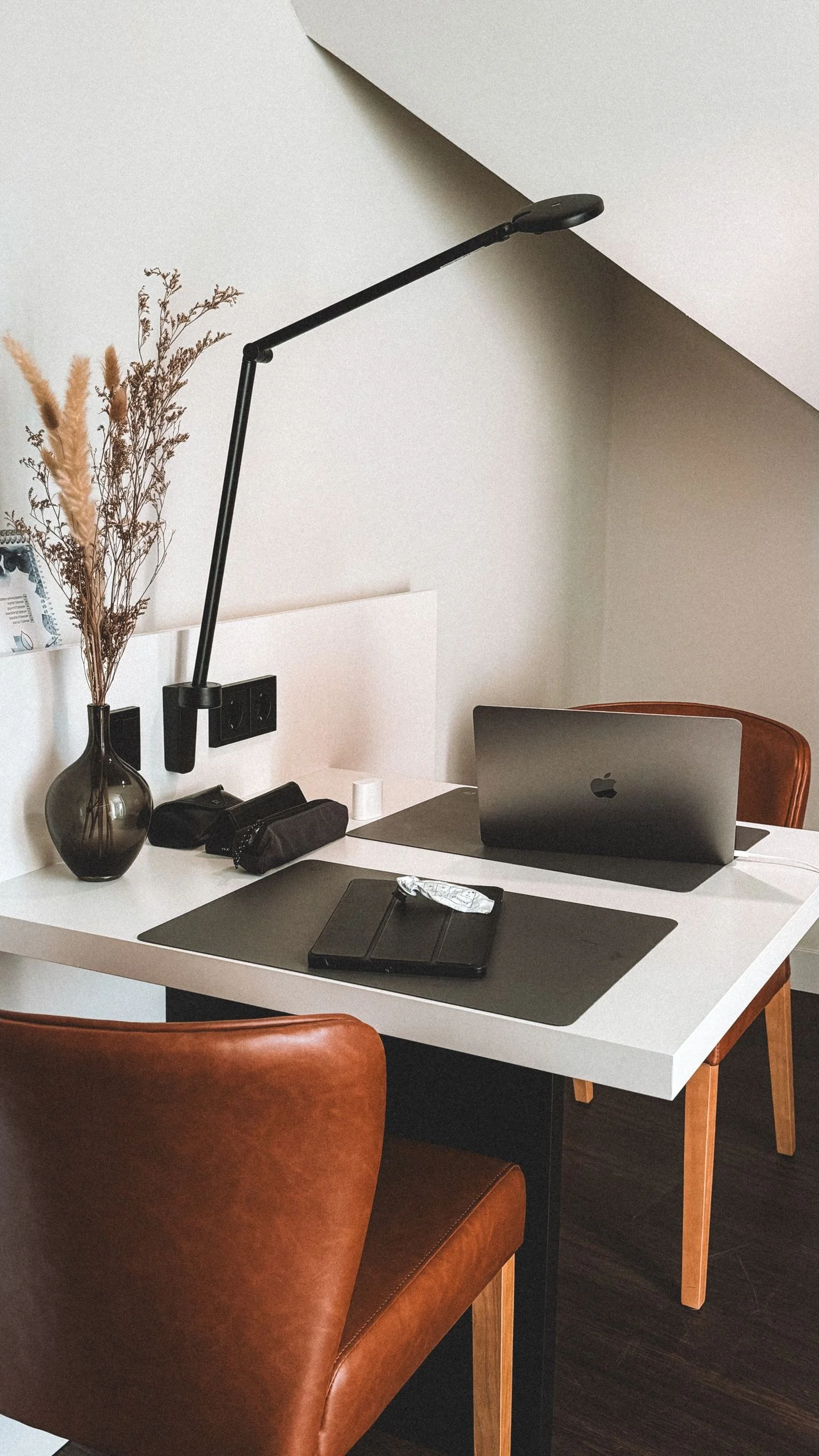
A clear desk is not an empty desk. It is a surface with enough uninterrupted space for the work taking place now. In a compact office, the best improvement may be removing stored items from the desktop rather than buying a larger desk.
Put the equipment and papers needed for one normal task on the surface. Everything else belongs to a different category: reference, supply, archive, or decoration. This simple separation reveals how much working area the desk actually needs.
Store by frequency
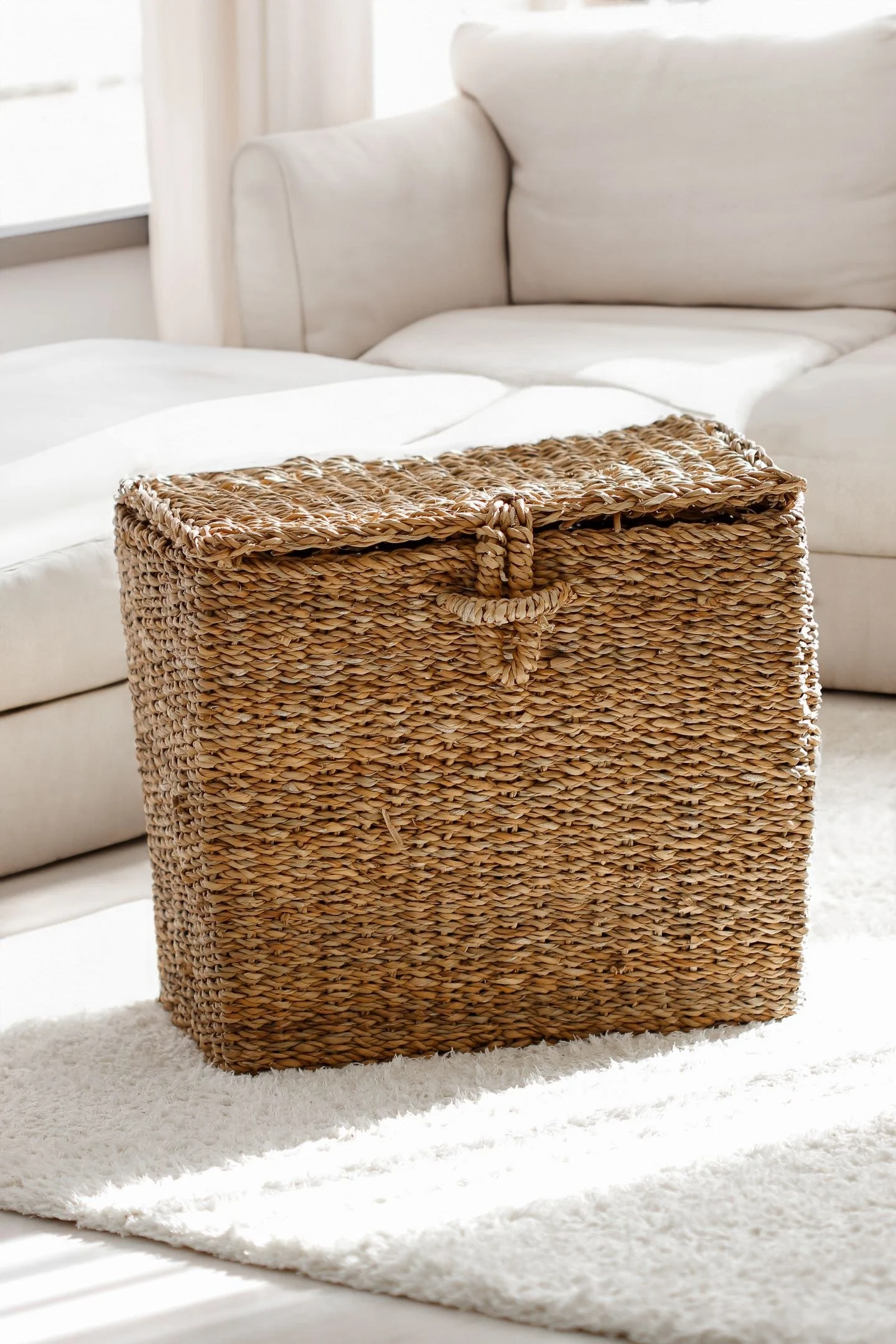
Keep daily supplies within easy reach, but avoid giving every small item a separate container on the desktop. A shallow drawer can hold pens, cables, and stationery without creating a row of visual obstacles. Reference books used weekly can sit on an adjacent shelf; archived material can move farther away.
IKEA's home desk guidance includes desks with storage and integrated shelves. Those features are useful only when the compartments fit your objects. Measure folders, equipment, and the chair space before choosing a model with bulky pedestals beneath it.
Preserve the working edge
The front part of the desk should accommodate the user's hands, keyboard, or papers without requiring a constant shuffle. Place decorative objects away from this active edge. A lamp base can also consume more usable area than expected, so compare its footprint with a suitable clamp or wall-mounted option where installation is appropriate.
Route cables through the furniture's intended openings and keep connections accessible. Avoid a layout that requires pulling the entire desk away from the wall whenever a charger changes. Follow equipment instructions for ventilation and do not hide power supplies inside a tightly packed decorative box.
At the end of a work session, return only the active project to a defined tray or folder. A growing stack called current work is still storage, and it eventually occupies the whole surface. Give completed material a separate destination.
The office can retain a personal object or artwork without sacrificing its function. Place it where it is visible but does not interrupt the task. A compact workspace feels calmer when every object has a clear role, not when the entire desk has been stripped of character.