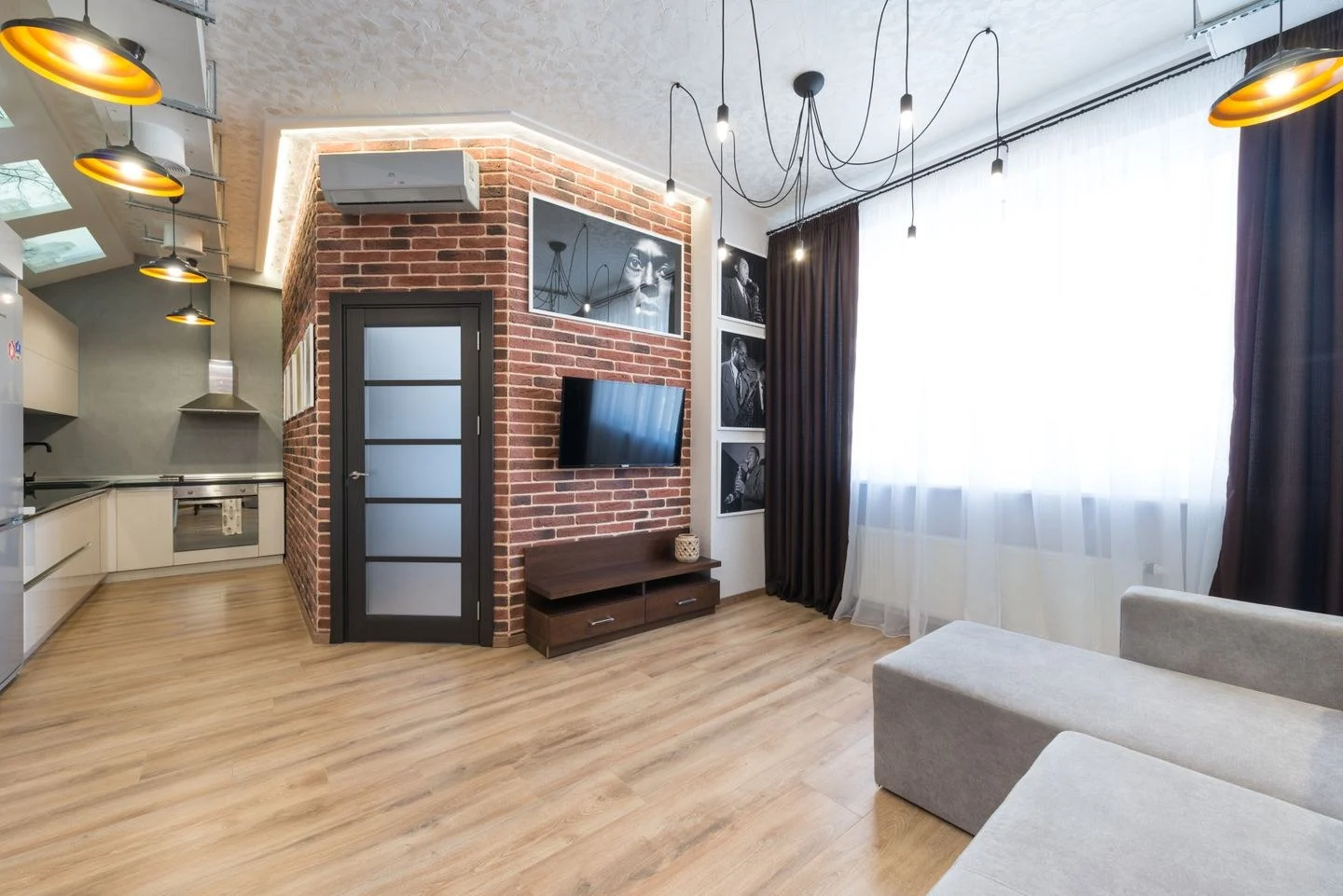
In a compact apartment, the dining table, kitchen cabinets, floor, and living room furniture may all appear in one glance. Different wood finishes become more noticeable because they are seen together. That does not mean they must match; it means the relationship deserves a whole-room view.
Identify the finish with the largest area. Flooring and built-in cabinets usually set the background. Compare smaller furniture against that background before deciding that two movable pieces need to match each other.
Keep a clear hierarchy
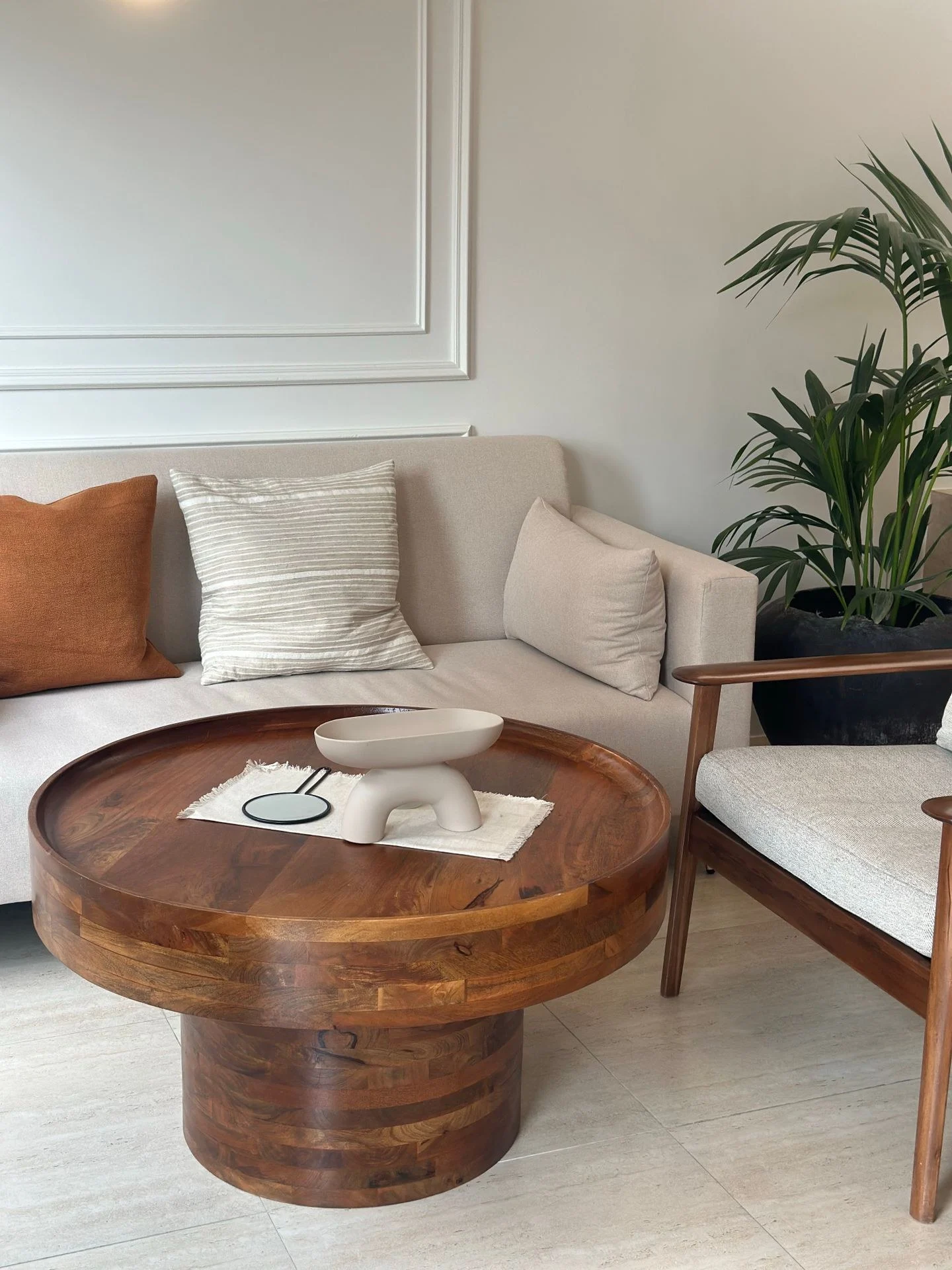
Let one wood remain dominant and a second provide contrast. A pale floor with a dark table can look deliberate, especially when the dark wood appears again in a small frame or chair detail. Several medium-brown finishes with slightly different orange and gray casts may be harder to read.
Look at grain as well as color. Strongly figured wood adds pattern, while a quieter surface lets other materials lead. If the floor already has active grain, a simple table finish may be easier to combine than another highly patterned surface.
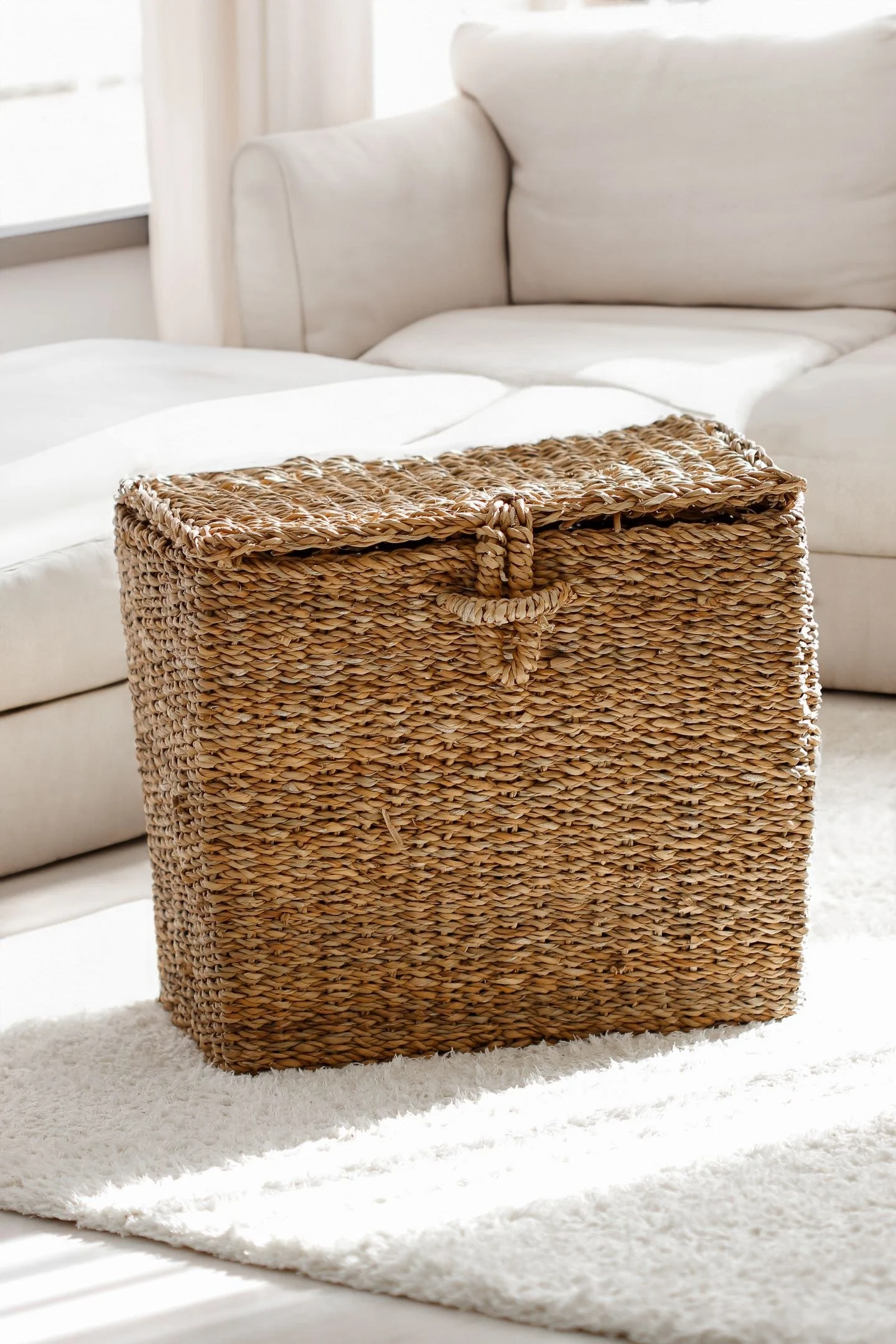
Use a rug to interrupt an awkward meeting between furniture and floor. The textile creates a separate plane, allowing the woods to coexist without touching visually across every edge. Choose the rug for the furniture arrangement, not only as a color patch.
Avoid multiplying finishes through small purchases
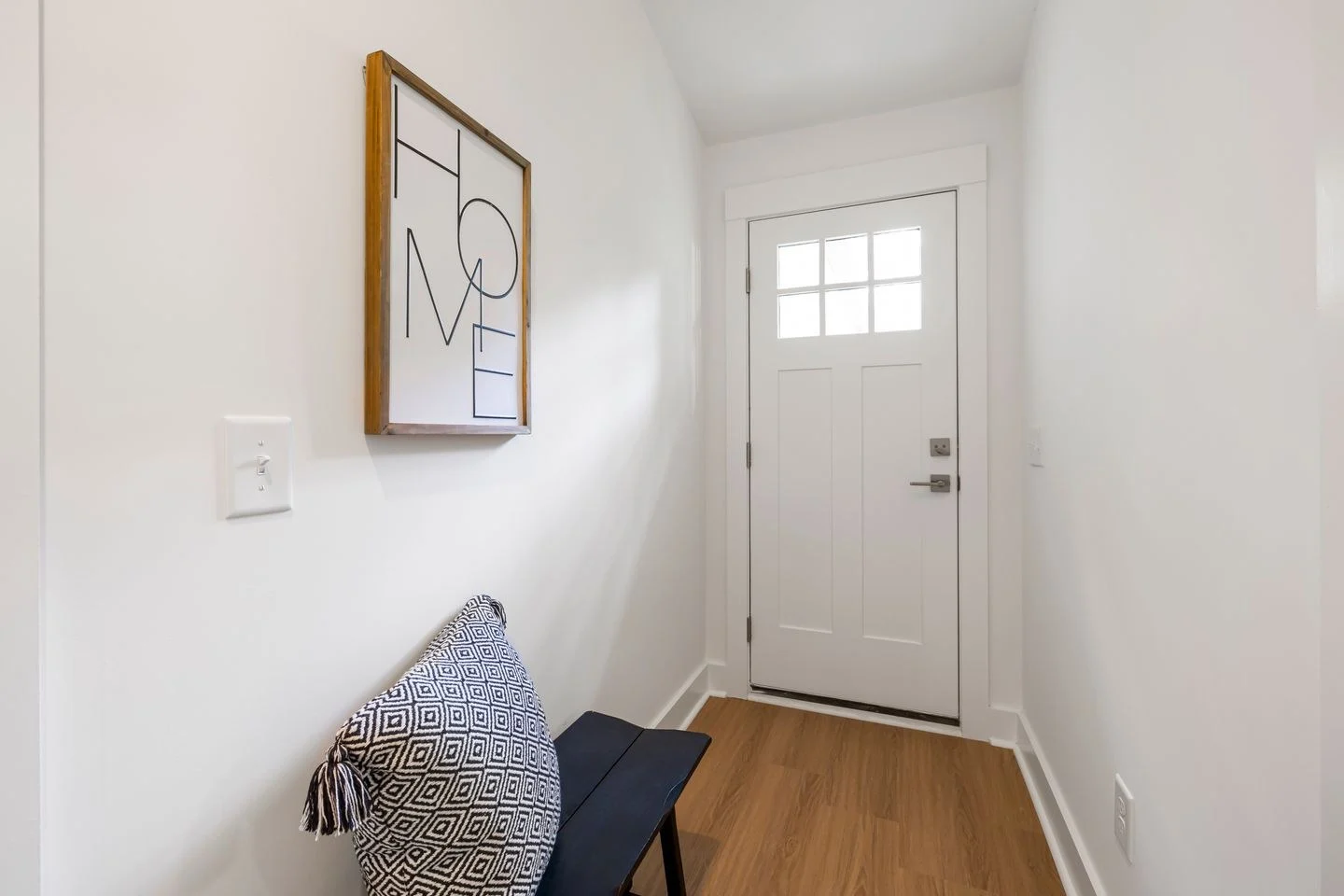
A new shelf, stool, or picture frame can introduce another wood tone almost unnoticed. Before buying, compare it with what is already visible from the main entrance. Painted or upholstered pieces may provide a quieter alternative when the wood palette is already full.
Actual samples are more useful than species names. Room & Board's material guide illustrates the variety within furniture materials; stain, sheen, and natural variation all affect the result. A piece described as oak may look very different from your oak floor.
You do not need to discard a useful inherited piece because its finish differs. Give it a clear location, simplify its immediate neighbors, and repeat one aspect of it elsewhere if necessary. A small apartment can hold a collected mixture when the major surfaces establish order and the smaller pieces are not all competing for equal attention.