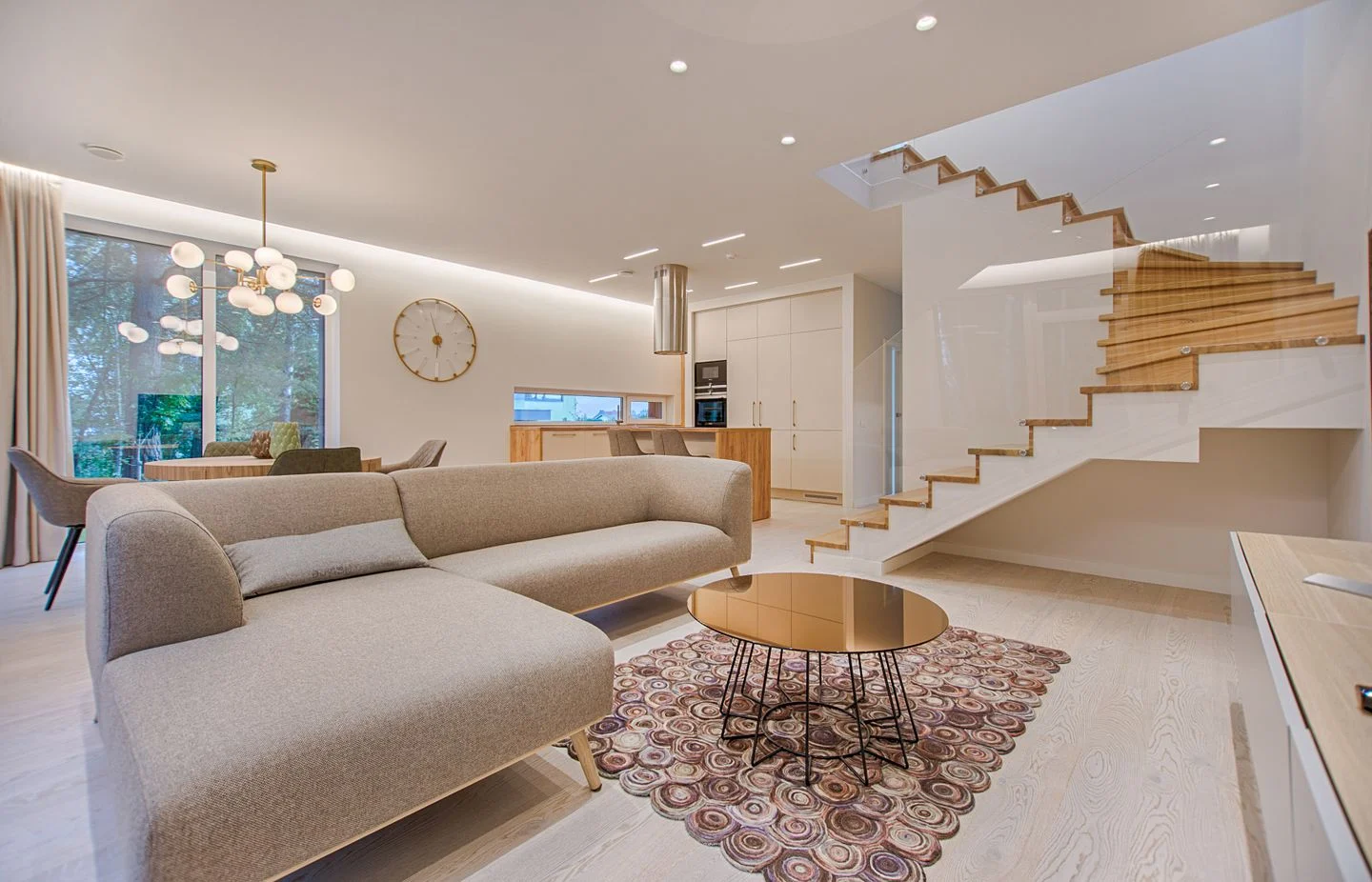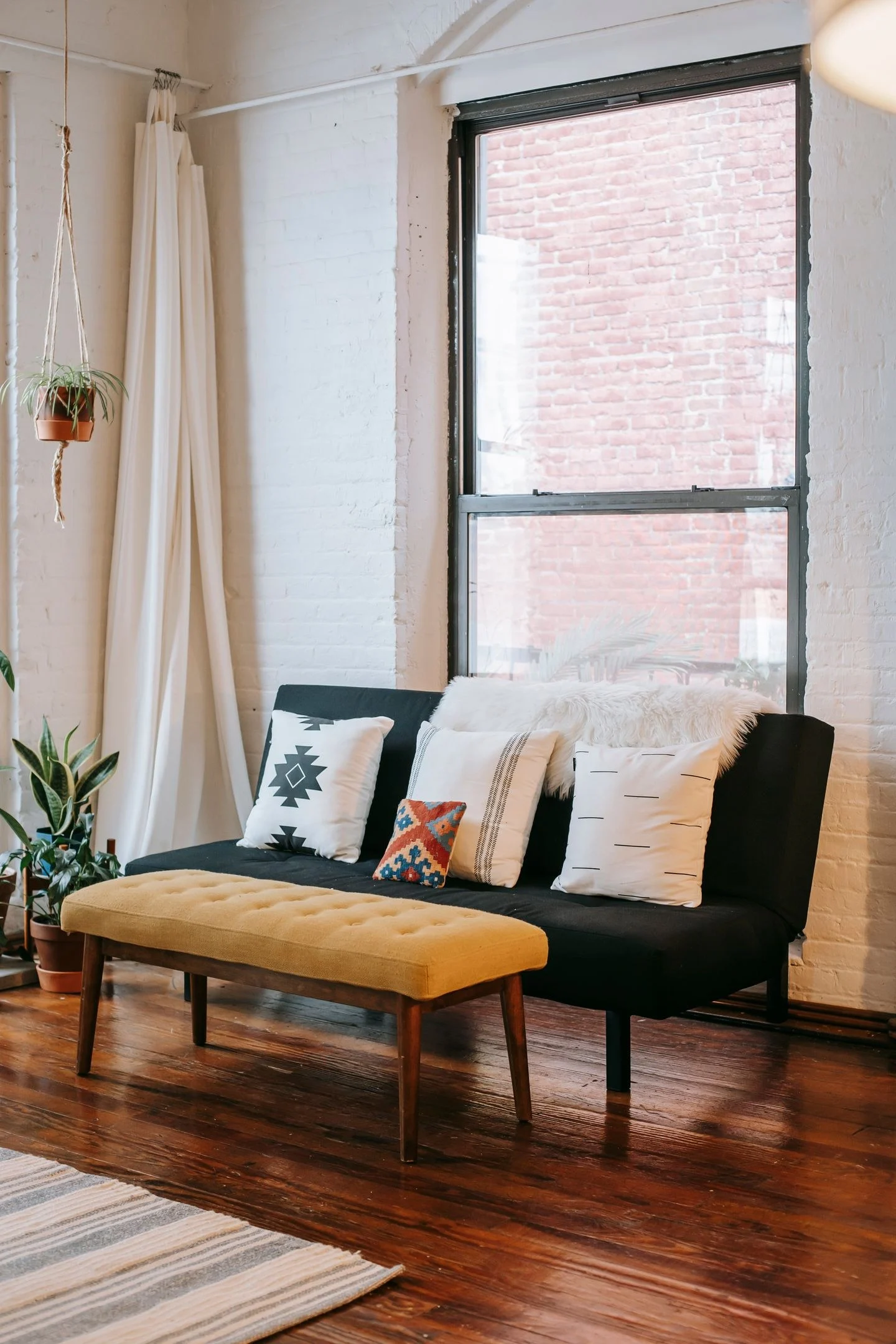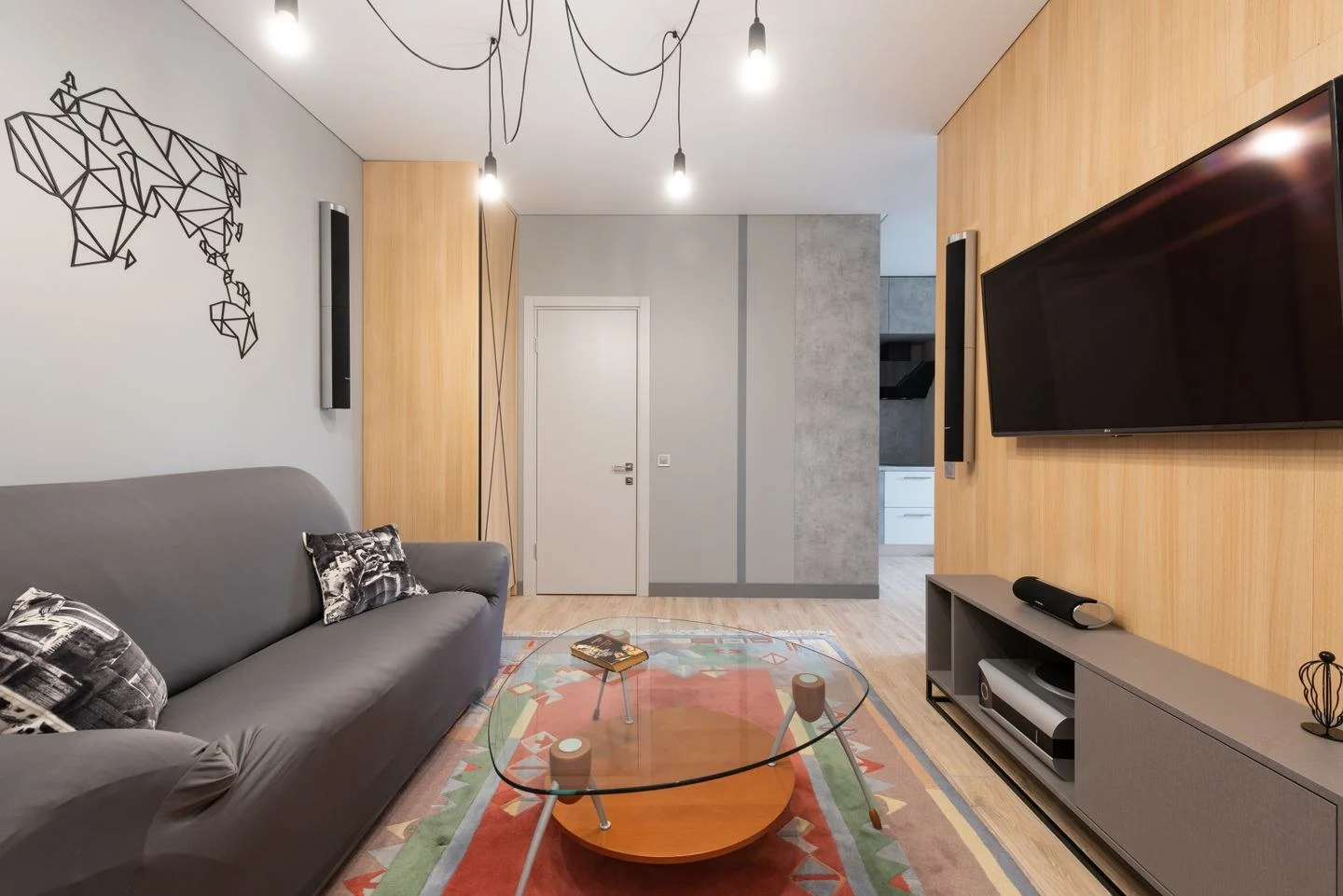
A coffee table is a piece of circulation furniture as much as a surface. Everyone walks around it, reaches across it, or stands beside it. The right choice starts with these movements and ends with the finish.
Place a temporary surface where the table might sit. Cardboard boxes or an existing small table can show whether the position works, although they should not be used as seating. Try it with people on the sofa and in the chairs, rather than measuring the empty gap alone.
Decide who needs to reach it
A long sofa may benefit from an elongated table, but the person in an adjacent chair also needs somewhere for a cup. You do not have to make the central table enormous to serve that person. A small side table can create a better arrangement, especially if the main walking route passes between the chair and sofa.
For an L-shaped sectional, check the open interior of the L. A square or round table may distribute usable surface more evenly than a narrow rectangle. With a chaise, leave enough room for feet to move around its end. Treat all spacing suggestions as starting points and test them with your household.
Compare the underside
Table bases change how much room feet have. A top with a broad pedestal feels different from one with four legs near the corners. A lower shelf can store books but may obstruct stretched-out legs. A lift-top mechanism needs operating room and should be assessed for the manufacturer's intended use and safety instructions.
Measure the table's height against the actual seat cushions. A low lounge sofa and a tall, upright sofa rarely want exactly the same table. If you regularly eat or work here, try that activity before buying; a standard coffee table should not be assumed to provide comfortable desk ergonomics.
A pale stone surface, glossy lacquer, and oiled wood each carry different care requirements. Read the product's instructions for heat, moisture, and cleaning rather than assuming a material label tells the whole story. Coasters need a convenient place too.
Two smaller tables can be easier to reposition for guests or a game, but they create additional edges and gaps. Choose them because you will use that flexibility, not simply because a pair looks interesting. Leave the final arrangement in place long enough to notice whether anyone repeatedly shifts the table aside. That movement is useful information about the size you actually need.