Solid wood and wood veneer describe different constructions, not a simple ranking from good to bad. A well-made veneered cabinet can be an appropriate long-term purchase, while a solid-wood label alone tells you little about joints, hardware, finish, or how a piece will perform.
Understand what the description covers
Solid wood refers to wood through the relevant component's thickness. Wood veneer is a thin layer of real wood attached to a supporting core. The core may be plywood, MDF, or another specified material. A printed wood-look surface is a different category, so ask for the construction details when a description only says wood finish.
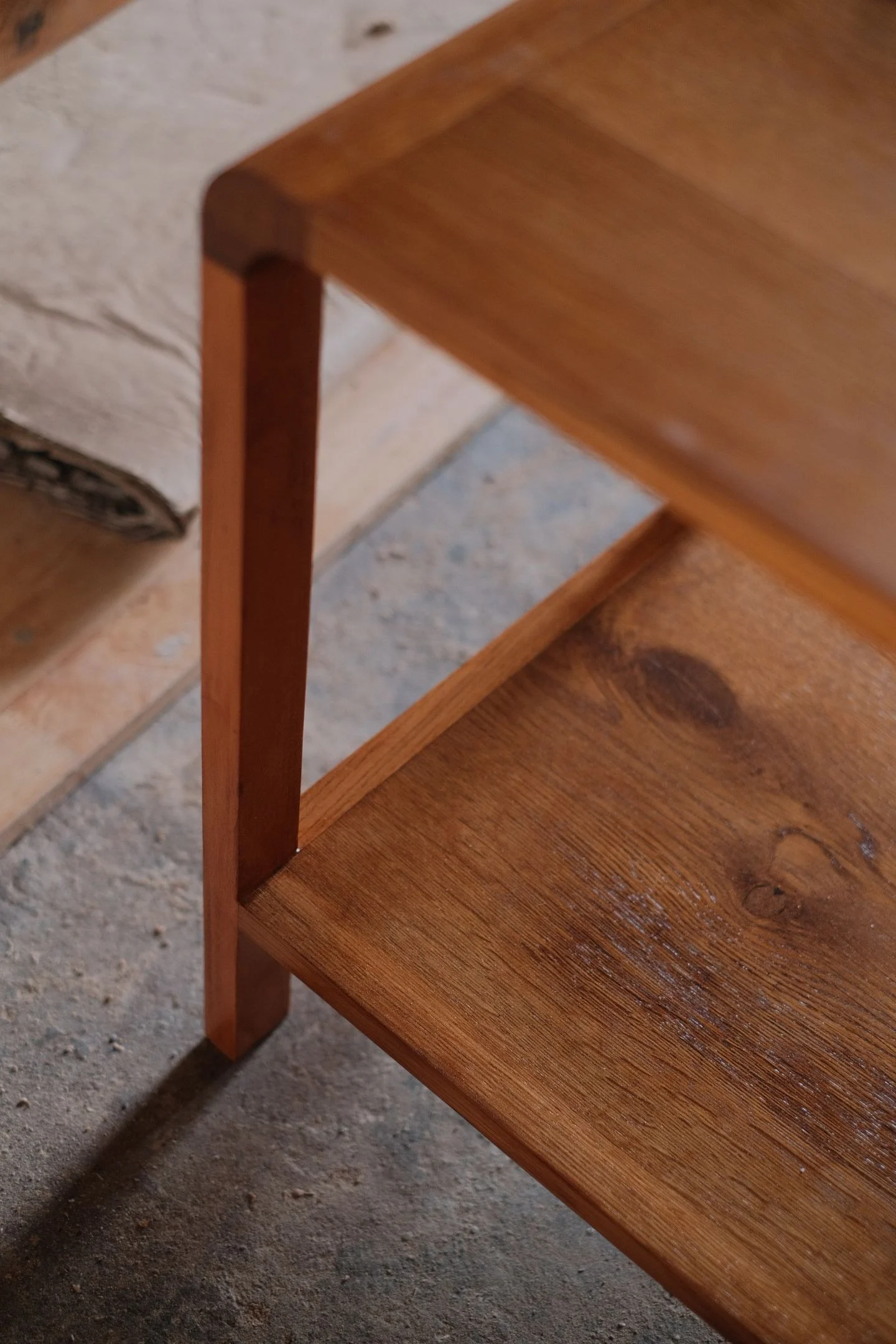
Furniture can combine materials. A table may have solid legs and a veneered top; a dresser may have a veneered case, solid trim, and drawers made from another material. Ask which parts the label describes rather than assuming the entire piece is built identically.
Room & Board's material guide discusses both solid wood and engineered substrates used with veneer. The useful takeaway is to examine the complete construction, not to reject a material because it appears beneath a decorative surface.
Inspect the parts that will be handled
Look at edges, corners, joints, drawer movement, and the underside where accessible. Veneer edges should be cleanly finished and well attached. Solid-wood joints should feel appropriate to the design without visible looseness. Do not use excessive force to test a showroom piece; ask for construction information and demonstrations.
Open drawers and doors through their intended movement. Check how they align and how much usable storage remains inside. A beautiful top does not compensate for hardware that feels unsuitable for daily use. For flat-pack furniture, read the assembly requirements and consider whether replacement hardware is available.
Weight is not a dependable quality test by itself. A heavy piece may use dense engineered materials, while a lighter piece may be well designed for its task. Judge stability and capacity from the manufacturer's specifications and the actual construction.
Ask about the finish and repair
The finish determines much of the everyday care. Oil, lacquer, paint, and other coatings need different treatment. Follow the instructions for the exact product rather than using a generic wood-cleaning recipe. Room & Board's care guidance, for example, separates oiled finishes from several coated finishes.
Veneer generally offers less material for sanding than a solid component, so do not assume every scratch can be sanded out. Repairs to either construction may require a specialist, particularly around damaged edges or complex finishes. Ask what the manufacturer recommends for likely wear before purchase.
Solid wood can respond to environmental changes, and furniture construction should account for that behavior. Follow the maker's recommendations for indoor conditions and placement. Neither solid wood nor veneer should be treated as unaffected by prolonged moisture, heat, or inappropriate cleaning.
Match the choice to the job
For a heavily used dining table, focus on the surface finish, stability, and care you can maintain. For a large cabinet, door alignment, shelf capacity, anchoring requirements, and usable storage may matter more than whether every panel is solid wood. For a distinctive grain pattern, veneer can be part of the design rather than a compromise hidden from view.
Keep the product specifications, care instructions, and warranty details with your purchase record. The better decision is the piece whose construction and maintenance make sense for your room and routine. A material name is the start of that comparison, not the conclusion.