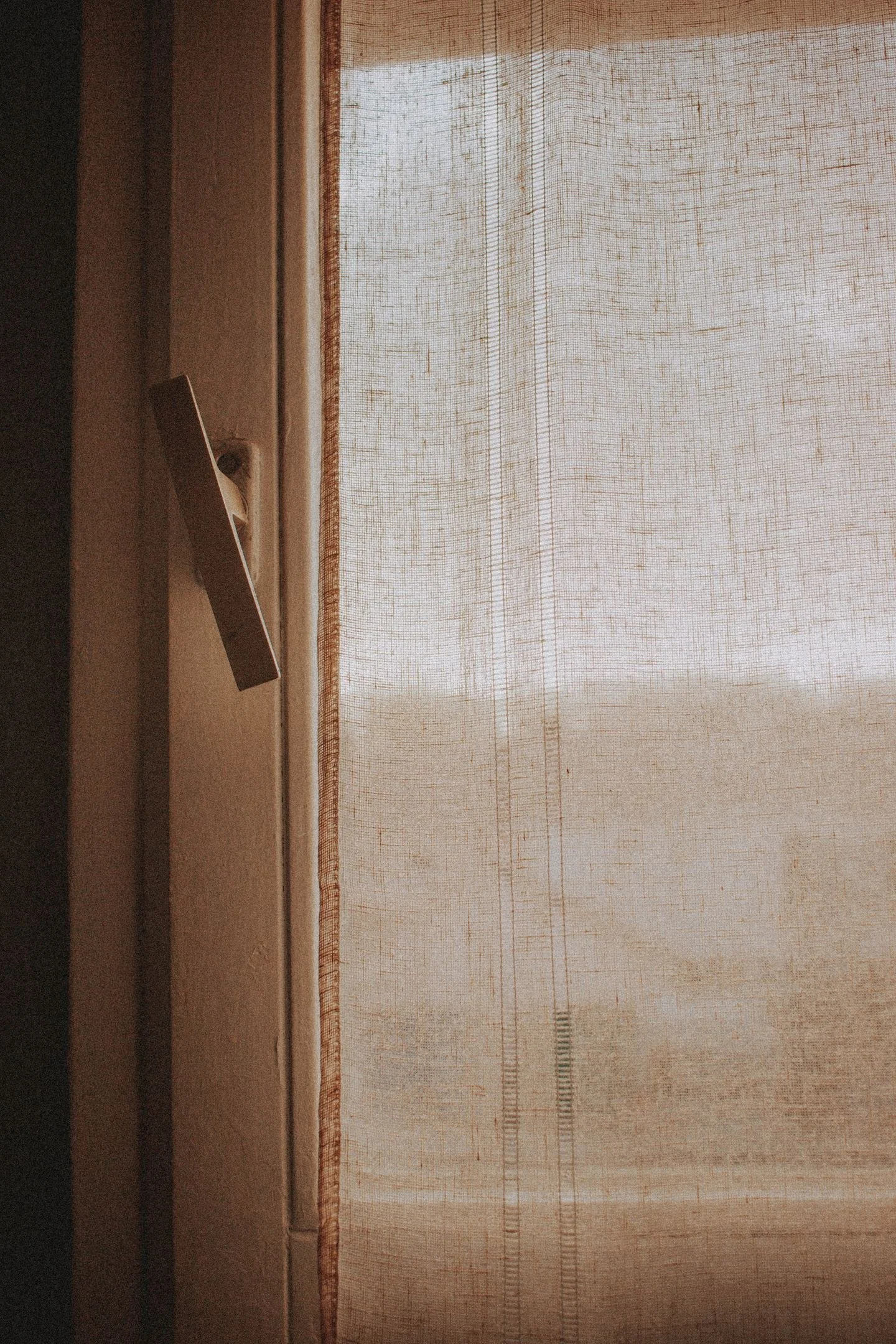
A curtain rod controls where the fabric begins, how far it can travel, and how much glass remains visible when the curtains are open. Its position should be decided alongside the curtain style rather than treated as a final installation detail.
Measure the window frame, the available wall above it, and the space on each side. Include adjacent corners, cabinets, doors, and other windows. A rod that looks balanced in a cropped photograph may extend into an obstacle in the actual room.
Allow for the gathered fabric
Curtains occupy width when drawn back. A wider rod can sometimes let more of that fabric sit beside the glass, but the required space depends on fabric fullness, thickness, and heading style. Ask for the relevant product dimensions rather than assuming every panel stacks into the same narrow strip.
Check the open view with a rough mock-up. Use a folded sheet or similar stand-in to represent the gathered volume. This can reveal whether the fabric will cover a light switch, interfere with furniture, or crowd the corner. The mock-up is a planning aid, not a substitute for the final product's instructions.
If one side of the window has much less wall space, a symmetrical extension may be impossible. Consider whether the panel arrangement can respond to the available space without making operation awkward. A different window-treatment type may be more suitable than forcing a conventional pair into an unsuitable opening.
Relate height to the room
A higher rod can create a longer vertical line, but the wall construction, ceiling detail, and curtain length all matter. Leave room for the hardware and ensure the selected position permits a suitable installation. A decorative rule about hanging high does not identify safe fixing points.
Confirm the rod's load rating, bracket spacing, and mounting requirements for the chosen fabric. Additional support may affect how panels travel. Use appropriate hardware and professional help when the substrate or hidden services are uncertain. Heavy curtains place different demands on the system from a lightweight decorative panel.
After marking the proposed position, check it with the curtains imagined both closed and open. The closed treatment should cover the intended area; the open treatment should leave the room usable and admit the desired light. A well-positioned rod makes both conditions feel like normal, finished states rather than one being a compromise.