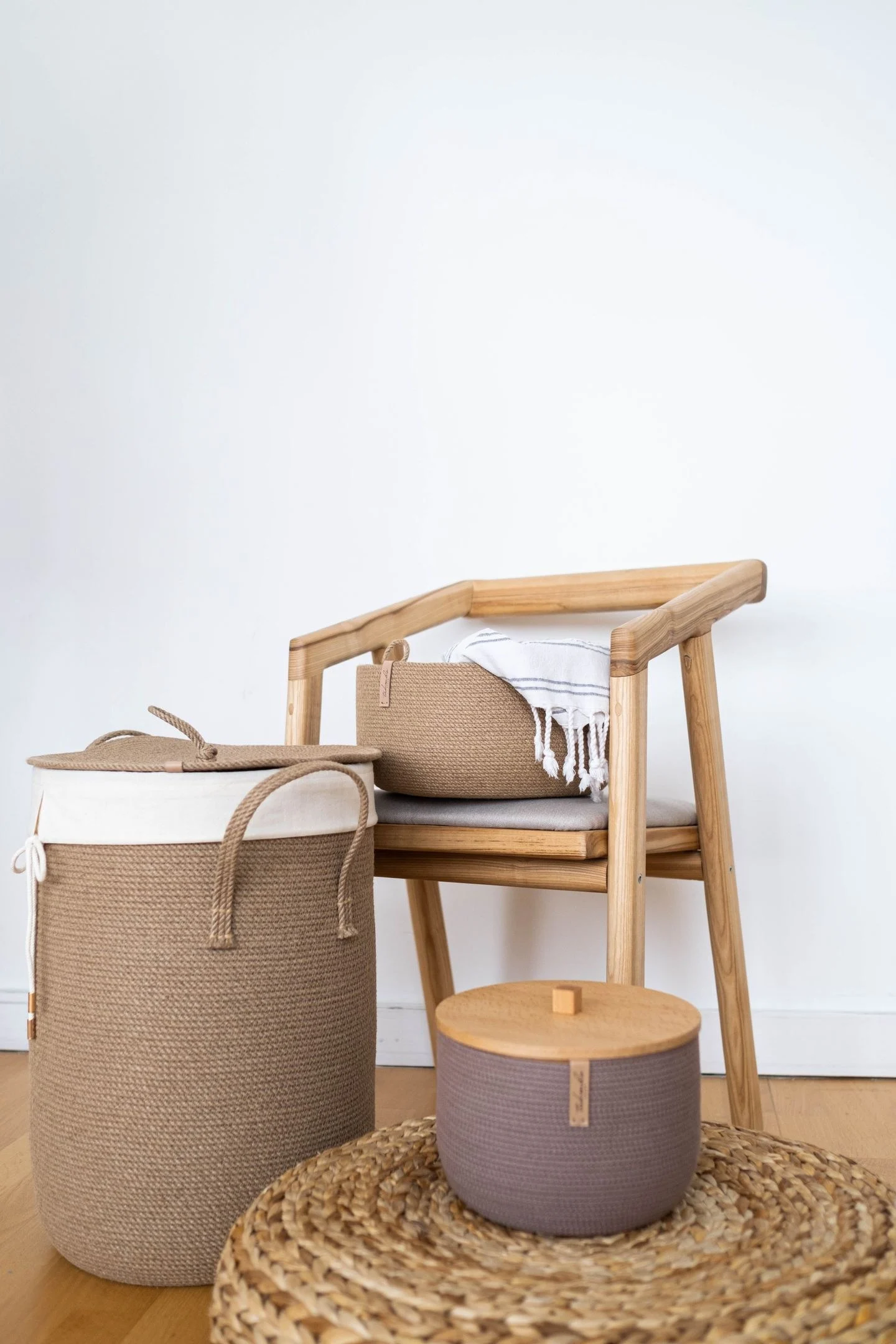
A basket works best when it has a specific category to hold. Throws, children's play items, spare cushions, or hobby supplies each suggest a different size and shape. Buying several attractive baskets first can leave you searching for contents that justify their place in the room.
Start with the objects that currently lack a home. Group them by how they are used rather than by how they look. Items needed together can share a container; unrelated things gathered only because they fit often become difficult to retrieve later.
Measure capacity that can actually be used
Check the basket's inside dimensions. Tapered sides, thick weaving, and handles can make the usable space smaller than the outside measurements suggest. A basket intended for a shelf also needs room above and beside it so it can be removed without scraping or catching.
For heavy contents, consider the basket's construction and stated load guidance. Handles are not automatically designed for carrying every filled basket. If the container will move frequently, test the handling with an appropriate load and choose a product intended for that task.
Soft items can tolerate a deeper basket more easily than small objects that disappear at the bottom. A low open container may suit a frequently used kit; a lidded basket can conceal occasional supplies. The lid adds a step, so choose it where that step will not discourage putting things away.
Place the basket at the end of the routine
A throw basket belongs where someone is likely to return the throw after using it. A basket across the room may remain empty while the sofa collects fabric. The best position may be less symmetrical than the prettiest position, but more likely to work.
Keep the basket out of circulation and away from conditions it is not designed to tolerate. Natural materials, fabric liners, and rigid frames can have different care needs. Check the product guidance, especially near damp areas, heat sources, or direct weather exposure.
Use a label if the contents are not obvious to everyone who uses the room. Choose a stable category rather than miscellaneous, which often becomes permission to postpone sorting. Leave some spare capacity so ordinary variation does not immediately create overflow.
When a basket repeatedly fills with the wrong objects, reconsider the category or its location. It may be placed beside the wrong activity, or the intended contents may already have another useful home. A storage plan succeeds through clear decisions; baskets simply make those decisions easier to carry out.