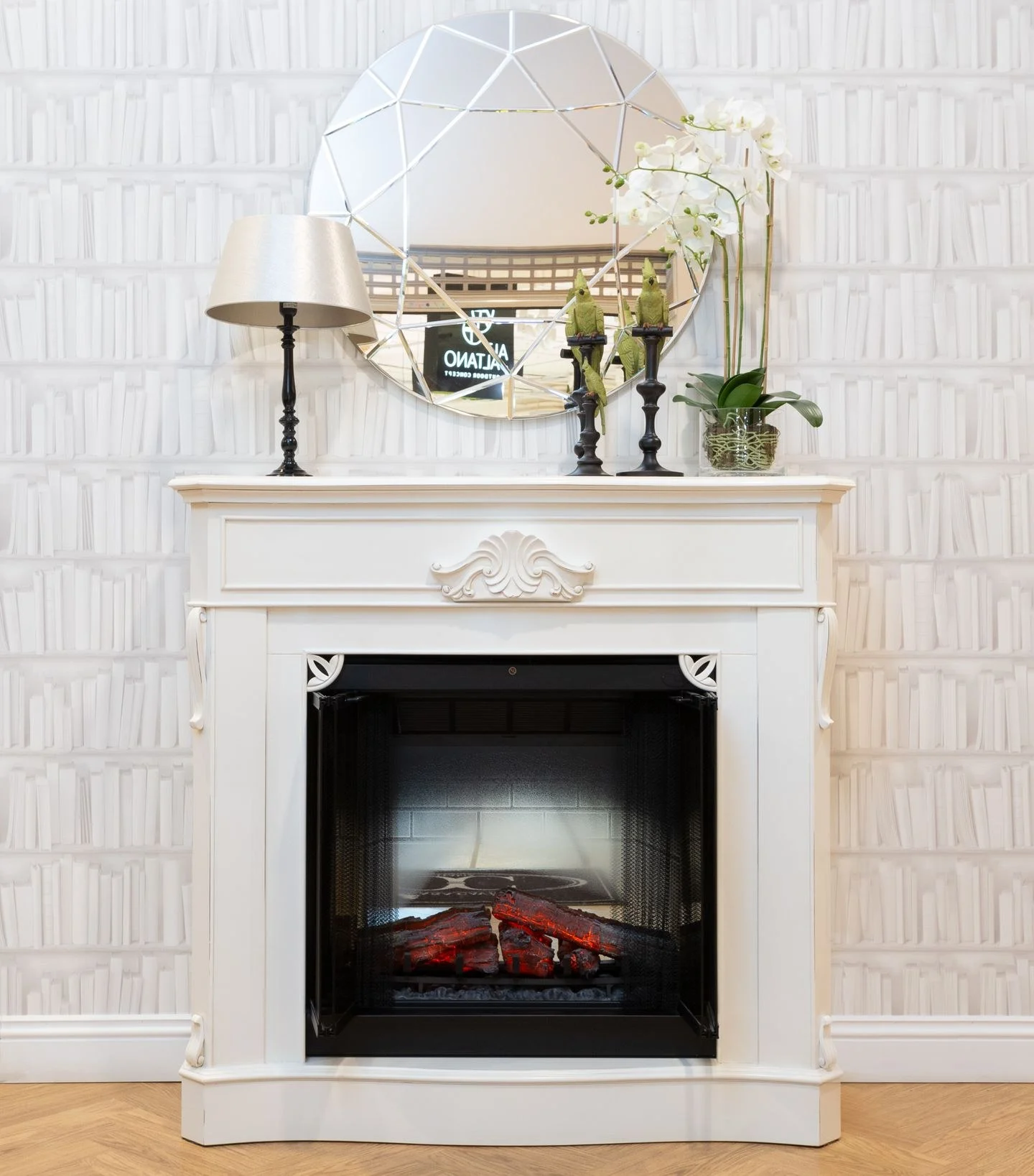
A mantel arrangement can feel balanced without using identical objects at both ends. One taller element and a lower group can create a more relaxed composition, provided the fireplace and room remain the main reference.
First check the fireplace manufacturer's instructions and any applicable installation requirements. The mantel is not automatically a safe display zone for every material. Keep combustible objects, hanging fabric, and anything affected by heat outside the required clearances. If the conditions are uncertain, have them assessed before styling a working fireplace.
Choose one dominant shape
A securely mounted artwork or mirror can organize the wall above the mantel. Its relationship to the surround matters more than matching the width of the shelf exactly. Avoid leaning heavy objects casually where vibration or a bump could dislodge them; follow the item's mounting or restraint requirements.
On the mantel itself, place one taller object to one side and try a lower pair or group on the other. Compare their visual weight rather than their count. A broad dark bowl may balance a taller light vase without needing an object of equal height.
Leave a clear stretch of mantel between groups. Filling the entire shelf with small ornaments can obscure the shape of the fireplace. If the surround has strong stone veining or detailed molding, fewer objects may be especially effective.
View it from the seating
The arrangement will often be seen from below and across the room. Small details that look charming while standing close may disappear from the sofa. Choose objects with clear silhouettes, but keep them stable on the actual shelf depth. Nothing should overhang precariously or rely on another object to stay upright.
A repeated color or material can connect the mantel with the room. It might echo a lamp base, rug detail, or picture frame elsewhere. Avoid duplicating every accessory, which can make the shelf feel like a display set rather than a collection.
Check the arrangement when the fireplace is off and, if appropriate and safe, under its normal operating conditions. Heat, reflections, and evening lighting can change the effect. Keep the display easy to move for cleaning or service. A mantel should complement a working architectural feature, not make its ordinary use more complicated.