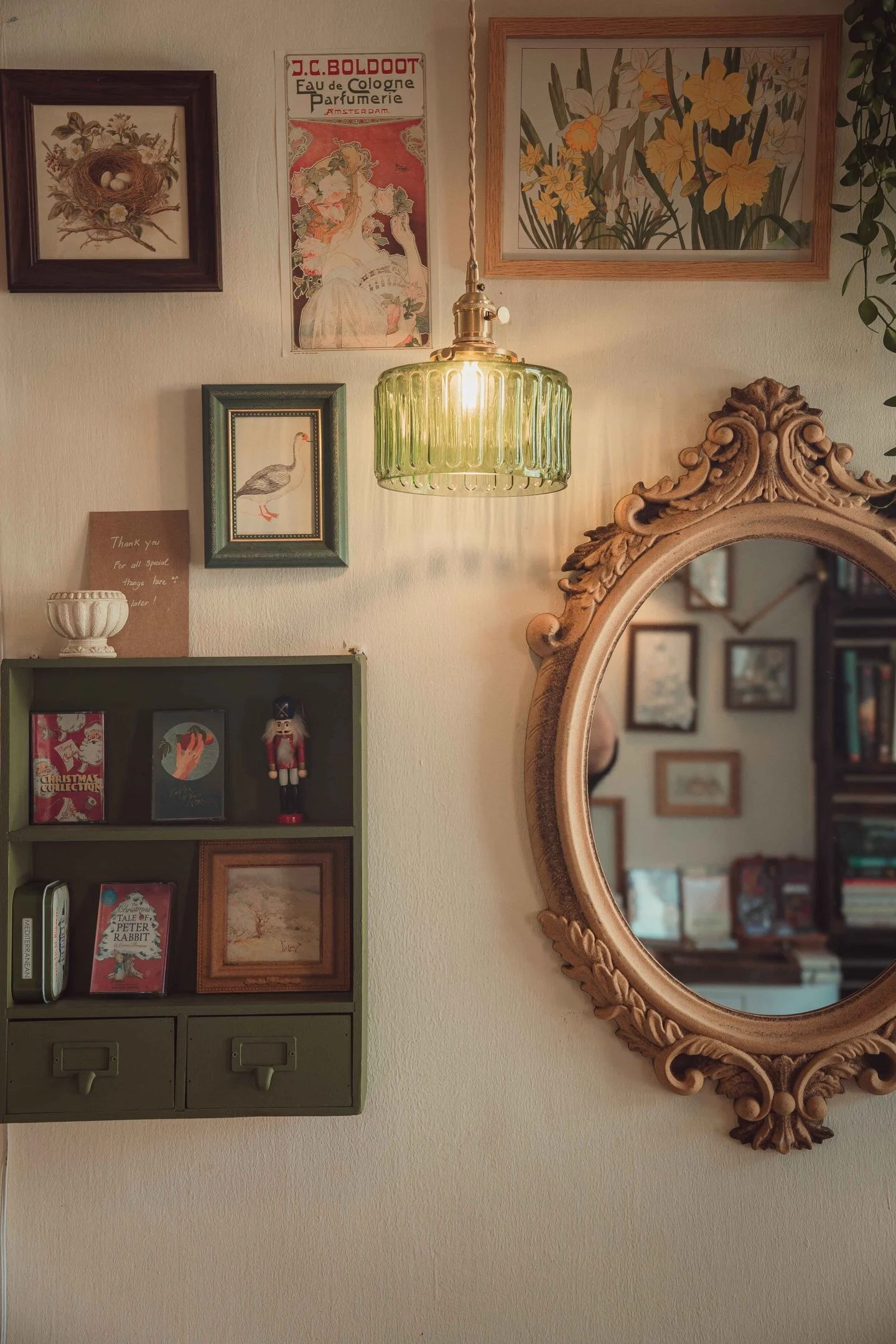
A collected display begins with objects you want to keep seeing. They may share a material, a place in your life, or simply a shape you enjoy. The connection does not have to be obvious to someone else, but the arrangement should give each object room to be noticed.
Gather the candidates on a clear table and remove anything included only to fill a gap. Separate fragile or heavy pieces before trying different groups. You may find that the collection is stronger when part of it is stored and rotated rather than displayed all at once.
Find the common thread
A group of ceramics can vary in color while sharing a handmade texture. Travel objects may have different materials but similar warm tones. Framed photographs can connect through their subjects while the frames stay relatively quiet. Choose one visible relationship to emphasize and let the other differences remain.
Avoid requiring every object to have a companion of the same color. That can lead to buying filler pieces that dilute the collection. Repetition can come from shape or scale instead: a round bowl might relate to a curved sculpture without sharing its finish.
Arrange height with stability
Place a substantial piece first, then add smaller objects where they do not hide it. A low object in front of a taller one can create depth if both remain visible. Use stable display supports intended for the object where needed; do not build precarious towers from books or fragile boxes.
Keep valuable or delicate pieces away from edges, frequent hand movements, and locations accessible to children or pets. Follow mounting and load requirements for shelves. A display that makes cleaning difficult may need fewer objects or a different position.
Leave room for the surface itself
Part of a cabinet top or shelf can remain empty. That space distinguishes the collection from stored clutter. Look from the place where you usually see it and remove one object if the silhouettes merge into a continuous line.
Lighting can help, but avoid directing heat or unsuitable light onto sensitive materials. If an object has conservation needs, follow advice specific to it rather than treating it as ordinary decor.
Rotate a few pieces when your interest changes, keeping the arrangement's useful structure. A collected display is allowed to evolve. It feels intentional when the objects are chosen and given space, not when every gap is permanently filled.