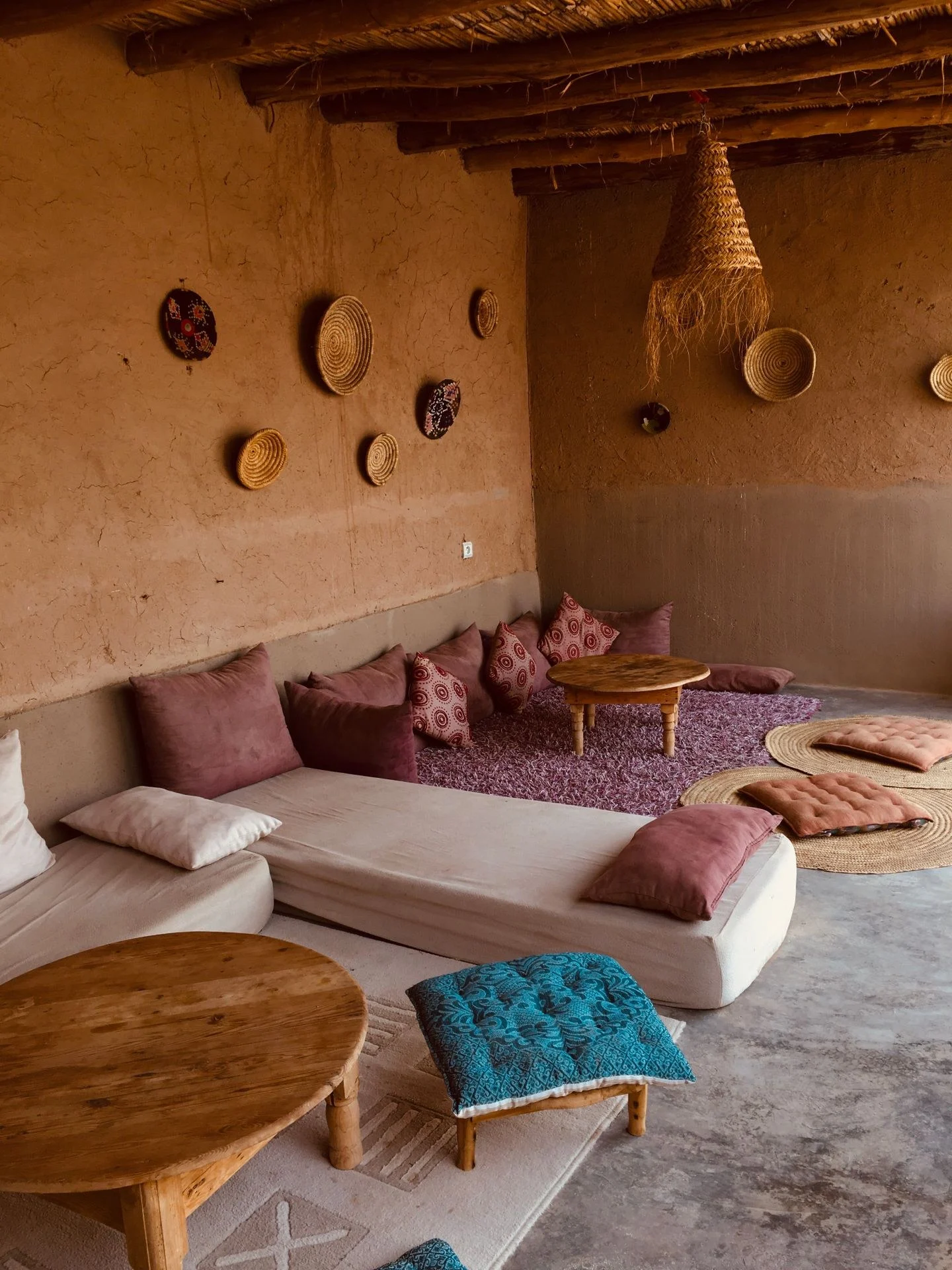
Layering a smaller rug over a larger one can define a seating area or bring a particular textile into a room. It also introduces another edge and a second surface that can move. Begin with those physical consequences before deciding whether the combination looks appealing.
Check the larger rug's position and condition first. It should suit the floor and furniture arrangement on its own. Adding a second rug will not correct a base rug that bunches, slides, or is too small for its intended job. Follow the manufacturers' guidance for each rug and any approved pad or underlay.
Give the upper rug a clear boundary
Place the smaller rug where its edges will be understandable and manageable. Avoid putting an edge directly in the main walking route or where a chair repeatedly crosses it. Test the arrangement with people sitting and standing, not only with the furniture neatly pushed into place.
The difference in size should allow both layers to read. If the rugs are almost the same size, their edges can look like an accidental misalignment. A more distinct smaller area may make the purpose clearer, although the actual dimensions still need to suit the furniture.
Compare the combined thickness beneath table and chair legs. A piece of furniture partly on one layer and partly on two may become uneven. Check doors and moving furniture nearby as well. Do not use improvised adhesives or backing materials that could damage either rug or the floor.
Let one texture lead
A quieter base can support a more patterned upper rug, or a smooth upper surface can contrast with a textured base. Several strong patterns may compete, especially when the sofa and curtains are also patterned. View the combination from the doorway to judge the amount of visual activity.
Consider cleaning before finalizing the arrangement. Both layers need to be lifted or moved according to their care requirements, and dirt can collect between them. A combination that is too cumbersome to maintain may not suit a busy room.
Live with a temporary layout long enough to notice whether the smaller rug shifts during normal movement. If it cannot remain safely and comfortably positioned using methods approved for the products, use the rugs separately. Layering should add a useful visual relationship, not a recurring adjustment that the household has to work around.