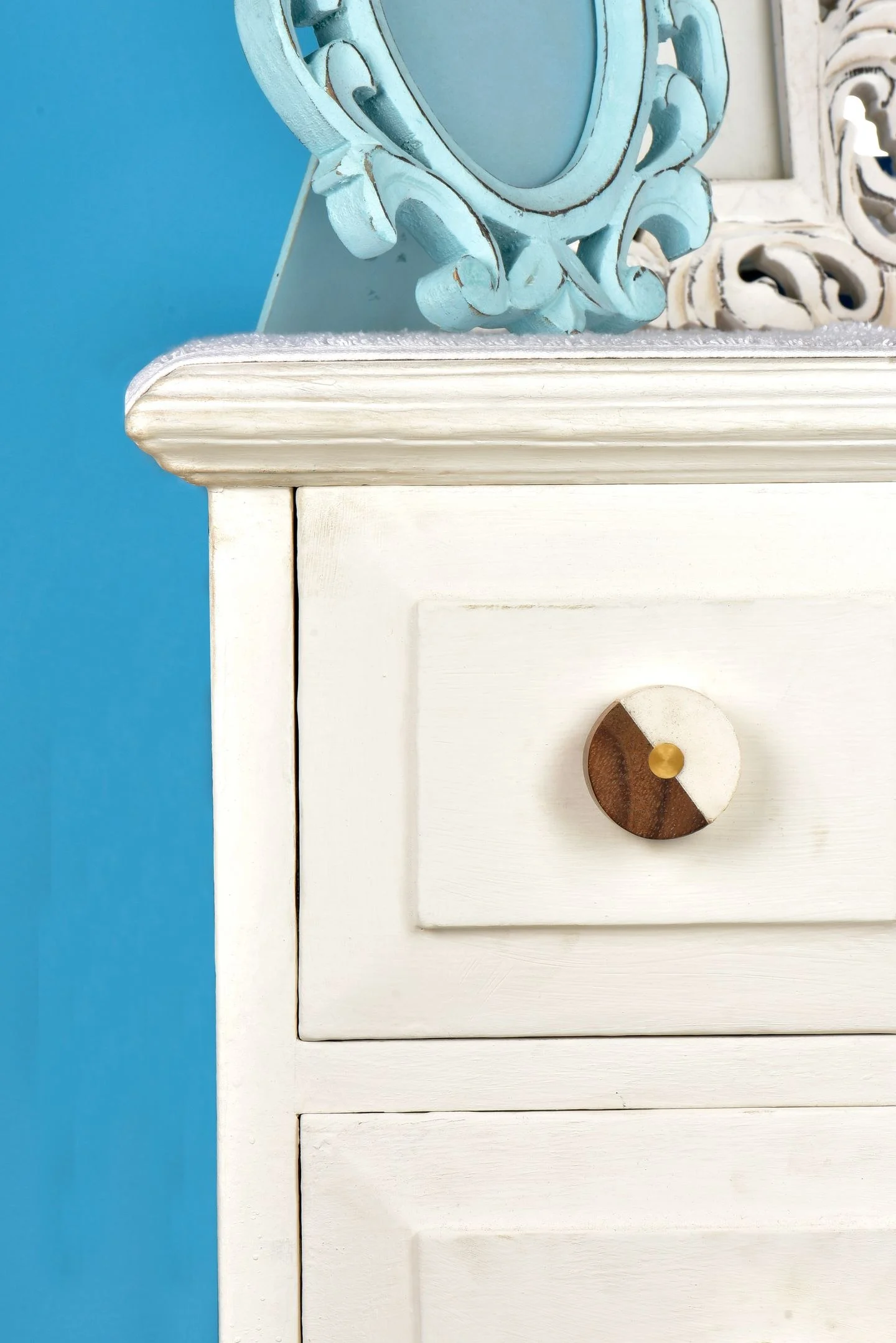
A cabinet knob may be small, but it is one of the parts you touch most often. Its size should suit the door visually and provide a comfortable grip. A tiny knob on a large, frequently used door can look delicate while being frustrating in practice.
Measure the door or drawer front and note any rails, recessed panels, or existing holes. The hardware has to work with that construction. For replacement knobs, check the screw size, door thickness, and whether the new base covers any marks left by the old hardware.
Try a sample before ordering a full kitchen or dresser set. Hold it with dry and slightly damp hands, and consider the needs of everyone who uses the cabinet. Rounded, faceted, or flattened shapes can feel quite different even when their diameter is similar.
Look at projection as well as diameter
A knob that sits close to the door may leave little space for fingers. One that projects far can catch clothing or collide with adjacent fronts. Open the door through its normal movement and check nearby walls, drawers, and appliances. An attractive profile is only useful if it does not create a new obstruction.
A long drawer may be more comfortable with a pull or a pair of appropriately placed knobs, depending on its construction and the manufacturer's recommendations. Do not add new holes solely from a visual sketch without checking the hardware instructions and the cabinet material. Have uncertain installation work assessed before drilling.
Compare the finish with the other metals nearby, but do not assume identical color names from different makers will match. A sample can reveal differences in sheen and undertone. Polished hardware catches more light, while a quieter finish may blend into the door; neither automatically indicates durability.
Check cleaning instructions, especially for coated or living finishes. A cleaner suitable for one metal may damage another finish. Avoid choosing a knob that requires maintenance you will not realistically perform.
Step back and look at several sample positions represented on the cabinetry. Hardware repeats across the room, so a bold knob becomes a pattern. Keep its scale related to the fronts and its feel related to the daily action. The right knob should be easy to find, grasp, and use before it becomes a decorative detail.