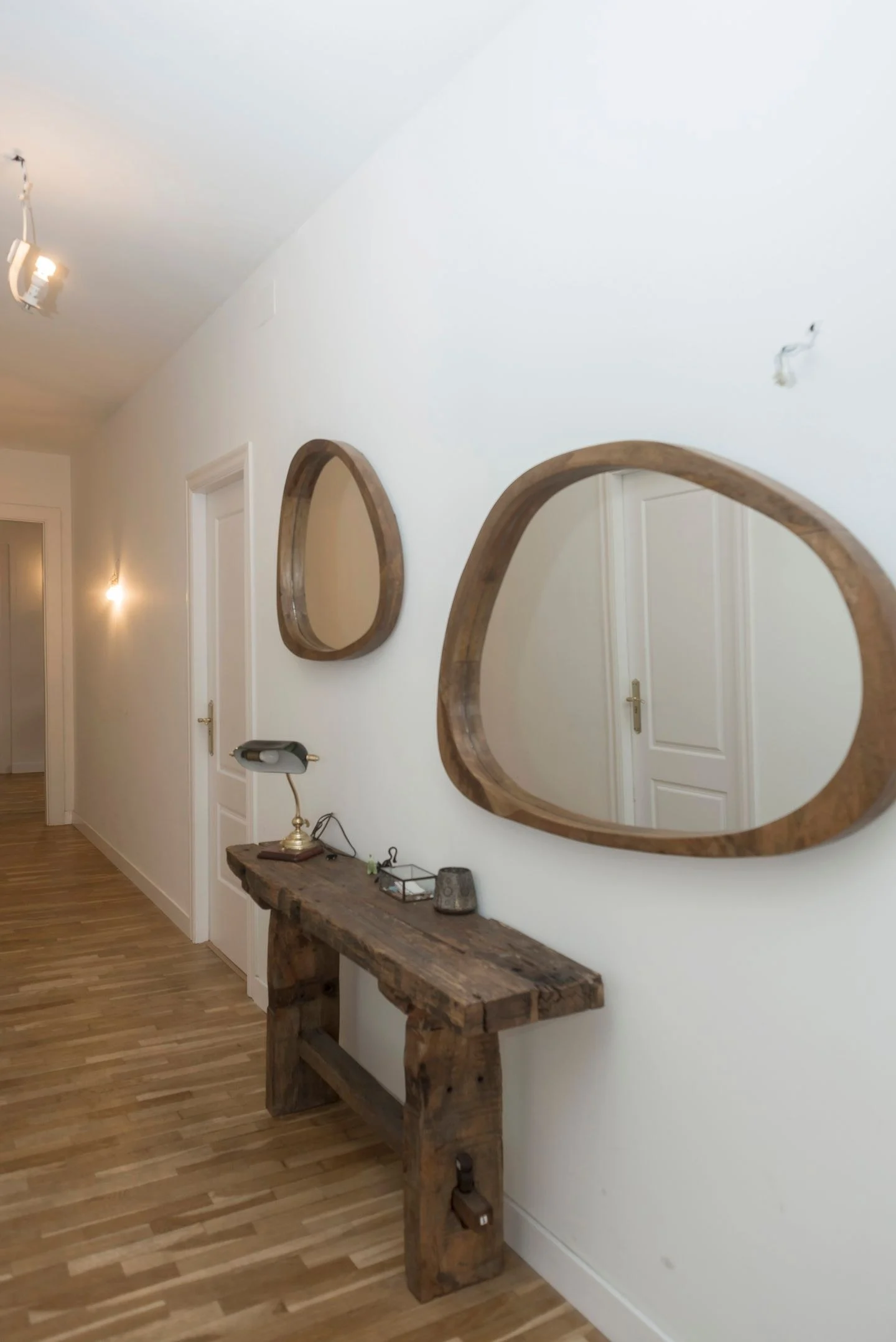
An entryway mirror can provide a last look before leaving, reflect another part of the home, or establish a focal point above a console. Decide which of these jobs matters most. A decorative mirror that is too small or too high for everyday use may not serve the purpose you expected.
Stand where you would naturally pause near the door. Check what you want to see: your face, upper body, or a fuller view. Mark the necessary reflective area on the wall before comparing frame shapes. A wide frame occupies wall space without increasing the usable reflection.
Look at what comes into view
The mirror will repeat whatever is opposite it. An attractive doorway or a bright room can be a useful reflection; a crowded coat rack may become more prominent than intended. Test the position with a temporary mirror or consider the sightline carefully from normal standing positions.
Do not assume that a mirror facing the entrance always produces the same effect. The distance to the door, the width of the hall, and what appears around the reflection all matter. Choose the view that feels comfortable in this particular space.
Above a console, relate the mirror's width and lower edge to the furniture. Leave usable room for items that belong on the surface without allowing a tall lamp or a pile of mail to block the main reflection. A mirror and console should work together rather than compete for the same visual area.
Keep the entrance easy to use
Check the door swing, coat storage, switches, and the route taken while carrying bags. A projecting frame can be awkward in a narrow hall. A floor mirror needs an appropriate position and securing method; it should not become a loose object in a busy passage.
Follow the mirror manufacturer's installation instructions and use fixings appropriate to its weight and the wall. Obtain help when the wall construction or hidden services are uncertain. The frame's visual lightness does not tell you how it needs to be supported.
Finish by entering the home as you normally would, then turn to use the mirror before leaving. If you must move a bag, step around a bench, or lean over the console each time, reconsider the position. A useful entryway mirror fits the ordinary movement of the home as well as the wall composition.