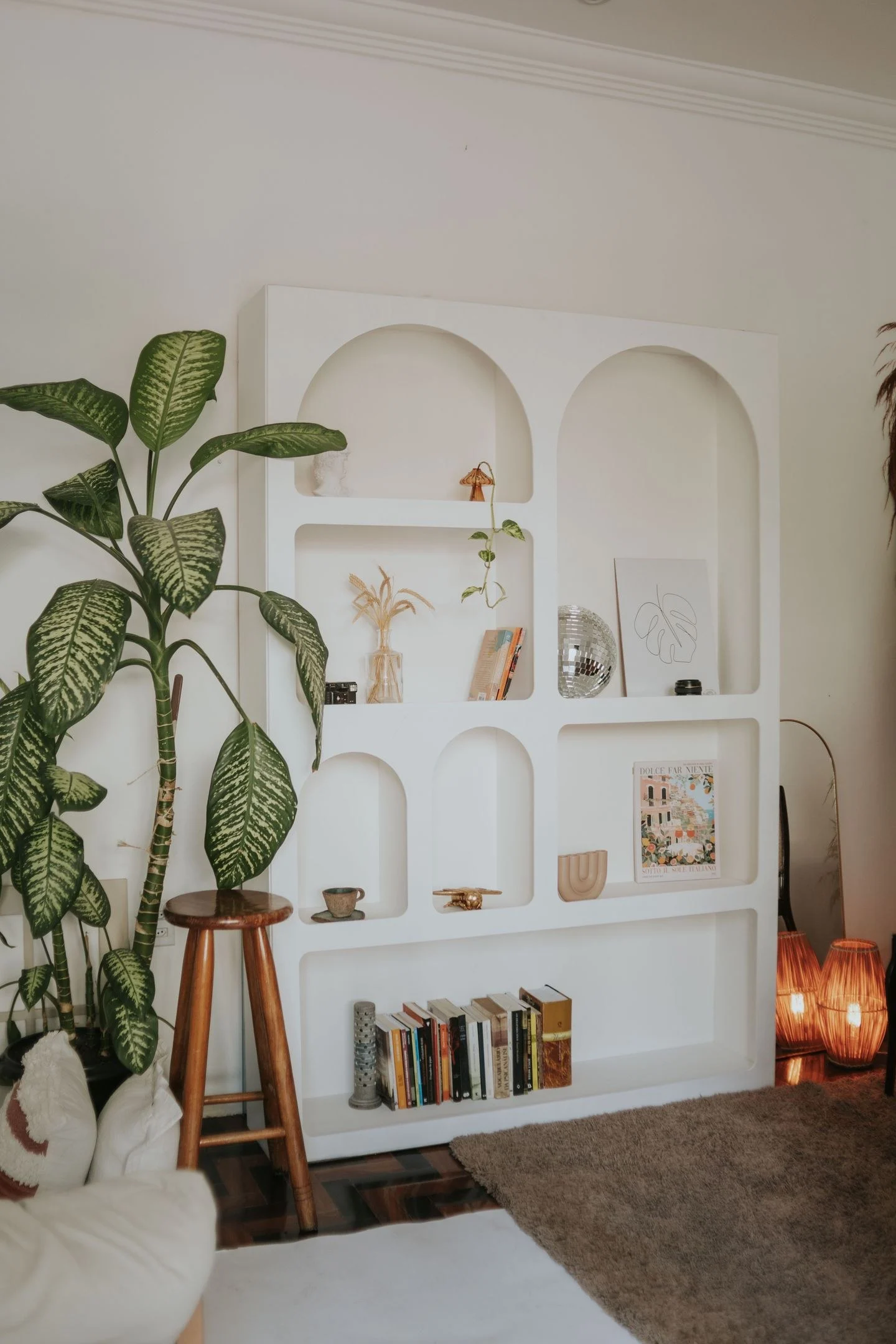
An indoor plant display works when the plants and the room can both function in the chosen position. A visually empty corner may not provide the light a plant needs. A bright window ledge may be difficult to reach for watering. Start with the conditions before deciding on the arrangement.
Identify the actual light available through the day and choose plants with suitable care requirements. Check the needs of the particular species rather than assuming every indoor plant tolerates the same conditions. Where children or pets are present, verify that the selected plants are appropriate for the household.
Give the plant its future footprint
Allow for leaves and stems as well as the pot. A plant beside a chair may gradually occupy shoulder space or brush against someone walking past. A trailing plant can interfere with shelf contents below it. Consider how its expected growth relates to the furniture rather than planning only for its purchase size.
Group pots at heights that let each plant receive suitable light and remain accessible. A taller stand can create variation, but it must be stable and appropriate for the loaded pot. Check the stand or shelf's instructions and capacity. Wet soil, a container, and the plant together can weigh more than the empty pot suggests.
Keep essential routes, door openings, and window operation clear. A grouping that has to be dismantled whenever the window opens is unlikely to remain convenient. One well-placed plant may serve the room better than several pots squeezed into marginal positions.
Protect surfaces through the care routine
Choose containers and any liners or saucers according to the plant's drainage needs and the furniture's requirements. A decorative outer pot is not automatically proof against leaks or condensation. Avoid leaving standing water against furniture, and inspect the surface beneath pots during normal care.
Plan how watering will happen. If plants are moved to a sink, make sure they can be lifted comfortably and returned without damaging nearby objects. If they are watered in place, leave access and use suitable protection for the surface. Follow the plant and container guidance rather than treating the display as a fixed arrangement that must never move.
Pot color and texture can connect the plants to the room once these practical matters are settled. A limited family of containers can make varied foliage feel organized. The display should remain attractive while leaves change and pots are moved for care, because that ongoing activity is part of keeping living plants indoors.